
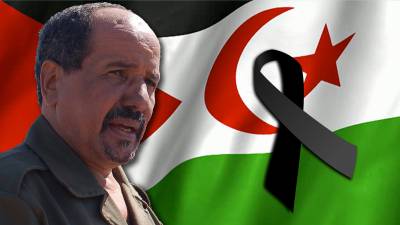
 Mohamed Abdelaziz. Photo: An Phoblacht.
Mohamed Abdelaziz, President of the Saharawi Arab Democratic Republic (SADR), died on May 31, following a long illness.
Mohamed Abdelaziz. Photo: An Phoblacht.
Mohamed Abdelaziz, President of the Saharawi Arab Democratic Republic (SADR), died on May 31, following a long illness.
-
Mohamed Abdelaziz. Photo: An Phoblacht.
Mohamed Abdelaziz, President of the Saharawi Arab Democratic Republic (SADR), died on May 31, following a long illness.
-
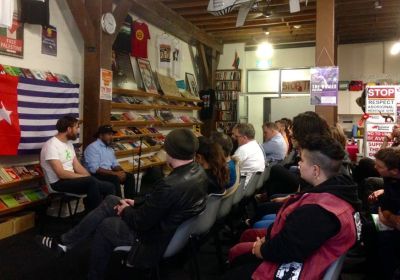
West Papuan independence leader Benny Wenda has been touring Australia, spreading awareness of the West Papuan struggle for freedom from Indonesian rule.
-
 A report released by the Institute for Energy Economics and Financial Analysis on May 19 has said that the $800 million gas pipeline planned for the Northern Territory is economically unviable, to the extent that it is described as the “whitest of white elephants”. The pipeline, known as the North East Gas Interconnector (NEGI), has been the crown of the NT Country Liberal Party’s economic strategy in the lead-up to the August election. The pipeline is designed to transport the vast shale gas reserves in the NT from Tennant Creek to Mt Isa for sale to the rest of the world.
 -
 In Coburg on May 28 about 400-500 people rallied peacefully in opposition to the federal government policies that promote racism towards Aborigines, refugees and Muslims. This was despite the rain.
Rally participants included the young and the old, people with children, church groups, interfaith groups, refugees, Muslims and First Nations people.
In Coburg on May 28 about 400-500 people rallied peacefully in opposition to the federal government policies that promote racism towards Aborigines, refugees and Muslims. This was despite the rain.
Rally participants included the young and the old, people with children, church groups, interfaith groups, refugees, Muslims and First Nations people.
-
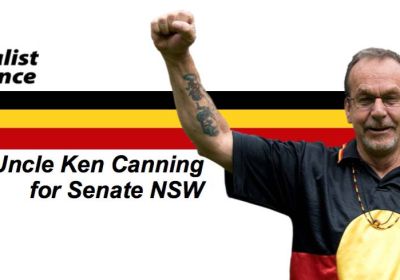 First Nations Socialist Alliance Senate candidate for NSW Ken Canning visited the Bankstown campus of Western Sydney University on May 9 to inform students about why we need a people's movement. The meeting was organised by the Resistance Club. He raised several key issues including the fact that despite former Labor PM Kevin Rudd's “Sorry” speech Indigenous children are still being forcefully removed at a higher rate than ever before.
 -
Two weeks into a protracted election campaign, it is looking ever-more likely that climate change is to be placed way down the order of business – at least for the major parties. The contest over climate change that characterised the previous three federal elections seems to have disappeared off the political radar despite the issue being more urgent than ever.
-
The land between the Clarence and Nambucca Rivers on New South Wales’ mid-north coast is Gumbaynggirr country. The Blood Rock massacre took place there in the 1880s, when police surrounded local Aboriginal people and shot them in the waters around Red Rock. A plaque reads: “Gumbaynggirr descendants, especially women, still avoid this headland. The significance of this place, and the rebirthing of our culture, will never been forgotten”.
-
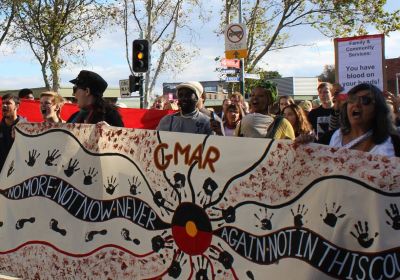 Around 100 Aboriginal grandmothers and supporters gathered at the Redfern Block on May 26, and marched to the Families and Community Services (FACS) office, as part of a National Day of Action on the anniversary of the Bringing Them Home report. The action was organised by the Grandmothers Against Removals (GMAR), a national network initiated by families who are directly affected by the child removal crisis. It is fighting to bring an end to continuing stolen generations.
 -
 A multi-generational delegation from the Borroloola Aboriginal community in the Northern Territory's Gulf Country were front and centre at a protest outside global mining giant Glencore's Sydney headquarters on May 19.
The protesters demanded that Glencore close its McArthur River mine and rehabilitate the site as well as the river and the surrounding land, on which they have traditionally relied for food.
A multi-generational delegation from the Borroloola Aboriginal community in the Northern Territory's Gulf Country were front and centre at a protest outside global mining giant Glencore's Sydney headquarters on May 19.
The protesters demanded that Glencore close its McArthur River mine and rehabilitate the site as well as the river and the surrounding land, on which they have traditionally relied for food.
-
 The federal Coalition government is planning to hold a referendum in 2017 on Constitutional Recognition of Australia’s original inhabitants. So far the campaign consists of establishing the Recognise campaign, in a bid to educate Australians about the importance of the recognition referendum. The government has already funded the Recognise campaign to the tune of $15 million, and promised another $15 million in this year’s budget. At the same time, it has cut funding to Aboriginal medical centres, Aboriginal legal services and other Indigenous programs and services.
 -
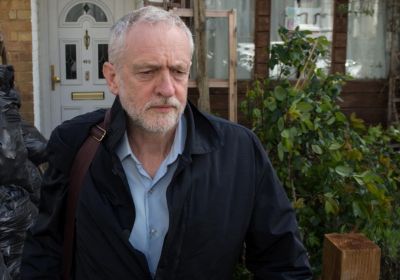 British Labour Party leader Jeremy Corbyn publicly criticised human rights abuses in Indonesian-occupied West Papua and backed Papuan demands for self-determination, in a May 3 meeting at Britain’s House of Commons. The meeting was a “historic step on the road to freedom for West Papua”, International Parliamentarians for West Papua (IPWP) said. At the meeting, a new declaration was signed calling for an internationally supervised vote on the independence of West Papua.
 -
