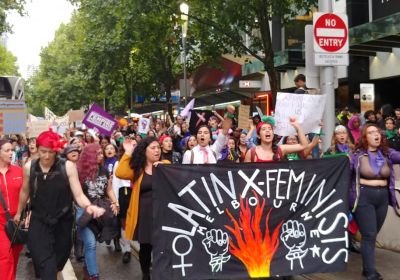
The presence of strong contingents of Latin American feminists was a feature of a number of the International Women's Day protests held in Australia from March 5-7, reports Zebedee Parkes.
The presence of strong contingents of Latin American feminists was a feature of a number of the International Women's Day protests held in Australia from March 5-7, reports Zebedee Parkes.
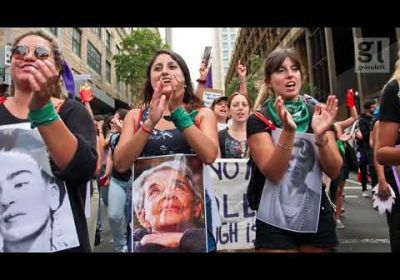
Organised by Latinxs Feministas en Melbourne on March 5 and DecoFem Collective in Sydney on March 7, Latin American women performed the feminist anthem "The rapist is you" at International Women's Day events, reports Zebedee Parkes.
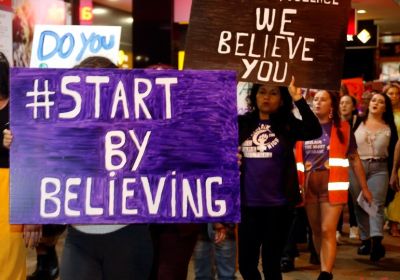
Sue Bolton asks why, the day after Rowan Baxter brutally incinerated his ex-partner Hannah Clarke and their children, the detective in charge of the investigation could publicly query whether the “husband” had been “driven too far”.

Domestic violence homicides of women killed by their current or former partner have already exceeded the shocking average of one a week this year. Former Sutherland Shire Domestic Violence Network activist Margaret Gleeson takes a look at some solutions.

A photo exhibition in Tokyo on January 23–26 celebrated the life and advocacy of Song Sin-do, who campaigned for an apology from the Japanese government for coercing her into sexual slavery during World War II, writes Melanie Barnes.

Circulating intimate images — real or fake — over the internet to attack a woman's credibility, shame her or silence her, is one of the various types of online violence against women that the Mexican government will likely formalise as a crime in coming months, writes Tamara Pearson from Puebla.

While some do not want to discuss the cause of Australia’s horrendous bushfires — runaway climate change — even fewer want to talk about how catastrophic fires are disproportionately affecting women and how it should be tackled. Mary Merkenich looks at the way women cope in emergencies and how the system treats them.

The Professional Footballers Association (PFA), the union representing Australia's professional football (soccer) players, registered a third straight year of record membership at its November 20 Annual General Meeting.
Margaret Atwood's 2019 Booker Prize-winning novel The Testaments is her response to the question of readers of The Handmaid's Tale: how did Gilead fall? She's had 35 years to come up with the answer, and she doesn't disappoint.
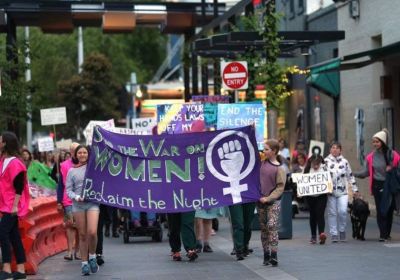
RtN rallies are traditionally held on the last Friday of October to demand an end to violence against women.
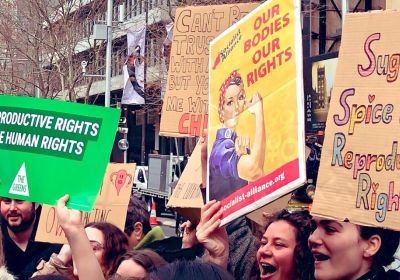
Abortion has finally been decriminalised in New South Wales, after decades of campaigning and nearly 40 hours of parliamentary “debate” that generated widespread anguish around what should be a basic health matter.