-
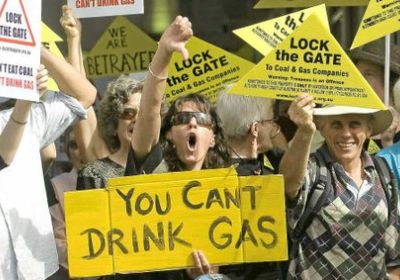
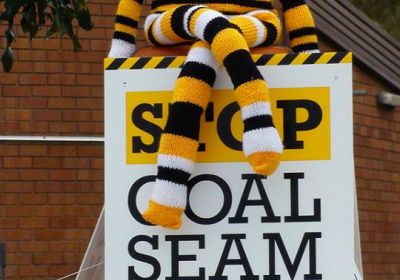
Since launching in March 2011, the campaign to stop coal seam gas (CSG) mining has grown into one of the most powerful and broadly supported community campaigns ever seen in the Illawarra. Involving unprecedented numbers of people, the immense pressure on the government has so far put a stop to the local CSG project, which threatens the drinking water for greater Sydney. -
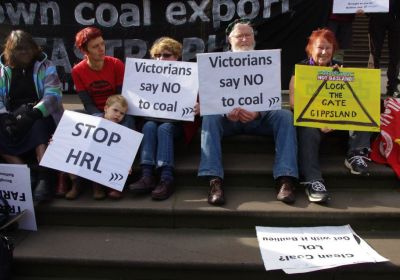
Gelliondale Resources, a subsidiary of Melbourne company Ignite Energy Resources Limited, have applied for a “retention licence” for a project to mine brown coal at Gelliondale, in the South Gippsland region. The application includes a work program of “field exploration activities such as drilling, sampling, excavation of costeans or pits and surveying,” according to the company website. -
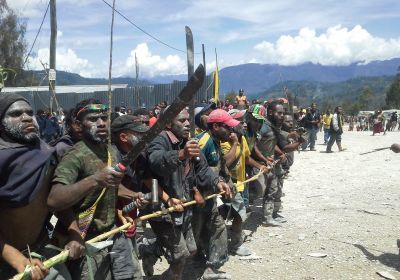
Violent clashes have once again erupted between local people, police and company security guards at the giant Porgera gold and silver mine in Papua New Guinea's highlands, operated and largely owned by the Canadian corporation Barrick Gold – the world's biggest gold mining company. -
Australian-New Zealand mining company OceanaGold has destroyed the isolated rural village of Didipio in the mountains of Kasibu in Nueva Vizcaya, a province of the Philippines. OceanaGold has operated one of six mining projects in the Philippines covered by the Financial or Technical Assistance Agreement (FTAA) since 1994. Fierce resistance from villagers, legal struggles and the financial problems of the company meant it was only this year that OceanaGold was able to ship out its first 5000 tons of copper-gold concentrate.
-
Lock the Gate released this statement on November 26. *** The first Santos rig drilling for coal seam gas in the Pilliga is today the site of direct action protest, as grandmother and author Sharyn Munro joins 20 locals in halting Santos’ drilling operations in the area, calling for the Sydney catchment coal seam gas moratorium to be extended to protect Pilliga groundwater. -
Australian oil and gas company AWE has signalled its intention to mine for unconventional gas on farmland bordering Western Australia’s Lesueur National Park. The proposal, released in October, includes plans to use the damaging process known as “fracking” to extract gas, starting in March next year. The national park is a environmentally significant area. It holds more than 900 different plant species and more than 10% of the total known flora of WA. It also holds seven species of declared rare fauna, and nine taxa found nowhere else in the world. -
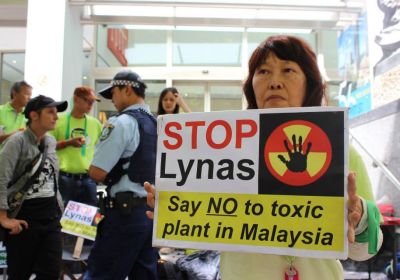
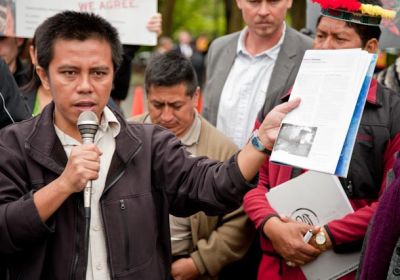
Six Malaysian activists from the Himpunan Hijau (Green Assembly) group have begun a three-day occupation of the entrance to the corporate headquarters of Lynas in Sydney. The Australian company has built an unwanted toxic rare earths refinery in Kuantan , Malaysia.
-
Australian environmentalists welcomed the October announcement that mining giant BHP was abandoning its plans for a coal export rail and port development at Abbot Point in Queensland. However, the company is simultaneously involved in a giant new coal export development on Kalimantan in Indonesia. -
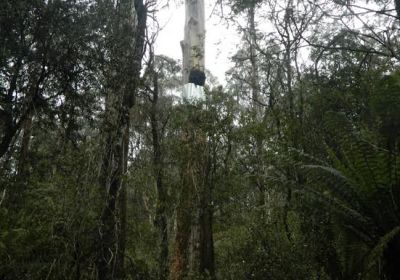
A Melbourne woman has taken to living in a treehouse suspended from a tall mountain ash in the Toolangi area north-east of Melbourne, to highlight loss of Victoria's native forest and the critically endangered Leadbeater's possum. Hannah Patchett told community radio 3CR that she decided to take the action because “a lot of people didn't even know where Toolangi was, let alone that there was clearfell logging happening in Leadbeater habitat. -
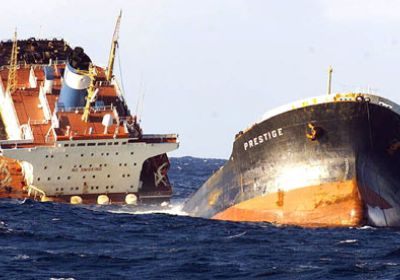
Eleven years to the day after the crew of the 80,000 tonne oil tanker Prestige heard the huge bang that marked the start of its break-up and of Europe’s most devastating oil spill, a high court panel in the Galician city of A Coruna delivered its verdict in the case on November 13. Who was guilty of an environmental catastrophe when the tanker broke in two and spilled 63,000 tonnes of sticky, sulphurous fuel oil along 2900 kilometres of Spain’s and France’s Atlantic coast? -
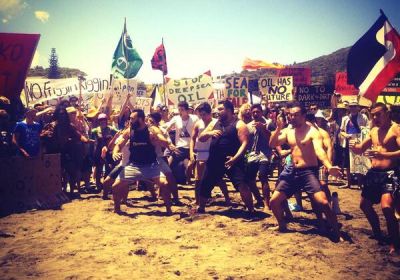
Continuing New Zealand’s proud history of protests at sea, attempts by Texan oil giant Andarko to start deep-sea oil drilling are being blocked by a tiny sailing boat. Thousands came out to NZ's west coast beaches on November 23 to support the Oil Free Flotilla in its stand against Anadarko. More than 1000 gathered for the main event at West Auckland's iconic Piha beach, carrying colourful home-made banners with messages such as "We love our beaches", "No drill, no spill" and "Anadarko go home". -
Friends of the Earth released this statement on November 21. *** Friends of the Earth has welcomed today’s announcement by the Premier that the moratorium on the process of unconventional gas fracking will be extended at least until June 2015. Friends of the Earth campaigns co-ordinator Cam Walker said: “This is a good start. Pushing the moratorium out to 2015 will take some of the heat out of the community concern over new fossil fuel projects.