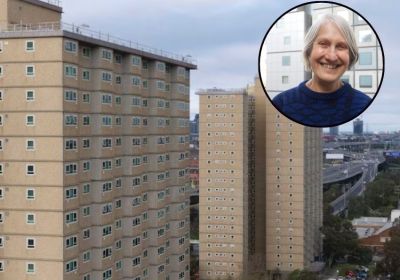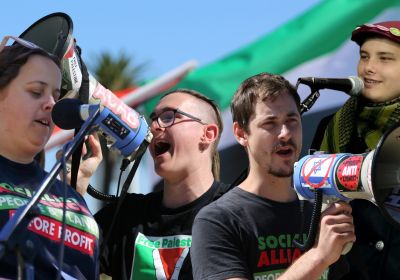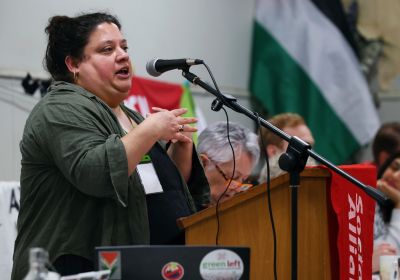
There are many ways to fix New South Wales — currently plagued by cuts, privatisations and tollway madness — participants at a socialist activist conference concluded on August 12. The day-long discussion ended with the election of a team of Socialist Alliance candidates to contest for the NSW Legislative Council in the March 2019 elections.
elections
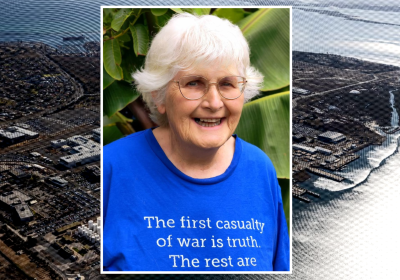
Ali Wazeer, a central committee member of The Struggle group, has won a seat in the national parliament with 23,530 votes on July 25. His closest rival for the seat, from a religious alliance, got only 7515.
A key leader of the Pashtun Tahafaz Movement (PTM), Wazeer was one the organisers of the mass meetings organised in major cities that demanded fair compensation to the victims of the “war on terror”. This campaign also demanded the release of all “missing” persons, or else that they be tried in court.
In his election victory speech on July 26, Imran Khan gave a sober talk that ran contrary to the violent language he used throughout the election campaign, notes Farooq Tariq from Lahore.
Khan’s Pakistan Tereek-e-Insaf (PTI) “won” 116 seats in the National Assembly out of the 342 seats, of which 278 seats are contested directly on the First Past the Post (FPTP) system.
Overcoming a flood of corporate money and New York’s powerful establishment machine, 28-year-old democratic socialist Alexandria Ocasio-Cortez toppled Democratic Representative Joe Crowley in New York’s 14th congressional district on June 26 with tireless grassroots organising and an ambitious progressive agenda of Medicare for All, housing as a human right, and abolishing the hated Immigration and Customs Enforcement agency. The result is being hailed as the biggest political upset of 2018.
Italy’s new government is the most conservative and reactionary since World War II, writes Daniele Fulvi.
After three months of laborious negotiations, Italy finally has a new government. However, there is very little to celebrate.
The populist Five Star Movement (M5S) and the far-right Lega Nord (Northern League) came to an agreement on the government’s agenda. They won the argument against Italian President Sergio Mattarella to give the prime ministership to Giuseppe Conte, a professor and jurist who sympathises with M5S.
The results of Colombia’s May 27 presidential election confirmed that a run-off election between Gustavo Petro and Ivan Duque will be required to decide the country’s newest leader. The election is set for June 17.
Ivan Duque, former president Alvaro Uribe's protégée and candidate for the right-wing Grand Alliance for Colombia, ended with 39.14%. Centre-left ex-mayor of Bogota Gustavo Petro, running for the List of Decency coalition, won 25.09%.
The centre-left candidate Andres Manuel Lopez Obrador (or AMLO, as he is commonly known) has widened his lead and is now 26 points ahead of his nearest rival, the right-wing Ricardo Anaya, for the upcoming July 1 presidential elections in Mexico.
In an opinion poll carried out by the popular newspaper Reforma, the candidate and head of the National Renewal Movement (Morena) got 52% of the vote intention.
The same poll showed that Morena will probably be the biggest minority in the House of Representatives, polling at 42%.
The Victorian Branch of the Australian Labor Party (ALP) held its state conference over the weekend of May 26 and 27.
The conference was held amid rising tensions within the Victorian ALP; with several prominent unions including the Construction, Forestry, Mining, Maritime and Energy Union (CFMMEU) splitting from the Socialist Left to form the new “Centre Unity and Industrial Left Alliance” faction with a number of right-wing unions including the Australian Workers Union (AWU).
Even before Venezuela’s May 20 presidential vote had taken place, the United States —headed by a president who lost the popular vote in an electoral system that systematically disenfranchises millions of poor and non-white voters — rejected the elections as “neither free nor fair”.
The Lima Group, a coalition of 13 right-wing Latin American countries plus Canada, also refused to recognise the results. Among its members are:
Venezuelan President Nicolas Maduro won the Venezuelan presidential elections on May 20, gaining a second presidential term for six years with more than 5.8 million votes, the National Electoral Council (CNE) announced that night.
With 92.6 percent of the votes counted, Maduro had 5.8 million votes, while his closest rival, former governor Henri Falcón getting 1.8 million votes, said CNE President Tibisay Lucena who added that in total, 8.6 million Venezuelans voted, out of an electoral registry of 20.5 million people.