
Up until now the argument has been that there's no alternative. We have to slash public spending and wages because there's so much debt that otherwise there'll be chaos, absolute chaos.
The joy of this method is it saves having to make a case for your actions, so it ought to be used more often. Journalists accused of phone hacking could say, "I had no choice but to listen to a dead soldier's voicemail because otherwise there'd be chaos, absolute chaos. Just look at Greece, they didn't hack any phones and look at the mess they're in, there was no alternative."
-
-
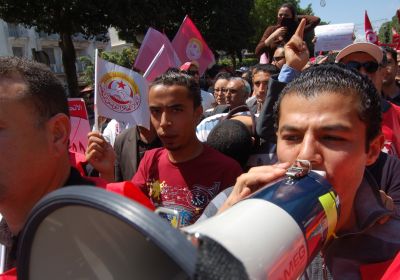 The rhetoric from Tunisia's interim government, led by the Islamist party Ennahda (the Renaissance), as well as the financial establishment, is that the old regime is gone. What is needed now, they say, is stability and the restoration of economic growth to complete the transition to democracy. International Monetary Fund (IMF) Managing Director Christine Lagarde said on April 2: "Investors and the population at large need to regain confidence in the future of the economy, to look beyond the short-term difficulties and provide the foundations for a rebound of the Tunisian economy."
 -
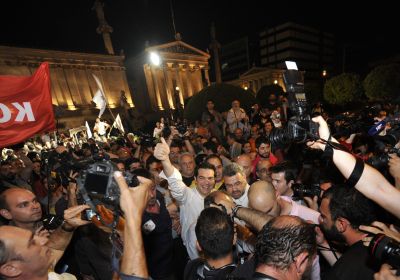
The sensational outcome of the Greek elections on May 6 in which SYRIZA, a coalition of left-reformist and radical left groups, came second to right-wing New Democracy (ND) with nearly 17% of the vote, came on the back of the catastrophe being imposed on the Greek working class.
-
Some years ago, travelling on the presidential plane of Venezulea's left-wing President Hugo Chavez of with a French friend from Le Monde Diplomatique, we were asked what we thought was happening in Europe. Was there any chance of a move to the left? We replied in the depressed and pessimistic tones typical of the early years of the 21st century. Neither in Britain nor France, nor anywhere in the eurozone, did we see much chance of a political breakthrough. Then maybe, said Chavez with a twinkle, they could come to our assistance.
-
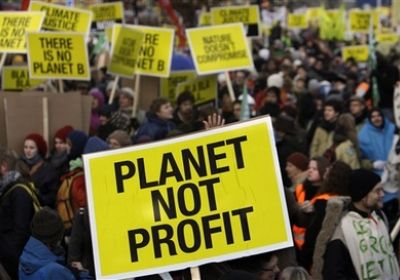 The Green Left Weekly fighting fund has received a huge boost over the last couple of weeks, thanks to the efforts of hard working supporters and volunteers around the country. So far this month, $24,600 has been sent in to the fighting fund, largely from successful fundraising events organised by our supporters. A huge thanks to everyone who helped organise and attend these wonderful events.
 -

A film of a large, peaceful student and staff rally on May 7 against Sydney Uni job cuts, being met by a brutal police and riot squad response. The police presence was organised by the architect of the cuts, vice chancellor Michael Spence.
-
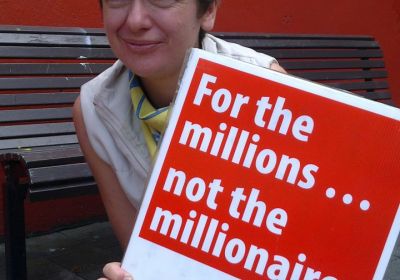 Towards a Socialist Australia was adopted as a draft by the 8th National Conference of the Socialist Alliance, held in Sydney, over January 20-22, 2012. Socialist Alliance also voted to consult with members, supporters and allies in the social movements over the coming months to improve this draft and deepen our collective understanding of the current political climate and the nature of the economic and environmental crises.
 -
 The presence of police and mobile brigade soldiers at construction sites for the PNG LNG (liquefied natural gas) project in Papua New Guinea ― majority owned by Exxon Mobil ― is an indication of the community discontent surrounding the project. Fears have been raised that conflict over the project could provoke violence like that of Bougainville in the 1990s.
 -
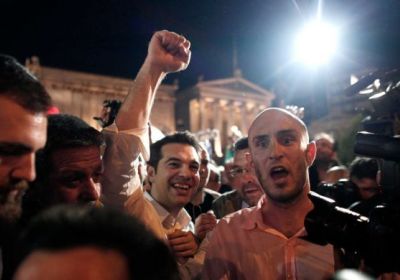
Greece will hold new elections in June if last-ditch negotiations on forming a coalition government fail once again.
-
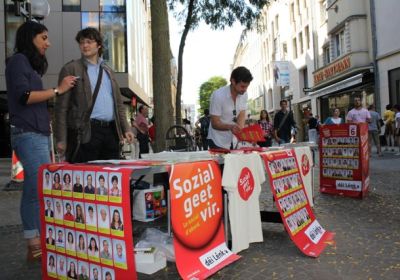 Compared with a southern Europe stricken by ever-rising unemployment and government attacks on social welfare and democratic rights, Luxembourg can feel as if it is on another, much more pleasant, planet. The richest country in Europe ― with Gross Domestic Product per capita at least 30% higher than that of the US, unemployment at 5.9% and the second-lowest public sector debt to GDP ratio ― this most important financial centre after London’s City would seem to be floating above the crisis.
 -
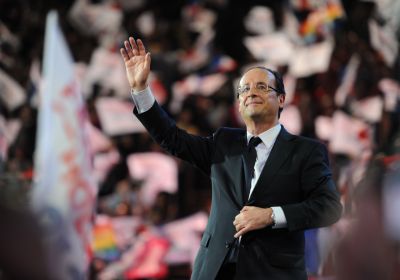 In what marks a significant shift in the balance of European politics, in the final round presidential election on May 6, Socialist Party candidate Francois Hollande defeated right-wing incumbent Nicolas Sarkozy of the centre-right Union for a Popular Movement by almost 52% to 48%. Hollande is France's first president from the social democratic Socialist Party in France in 17 years. Sarkozy is the first president since 1981 not to win a second term.
 -
 Quebec college and university students are now in the 13th week of their militant province-wide strike. They have voted overwhelmingly to reject a government offer that met none of their key demands. After a 22-hour bargaining session involving ministers of the Charest government, university and college heads, and leaders of the major trade-union federations, the student leaders agreed on May 6 to put the offer to a vote of their memberships without recommending acceptance. If the offer was accepted: