
Hundreds of protesters from the indigenous advocacy NGO Survival International gathered outside Peruvian consulates and embassies in London, Paris, Madrid and San Francisco on April 23. They had gathered to urge the Peruvian government to reconsider expanding the Camisea gas mega-project.
Camisea’s Bloc 88, deep in the Amazonian jungles of south-eastern Peru, is thought to contain over 10 trillion cubic feet of gas.
-
-
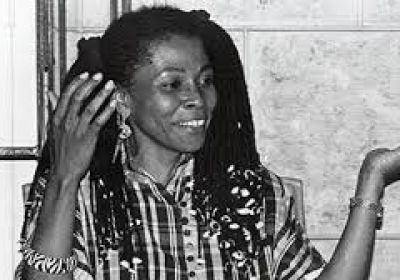 In the aftermath of the bombing of the Boston Marathon, the Obama administration is broadening its definition of “terrorism” to include fighters for Black rights in the US. Washington has already used the term so indiscriminately against enemies internationally that it has become virtually meaningless. For example, every act of resistance to US occupation in Iraq and Afghanistan is labeled “terrorism”. By that definition, George Washington and the other American revolutionists were “terrorists” for resisting British rule.
 -
A truck delivering waste from a fracking operation in Greene County, Pennsylvania, on April 19 was quarantined after being rejected by a hazardous waste landfill as too dangerous. The truck was carrying highly radioactive radium-226 in concentrations 86 times higher than allowed per Environmental Protection Agency limits. After being quarantined at the landfill, the truck was sent back to the fracking site, which is operated by Rice Energy. Radium, it should be noted, is a routine by-product of fracking — the fossil fuel extraction method behind the ongoing “natural gas boom”.
-
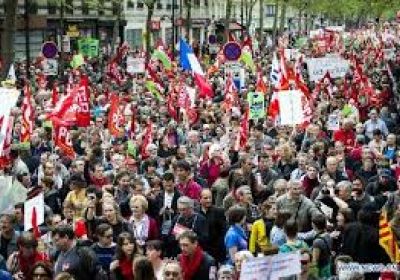 The largest left protest ever against the policies of a French Socialist Party (PS) government took place in Paris on May 5. To the stirring sounds of the protest anthem “On Lache Rien” (“We Don’t Give In”), up to 180,000 workers, pensioners, unemployed and students marched from the Bastille to Place de la Nation.
 -
 As the 2013 federal budget looms, both the Labor government and the Opposition insist on the need to cut social spending. All the talk is about bringing the budget back into surplus as soon as possible and the cuts, they argue, will be needed to end the federal deficit. Ministers in Julia Gillard’s government have warned of a huge shortfall in government revenue, estimated at $7.5 billion by treasurer Wayne Swan and $17 billion by finance minister Penny Wong.
 -
The United Nations General Assembly met after World War II in 1948 and committed to 30 articles on human rights. The Universal Declaration of Human Rights (UDHR) has been signed by most nations and serves in many cases as a legally binding document on human rights. Article 25 in the UDHR says: “Everyone has the right to a standard of living adequate for the health and well-being of himself and of his family, including food, clothing, housing, and medical care.”
-
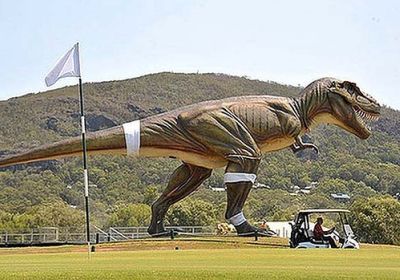 Finally, we have a reason to get excited about elections. Yes, billionaire mining magnate Clive Palmer has formed a political party and is determined to become Australia’s next prime minister. For the first time in god knows how long, we have a real alternative to the tweedledum-tweedledee politics of the big parties. Palmer's bid for PM poses a crucial question: why shouldn’t those who own this country, run it too?
 -
 The impact of austerity has thrown politics in Britain into turmoil. Both parties of the ruling coalition government — the Conservative Party (Tories) and the Liberal Democrats — lost heavily in municipal elections in England on May 2 to the United Kingdom Independence Party (UKIP). The UKIP is a right-wing, populist, anti-immigration party that is pulling all the main parties to the right. Labour’s performance was better but poor, since its answer to austerity is its own brand of austerity and it has pandered to anti-immigrant sentiment.
 -

University students across Australia will take to the streets on May 14 to protest the federal Labor government’s $2.8 billion cuts to higher education. The call by the National Union of Students (NUS) for a “student strike against education cuts” has not only received support from students, but also the National Tertiary Education Union (NTEU), which covers university staff. On a number of campuses, NTEU members have been resisting cuts that university administrations claim are necessary due to lack of government funding.
-
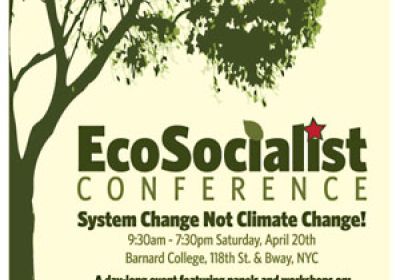 The Ecosocialist Conference, a broad and enthusiastic all-day meeting in New York April 20, took a big step toward creating an anti-capitalist wing of the environmental movement. The conference was arranged in just six weeks by organizers of the Ecosocialist Contingent in the mass demonstration against the Keystone XL tar sands pipeline in Washington February 17. It was supported by 29 groups who subscribed to the Ecosocialist Contingent statement for “system change, not climate change.”
 -
Luigi Preiti, a 49-year old unemployed man from the Calabria region of southern Italy, walked towards Palazzo Chigi on April 28, the seat of the Italian government in Rome, holding a gun. As the military police patrolling the palace tried to stop him, Preiti went on a shooting spree. He wounded two policemen before the he was restrained and arrested by the Carabinieri. Apparently, Preiti’s intended plan was “to kill a politician” and then commit suicide.
-
 Lately it seems that we can’t get away from the hard, simple fact that art requires labour — both in the actual creation and in the conditions that make it possible. Where there’s labour there’s normally a lot of hard work and sacrifice. And where there’s hard work and sacrifice, there’s normally some bastard at the top looking to squeeze as much as they can out of those of us who actually work. Much as some of us would love to act like art exists in a separate realm from all of this, it doesn’t.