-
Meral Cicek (pictured) is the chair of Kurt Kadin Iliskiler Merkezi, the Kurdish Centre for Women's Affairs in Erbil, in the autonomous Kurdish Region in northern Iraq). Cicek spoke to the Rosa Luxemburg Foundation’s Florian Wilde during the World Social Forum (WSF) in Tunis last month. It has been translated by Leandros Fischer. * * * -
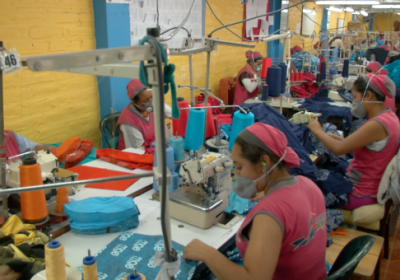
The revolutionary “The Law for Labour Justice and Recognition of Work from Home,” was passed by Ecuador's National Assembly on April 14, TeleSUR English reported on April 15. The law, which was first proposed by President Rafael Correa on November 15 to about 100,000 workers, passed by 91 votes to 29. The law will extend the benefits of the social security system to all Ecuadoreans wishing to be affiliated.
-
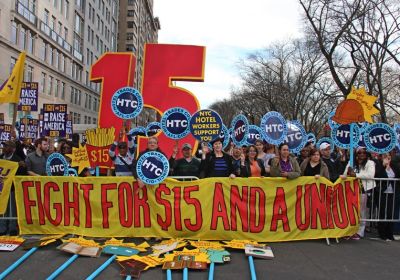
Workers in more than US 200 cities across the US went on strike and joined marches on April 15 “during what organisers claimed was the largest protest by low-wage workers in US history”, the Guardian said the next day. -
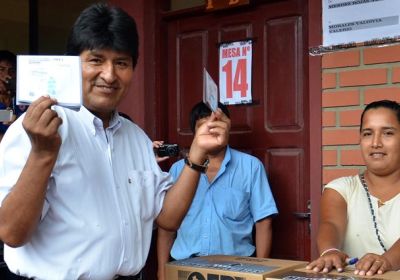
Up to 90% of the electorate voted in Bolivia’s “local” elections on March 29 for governors, mayors and departmental assembly and municipal council members throughout the country. The governing Movement for Socialism (MAS) of left-wing President Evo Morales once again emerged as the only party with national representation. It is by far the major political force in Bolivia, and far ahead of the opposition parties, none of which has a significant presence in all nine departments. -
Ecuador has lifted 1.3 million people out of poverty in the past eight years, a new survey revealed on April 13, TeleSUR English said that day. The results of the first “Survey of Living Conditions in Ecuador” showed that poverty has fallen by one third. It also revealed that 900,000 individuals have been lifted out of extreme poverty, whilst the Gini coefficient, which measures wealth gaps, has dropped 4.8 points since 2006. -
United States politics is witnessing a new sorry spectacle — and one with real consequences for Australia, as well as other nations on the Pacific rim. US President Barack Obama is trying to drum up support from his party to implement the agenda of the huge corporations that sought to block his election and re-election via the proposed Trans-Pacific Partnership (TPP) “free trade” deal involving 12 Pacific rim nations.
-
Tony Abbott’s government is gearing up for another budget, and much has been made about how to raise revenue and what to cut. The government has toned down its previous rhetoric about a budget emergency, which appears to have disappeared despite the government failing to pass most of last year’s budget measures, but it still looks as if they will make the most disadvantaged pay while keeping things sweet for their mates in the big end of town. -
President Nicolas Maduro of Venezuela began his visit to Panama City for the Summit of the Americas with a visit to the impoverished neighbourhood of El Chorrillo to lay a wreath at the monument to those killed by the US bombing of the community during the 1989 US invasion of Panama.
The seventh Summit of the Americas, held in Panama City on April 10 and 11, was widely hailed as a victory for left-leaning and progressive forces in the region, particularly Venezuela and Cuba.

-
Spain's left-wing Podemos party would win a general election if it were held today, a Metroscopa poll released on April 12 found. General elections are scheduled for December. Podemos, which was founded in January last year, came first with the support of 22.1% of those questioned. The opposition Spanish Socialist Workers Party (PSOE) regained lost ground to come second with 21.9% of the vote. The ruling conservative Popular Party (PP) would come third with 20.8% of the vote.
-
The head of the Business Council of Australia (BCA), Catherine Livingstone, has called for a national “conversation” about what the federal government and the business community euphemistically call “economic reform”. Ever in thrall to trickle-down economics, they manage to talk in “doublespeak”, a close relative of the doublethink that George Orwell wrote about in his novel Nineteen Eighty-Four. -
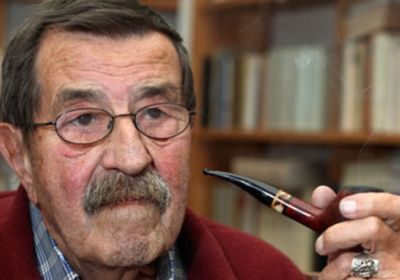
Günter Grass, who was one of Germany’s most important post-war novelists, died on April 13 at the age of 87 in the town of Lübeck, in northern Germany. Grass was perhaps most famous for his 1959 book The Tin Drum, a novel that embodied fantastical elements in its critique of Weimar and Nazi Germany. As such, his style bore resemblances to Latin America’s genre of magical realism. In 1979, the book was turned into an Academy Award winning film by Volker Schlöndorff, which won the Oscar for best foreign film. -
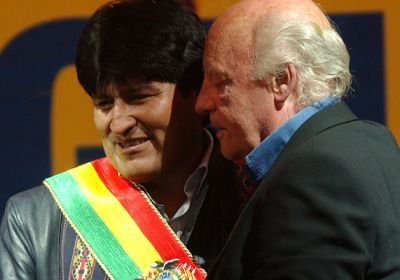
Internationally awarded Uruguayan author and journalist Eduardo Galeano died on April 13 of lung cancer at age 75 in Montevideo, the capital of Uruguay.