
 Photo: CUT.
About 1 million people across Brazil protested on August 20 against right-wing attempts to impeach President Dilma Rousseff.
The marches were joined by Brazil's big social movements, including the Movement of Landless Workers (MST) and the United Workers' Central (CUT), the largest trade union federation in Latin America.
Photo: CUT.
About 1 million people across Brazil protested on August 20 against right-wing attempts to impeach President Dilma Rousseff.
The marches were joined by Brazil's big social movements, including the Movement of Landless Workers (MST) and the United Workers' Central (CUT), the largest trade union federation in Latin America.
-
Photo: CUT.
About 1 million people across Brazil protested on August 20 against right-wing attempts to impeach President Dilma Rousseff.
The marches were joined by Brazil's big social movements, including the Movement of Landless Workers (MST) and the United Workers' Central (CUT), the largest trade union federation in Latin America.
-
 Israeli bulldozers uproot olive trees on Palestinian lands to make way for a separation wall in Beit Jala.
Palestinian farmers have called for international solidarity against ongoing Israeli destruction of their olive groves and livelihoods.
Israeli bulldozers uproot olive trees on Palestinian lands to make way for a separation wall in Beit Jala.
Palestinian farmers have called for international solidarity against ongoing Israeli destruction of their olive groves and livelihoods.
-
 Tianjin residents protest, August 20.
Capitalism with Chinese characteristics is in some strife. This is largely because the government’s attempt to keep growth at an unsustainable 7% a year is fuelled by equally unsustainable debt.
Corporate and local government debt has grown by 50% since 2009, and total debt, which includes household debt, is now close to 187% of GDP.
Tianjin residents protest, August 20.
Capitalism with Chinese characteristics is in some strife. This is largely because the government’s attempt to keep growth at an unsustainable 7% a year is fuelled by equally unsustainable debt.
Corporate and local government debt has grown by 50% since 2009, and total debt, which includes household debt, is now close to 187% of GDP.
-
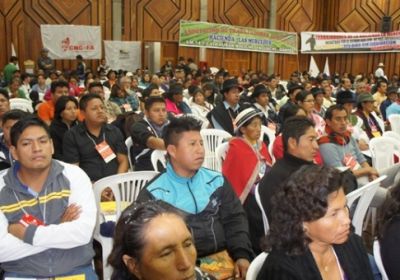
More than 6000 people and 500 group have participated in public meetings on a proposed land law with the government of President Rafael Correa.
-
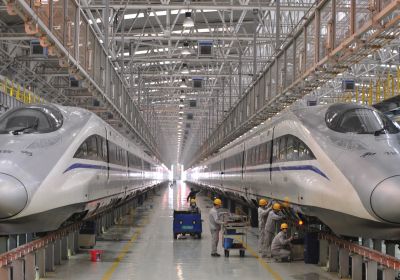
The dramatic slowing of China’s economy has significant consequences for world growth. Official statistics likely overstate China’s official growth rate of 7%.
-
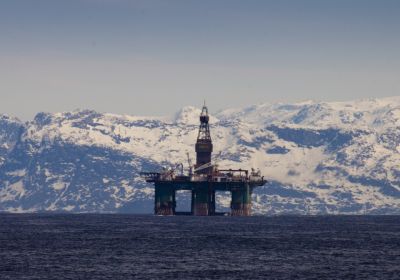
Less than a month after giving the green light for Royal Dutch Shell to start oil exploration in the Arctic, the US government approved a bid from the oil giant to drill even deeper on August 17.
-
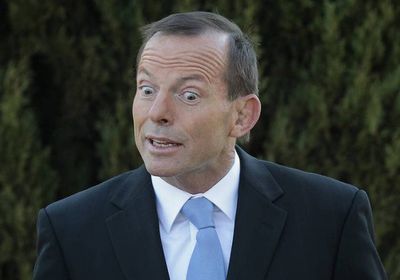
New polls show that had an election been held in mid-August, Tony Abbott's federal Coalition would have suffered a 7.5% swing against it. The Prime Minister’s prevarication on marriage equality and the scandal over entitlements are fueling the dissent.
-
 Vigil of government supporters outside the presidential palace.
After days of anti-government demonstrations, some indigenous groups aligned with the right-wing opposition have vowed to continue protests and strike against President Rafael Correa. The opposition has described its national strike as indefinite.
Vigil of government supporters outside the presidential palace.
After days of anti-government demonstrations, some indigenous groups aligned with the right-wing opposition have vowed to continue protests and strike against President Rafael Correa. The opposition has described its national strike as indefinite.
-
 When it comes to elections in Venezuela, there are at least three things you can usually count on. The upcoming December 6 elections for the National Assembly are no different — even if the result is far from certain. The first is that much is at stake. In a country where the poor majority has sought to advance radical change through popular mobilisations and votes, every election since Hugo Chavez’s successful 1998 bid for president has been transformed into a referendum on the future of the country’s “Bolivarian revolution”.
 -
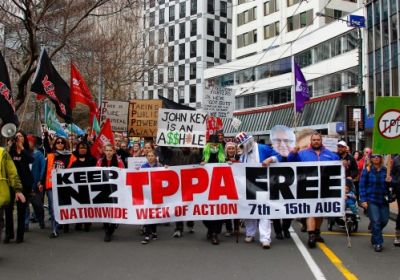
There were huge protests against the Trans-Pacific Partnership held across New Zealand on August 15. About 10,000 protesters marched in Auckland, 5000 in Wellington, 4000 in Christchurch and thousands more in other parts of the country.
-
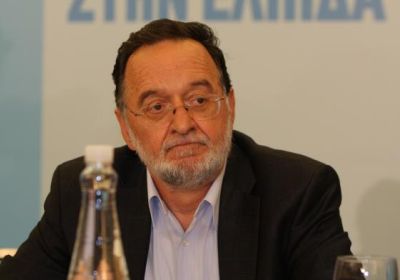 Greek Prime Minister Alexis Tsipras announced Thursday that he will step down and call snap elections for September 20, after facing strong resistance from within his own SYRIZA party. “I will ask the Greek people if they think we have made achievements,” said the prime minister. “You will decide how we will recuperate the Greek economy, with your vote you will decide the future of Greece.”
 -
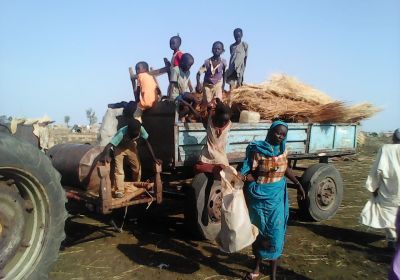 The Sudanese Armed Forces (SAF) and the National Intelligence and Security Services (NISS) have forcibly relocated more than 25,000 Ingessana people from the Bao region in Blue Nile between April and July. The relocations to other parts of the state are part of a deliberate campaign of ethnic cleansing designed to weaken opposition to the SAF’s armed offensive in the region. Blue Nile in Sudan’s south, along with neighbouring state South Kordofan, has been subjected to a concerted SAF aerial and ground assault since 2011.