
The Yemen President Ali Abdullah Saleh is under increased pressure to step down after the defection in recent days of key tribal leaders, government ministers, diplomats and army units. The defectors have pledged support for anti-government protesters.
Tens of thousands of people marched in the capital, Sana’a, on March 25 to demand Saleh step down, AlJazeera.net said that day. However, the article said Saleh gave a defiant speech to supporters, insisting he would only hand over power “to capable, responsible hands”.
-
-

“As rain poured down last night, I thought I can’t possibly go this morning, but then I got on WLCentral this morning and Daniel Ellsberg has been arrested in his 80s outside the White House, so we can brave a little rain!”
-
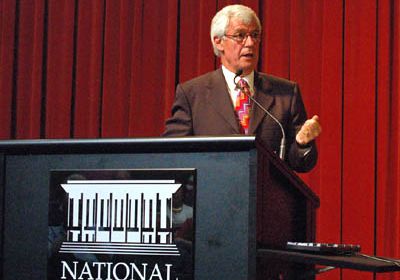
The public forum “Breaking Australia's silence: WikiLeaks and freedom” took place on March 16 at the Sydney Town Hall. More than 2000 people attended. The event was staged by the Sydney Peace Foundation, Amnesty, Stop the War Coalition, and supported by the City of Sydney.
-
Nine refugees held in the Northern Immigration Detention Centre in Darwin staged a protest on top of a building in the centre’s compound on March 15 after they witnessed Serco guards assault another detainee. The refugees — who are Rohingya people, an ethnic minority in western Burma — told refugee advocate Carl O’Connor on March 16 that the protest was sparked by a physical assault on another Rohingya detainee. “One man was refused rice in the mess room,” the refugees said. “Out of frustration he broke a glass. He was then chased down and tried to escape from two Serco guards.
-
Emboldened by the successes of Muammar Gaddafi’s forces in Libya, a number of Arab regimes have escalated crackdowns on pro-democracy protests while the world’s media was focused on the earthquake disaster in Japan. With the exceptions of Libya and Iran, the governments brutally cracking down on their citizens have received minimal criticism from the West. Calls for “restraint on both sides” obscure the fact that it is governments armed with weapons made in the West ruthlessly attacking mostly unarmed people.
-
As the United States and Britain look for an excuse to invade another oil-rich Arab country, the hypocrisy is familiar. Libyan leader Colonel Muammar Gaddafi is “delusional” and “blood-drenched”, while the authors of an invasion that killed a million Iraqis, who have kidnapped and tortured in our name, are entirely sane, never blood-drenched and once again the arbiters of “stability”. But something has changed. Reality is no longer what the powerful say it is. Of all the spectacular revolts across the world, the most exciting is the insurrection of knowledge sparked by WikiLeaks.
-
After ousting former President Zine El Abidine Ben Ali and his supporters from office, the Tunisians have again hit the streets — this time, to demonstrate against the visit of US Secretary of State Hillary Clinton. About 300 people demonstrated at Tunis’ central Avenue Bourguiba against her visit on March 16, Reuters said. The next day, Clinton met with President Foued Mebazaa and Prime Minister Beji Caid Essebsi. About 100 people protested, in the face of dozens of riot police, two military helicopters and a water cannon, Al Jazeera said.
-
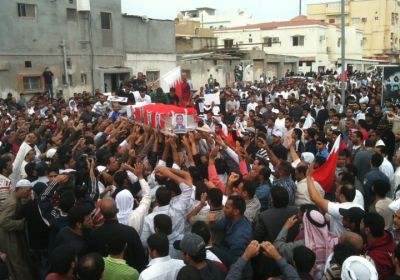
The government of Bahrain unleashed a brutal crackdown and invited in foreign troops on March 14 in an attempt to end pro-democracy protests that have lasted for more than a month.
-
“Ridiculous, counterproductive and stupid” is how one US official described the treatment of alleged WikiLeaks whistleblower Bradley Manning. Manning, a private in the US army, has been held in solitary confinement for nine months at Quantico Marine Corps Brig while awaiting a pre-trial hearing. Breaking government ranks, spokesperson for the US State Department PJ Crowley criticized on March 10 the reported mistreatment of Manning. This mistreatment has included Manning being forced to strip and remain naked in his cell.
-
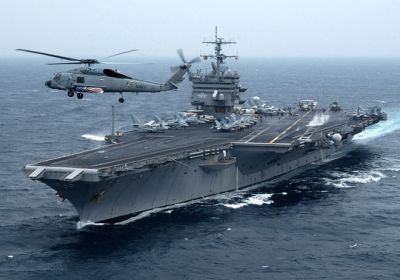 On March 17, the United Nations Security Council (UNSC) “effectively authorized the use of force in Libya”, the UN News Center said that day. “Acting under Chapter VII of the UN Charter, which provides for the use of force if needed,” the report said, “the Council adopted a resolution by 10 votes to zero, with five abstentions, authorizing Member States ‘to take all necessary measures … to protect civilians and civilian populated areas under threat of attack in the Libyan Arab Jamhariya, including Benghazi, while excluding an occupation force.’”
 -
Six activists arrested in Harare, along with 39 others, were finally granted bail on March 16 after a month in jail. The activists were arrested for attending a video screening of footage from the people’s uprisings in Egypt and Tunisia. However, the six need to raise US$12,000 to pay their bail — far more than they can afford. An appeal is being launched internationally to raise the funds needed to pay the activists’ bail (see below for details). The bail conditions require the six to surrender passports and travelling documents. They must report three times a week to the police.
-
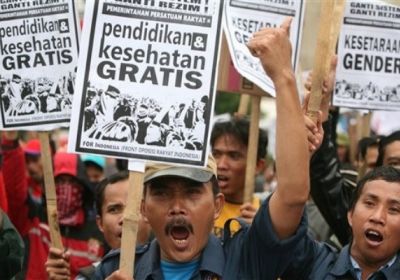 Progressive Indonesian website Berdikari Online said in a March 14 editorial that the recent US diplomatic cables published by WikiLeaks exposing the corruption of the Indonesian government confirmed what most Indonesians already knew. However, it said the leaks have further delegitimised the government of President Susilo Bambang Yudhoyono. In his two terms of government, the editorial said, Yudhoyono has imposed neoliberal policies and acted as a puppet of US imperialism.