
United Nations-African Union joint special representative Ibrahim Gambari said in Khartoum on September 15, that attacks in Darfur were down by about 70% over the past three years thanks to the peacekeeping efforts.
However, a September 16 statement by Hussein Abu Sharati, a spokesperson for Darfuri refugees and internally displaced persons (IDPs), angrily rejected the claims. He said the government “still commits genocide in Darfur” and that people are unable to return to their homes because it is unsafe.
-
-
On October 7, Rene Gonzalez will be released from a United States prison in Florida after serving a 15 year sentence. Gonzalez is one of the Cuban Five — five Cuban men jailed in the US for infiltrating right-wing anti-Cuban terrorist groups to defend the security of the Cuban people. The US government is now trying to stop Gonzalez’s immediate return to his homeland after his release. In the most cynical and mean-spirited fashion, a US court is extending his punishment by making him spend three years on probation in Florida.
-
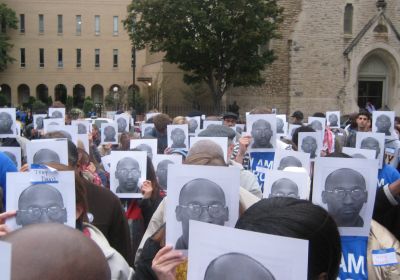 On September 21, death row prisoner in the state of Georgia, Troy Davis, was killed by lethal injection. His execution came despite a campaign from around the world in his defence, including by Amnesty International, and protests outside the prison where he was held and across the US. Last-minute legal appeals in the US Supreme Court failed to stop the execution. Davis was found guilty of the murder of police officer Mark MacPhail in 1989 and sentenced to death.
 -
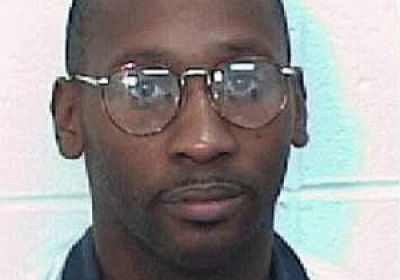 Troy Davis was executed by the state of Georgia on September 21.. Journalist Jon Lewis was present at the execution and told media waiting outside the prison that Davis was “defiant until the very end, defending his innocence until the end”. Davis was convicted of killing off duty Georgia police officer Mark MacPhail in 1989. He was sentenced to death.
 -
Iraqi hotel worker Baha Mousa died after violent and cowardly abuse by British soldiers, a public inquiry in Britain has found. Inquiry chairperson William Gage published his report on September 8. He described the treatment of Mousa and his fellow detainees in the Iraqi city of Basra in 2003 as "an appalling episode of serious, gratuitous violence on civilians which resulted in the death of one man and injuries to others". Mousa was detained along with a number of others by members of the 1st Battalion Queen's Lancashire Regiment after a raid on the Ibn al-Haitham hotel in Basra.
-
The wave of riots in numerous English cities this August did not lead to widespread disruption anywhere in Wales. Despite this, several people in Wales have been arrested for riot related offences, some of whom have been denied bail and handed highly disproportionate sentences. These arrests are not a result of the limited disorder that happened in Cardiff on August 9, which briefly led the BBC to drop the term “England Riots” in favour of “UK Riots”.
-
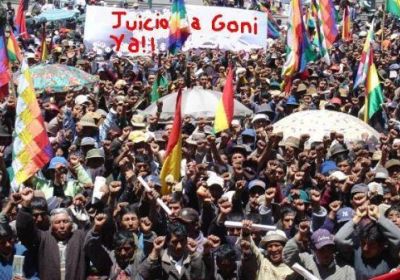 Neoliberal policies “which have fed the growing political disaffection of Bolivia's majority poor, have helped fuel the country's rolling 'social revolution.'" This was how a May 6, 2006, US embassy cable from La Paz recently released by WikiLeaks viewed the powerful wave of struggle that led to the election of Bolivia's first indigenous president, Evo Morales, in 2005. This secret assessment came despite Washington publicly trumpeting neoliberal policies as the way to solve the problems of Latin America's poor.
 -
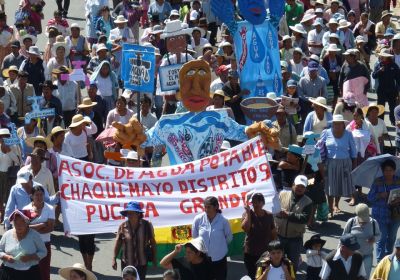 WikiLeaks' release of cables from the United States embassy in La Paz has shed light on its attempts to create divisions in the social and indigenous movements that make up the support base of the country’s first indigenous-led government. The cables prove the embassy sought to use the US government aid agency, USAID, to promote US interests. A March 6, 2006, cable titled “Dissent in Evo’s ranks” reports on a meeting only months after Morales' inauguration as president in December 2005 with “a social sectors leader” from the altiplano (highlands) region in the west.
 -
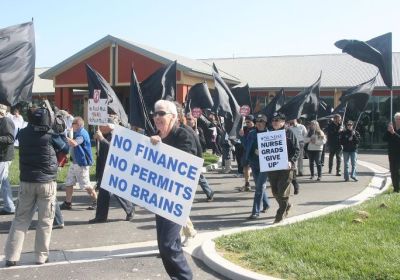 Grassroot activist group Code Green Tasmania released the statement below on September 15 to mark a protest outside forest company Gunns’ Launceston office that day. The previous day, Tasmanian premier Lara Giddings announced her government would give Gunns $23 million in return for the company agreeing to end the logging of native forests. Giddings also said she had cancelled Gunns’ $25 million debt to the state-owned Forestry Tasmania. * * * Forty protesters today staged a peaceful protest at Gunns Ltd’s Lindsay St office.
 -
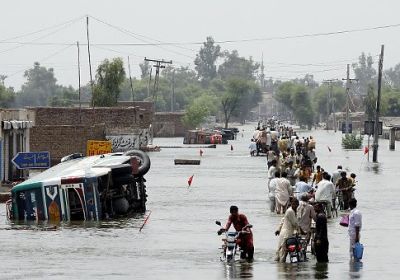
Last year's floods were the worst in Pakistan's history. Twenty million people were affected and about 2000 lost their lives. Now there is record flooding for the second year in a row.
-
 Tens of thousands of Egyptians reclaimed Tahrir square from police on September 9, demanding an end to military trials of civilians and for judicial freedom. Security forces withdrew from the square on the day before. It had been under guard since a sit-in was broken up on August 1. Groups of youth immediately started organising the September 9 rally. They marched through the streets of downtown Cairo demanding an end to the rule of the military council and calling for Cairo's residents to join the protest.
 -
Thousands of Swazi people marched through Mbabane on September 5, burning images of Swaziland's absolute monarch King Mswati III. Protesters sung freedom songs and chanting slogans against his agenda of pay freezes and cuts to student allowances. Striking public-sector staff, who took part in the rally, called for increased taxes on the monarch and his wealthy cronies instead of welfare cuts. The rally kicked off the Swaziland United Democratic Front's Global Week of Action. Over the next six days, workers planned to stage a series of strikes.