-
We live in a time of growing inequality between the rich and poor, when the environment is being destroyed to the point of threatening our very existence, because of a system that prioritises profit. Here are 10 reasons why socialism is the way forward to solve society’s problems. 1. THE DESTRUCTION OF CLASS DIVISION Under capitalism, people are divided on the basis of class. There are the 1%, who own the wealth and the means to produce wealth, and the rest of us, the 99%, who sell their labour to produce profit for the 1%. -
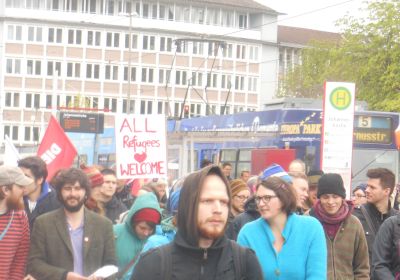
“Too many people have already lost their lives in the Mediterranean sea, more than a thousand this week, which is a major crime against humanity,” The Party of the European Left (EL) said in a April 20 statement. “We need to stop it immediately!” The EL, a group made up of left-wing parties from across Europe, said: “We reject any attempt to solve the so-called 'migration problem' by an increased militarisation.” -
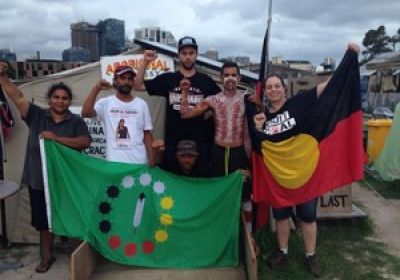
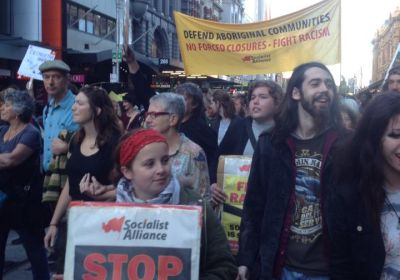
As New South Wales is experiencing some of the strongest winds and rain in several years, the Redfern Tent Embassy is holding fast against strong winds and relentless rain. Redfern locals, and activists have banded together over the past few nights to keep the activist spot at the Block running. The embassy was erected in protest of the Aboriginal Housing Company’s plans to develop on the site , placing th cheap and affordable Aboriginal housing the Block has previously provided. -
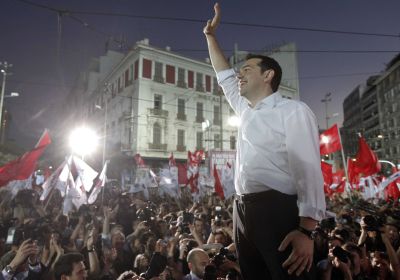
“A high-ranking official close to Greek Prime Minister Alexis Tsipras said the Greek government is not planning to give in to its creditors’ pressures and go against the program they had promised to the Greek people who brought them to power,” GreekReporter.com said on April 16. The comment came amid rising tensions between Greece's SYRIZA-led anti-austerity government and its creditors — the European Central Bank, the European Commission and the International Monetary Fund (IMF).
-
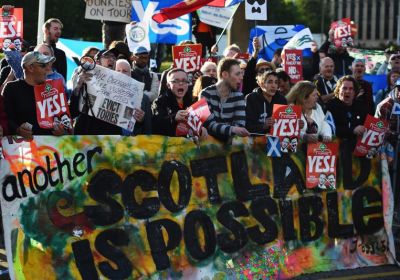
The People’s Referendum: Why Scotland Will Never Be the Same Again by Paul Geoghegan Luath Press 2015 177 pages The British-wide general election for the Westminster parliament scheduled for May 7 looks set to be very close, perhaps even closer than the 2010 election that resulted in the Labour Party being replaced by a Conservative Party-Liberal Democrat coalition government. Opinion polls suggest that neither of the two main British parties, Conservative or Labour, will win enough seats for a majority of their own in the House of Commons. -
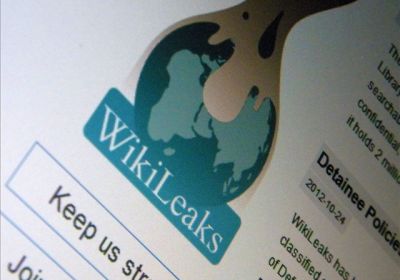
Whistleblower website WikiLeaks published a slew of documents on April 16 casting light on secretive efforts by entertainment and electronics giant Sony to lobby the US government on hot button issues such as cracking down on online piracy. One collection of emails indicates staff from Sony's US subsidiary, Sony Pictures Entertainment (SPE), sought to maneuver around a US$5,000 limit on corporate contributions to political campaigns to contribute to Democratic New York Governor Andrew Cuomo's re-election war chest. -
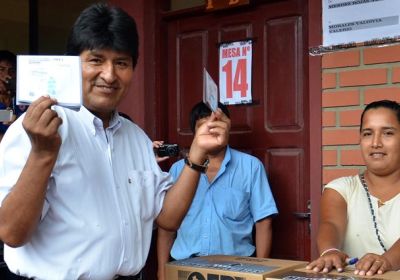
Up to 90% of the electorate voted in Bolivia’s “local” elections on March 29 for governors, mayors and departmental assembly and municipal council members throughout the country. The governing Movement for Socialism (MAS) of left-wing President Evo Morales once again emerged as the only party with national representation. It is by far the major political force in Bolivia, and far ahead of the opposition parties, none of which has a significant presence in all nine departments. -
Sudan’s ruling National Congress Party (NCP) persisted with April 13-15 national elections, despite widespread condemnation of the process from inside and outside the country. Sudanese President Omer al-Bashir, who came to power in a 1989 coup, contested the presidency among 15 mostly unknown candidates. The election was boycotted by opposition groups. They have called for an inclusive consultation process to resolve the country’s substantial problems, establishing a transitional government, and immediately ending the repression of dissent as prerequisites for free and fair elections.
-
Meral Cicek (pictured) is the chair of Kurt Kadin Iliskiler Merkezi, the Kurdish Centre for Women's Affairs in Erbil, in the autonomous Kurdish Region in northern Iraq). Cicek spoke to the Rosa Luxemburg Foundation’s Florian Wilde during the World Social Forum (WSF) in Tunis last month. It has been translated by Leandros Fischer. * * * -
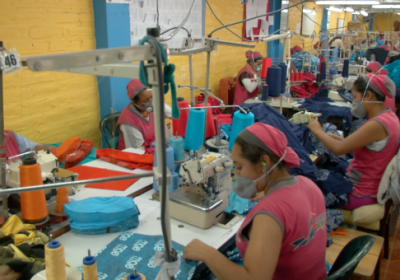
The revolutionary “The Law for Labour Justice and Recognition of Work from Home,” was passed by Ecuador's National Assembly on April 14, TeleSUR English reported on April 15. The law, which was first proposed by President Rafael Correa on November 15 to about 100,000 workers, passed by 91 votes to 29. The law will extend the benefits of the social security system to all Ecuadoreans wishing to be affiliated.
-
President Nicolas Maduro of Venezuela began his visit to Panama City for the Summit of the Americas with a visit to the impoverished neighbourhood of El Chorrillo to lay a wreath at the monument to those killed by the US bombing of the community during the 1989 US invasion of Panama.
The seventh Summit of the Americas, held in Panama City on April 10 and 11, was widely hailed as a victory for left-leaning and progressive forces in the region, particularly Venezuela and Cuba.
-
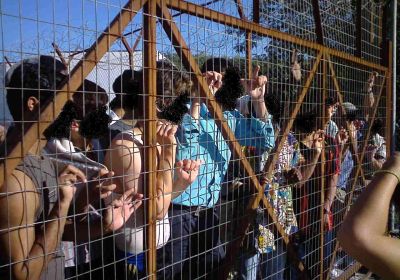
The Greek government said on April 17 that it was releasing detainees in its neglected immigration centers. “The people that were there, were living an indescribable barbarity,” said Greek immigration minister Tasia Christodoulopoulou. According to Christodoulopoulou, many of the detainees were illegally being held indefinitely.