-
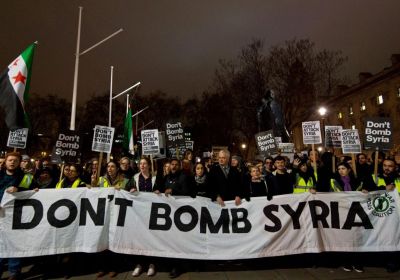
British parliament sat late into the night on December 2 before eventually voting up Prime Minister David Cameron's proposal to join the US-led air war in Syria. Opposition Labour Party leader and veteran anti-war activist Jeremy Corbyn argued strongly against bombing Syria, as did protesters outside parliament. However, many right-wing Labour MPs supported the government. -
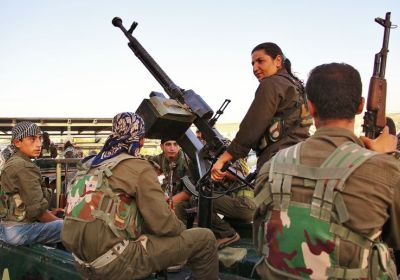
Syria can seem an endless black hole of misery. But in the northern, largely Kurdish region of Rojava, it is also the scene of a profoundly democratic and humanist revolution, which places the rights of ethnic minorities and women's liberation at its centre.
-
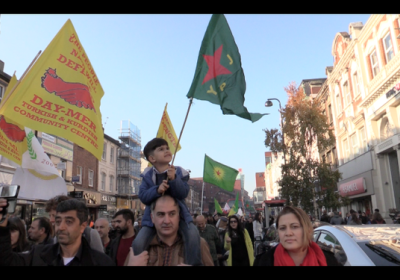
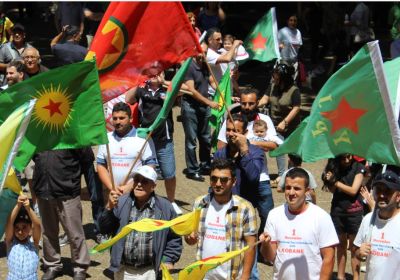
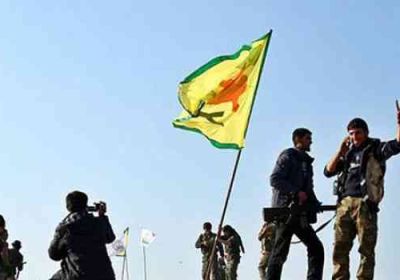
Tens of thousands of people have rallied worldwide to demand greater international support for Kurds battling the Islamic State of Iraq and Syria in the largely Kurdish territory of Rojava in northern Syria. Kobane is a Rojavan town that was the scene of prolonged and devastating conflict between the Rojavan revolutionary forces and ISIS, before finally being liberated in January. The battle for Kobane became symbolic of the Rojavan struggle against ISIS and its allies, such as the Turkish state. -
Tens of thousands of people rallied around the world on November 1 to demand greater international support for Kurds battling the ISIS in Syria. Last year on the same date, hundreds of rallies, demonstrations and actions took place across dozens of countries to show support for Kobane and its people at a time when major players in the region, including Turkey and Iraq, were doing little to help its people cope with the Islamic State siege. -
Turkish Prime Minister Ahmet Davutoglu has confirmed that Turkish forces attacked Kurdish militia in northern Syria on October 25, Morning Star said on October 28. The Kurdish People’s Protection Units (YPG) said the next day that its forces in the border town of Tal Abyad had come under machine-gun fire from across the frontier in Akcakale. -
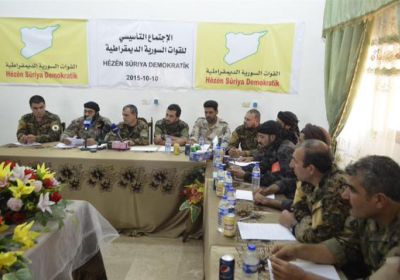
The Democratic Forces of Syria held a founding meeting on October 12 and released a final declaration three days later, Kurdish Question reported on October 17.
-
One year ago, the Islamic State of Iraq and Syria (ISIS) began its brutal assault on the city of Kobane in the largely Kurdish region of Rojava in the north of Syria. The violent fanatics were seeking to destroy the profoundly democratic, multi-ethnic and feminist revolution under way in the liberated autonomous region. -
On October 12, Amnesty International released a report alleging “civilians living in areas of northern Syria under the de facto control of the Autonomous Administration led by the Partiya Yekîtiya Demokrat (Democratic Union Party, PYD) are being subjected to serious abuses that include forced displacement and home demolitions.”
The report said some of these alleged abuses were war crimes.
-
Russia’s current military action in Syria, its first such action outside former Soviet territory, has shocked the world.
Turkish President Tayyip Erdoğan exclaimed, miserably: “Russia has no border with Syria, so why are they so interested in Syria?”
-
Russia followed the lead of Western powers on September 30 and began direct military intervention in Syria – using the same form (air strikes) and the same declared enemy, the Islamic State of Iraq and Syria. Russia's campaign, aimed to shore up the beleaguered regime of Syrian dictator Bashar Assad, will also target the al Qaeda-affiliated Nusra Front and other armed groups fighting the dictatorship. Russia's entry into the fray has dramatically heightened tensions between Russia and the West and further complicated the already confused, multi-sided conflict in Syria. -
The Turkish right wing takes winning elections seriously. The ruling Justice and Development Party (AKP) of President Recep Tayyip Erdoğan is so serious about achieving the result it wants in parliamentary elections on November 1, it is pushing the country to civil war.
-
Turkey has “joined the war against ISIS”, according to US politicians and the corporate media after a July 23 deal between the US and the Turkish government. The deal gives US war planes and drones access to Turkey's Incirlik airbase from which to conduct air strikes in Syria and Iraq.