
United Nations Secretary-General Ban Ki-moon announced on June 22 the formation of a three-member panel to advise him on whether Sri Lanka committed crimes during the last months of its war against the Liberation Tigers of Tamil Eelam, Reuters said that day.
-
-
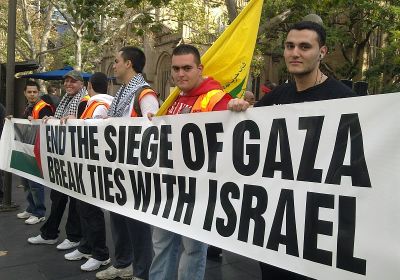 On June 14, Muhammad Juma Abu Wardeh, a 17-year-old Palestinian labourer, was shot and wounded by Israeli snipers along the “buffer zone” in eastern Gaza as he collected materials for a cement plant in Jabaliya, north of Gaza City. Israel’s ongoing blockade against the Gaza Strip has prevented access to raw construction materials, forcing workers to risk their lives to trawl open agricultural areas for resources.
 -
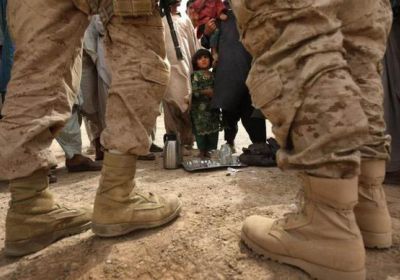 On June 25, ABC News Radio reported 79 occupation soldiers had been killed so far that month, the highest number in any month since the October 2001 US-led invasion. On June 23, US President Barack Obama sacked the commander of US-led occupation forces in Afghanistan, General Stanley McChrystal — but not for the rising body count. The sacking was in response to a July Rolling Stone article in which McChrystal and his aides regularly refer to civilian leaders of the occupying powers (including Obama) using terms such as “clown” and “fucking gay”.
 -
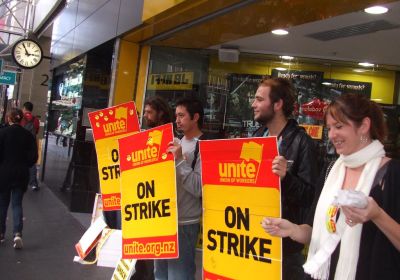
Labour history was made as New Zealand had its first mall workers strike on May 25. Workers in JB Hi-Fi in Albany, organised with the Unite union, went on strike for better pay and against a culture of bullying and intimidation against union members. Unite had already organised the first strike at a JB Hi Fi store on April 16. Unite member Jack Lucas said: “Our manager told me that I would never get a pay rise if I stayed with the collective. There was a lot of pressure put on me to resign.
-
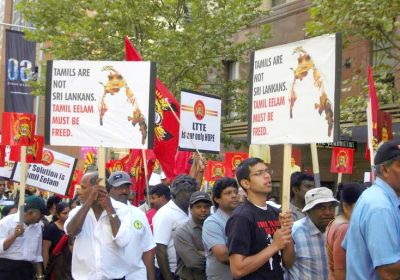 More than a year after its victory over the pro-independence Liberation Tigers of Tamil Eelam (LTTE), the Sri Lankan Army (SLA) continues to hold large areas of land in the predominantly Tamil north and east of Sri Lanka as “high security zones” (HSZ). Many of the Tamil inhabitants who were evicted from these areas to create the HSZs during the decades-long war are still unable to return to their homes.
 -
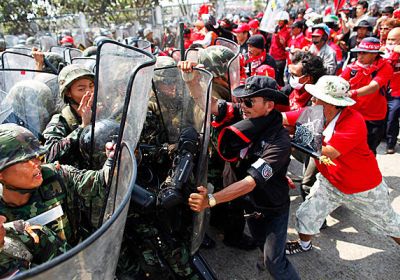 News from Thailand is alarming: hundreds of people detained for violations of the emergency decree, including children, injured people chained to their hospital beds and several assassinations of local leaders of the pro-democracy Red Shirt movement. The country is moving deeper into an authoritarian and military regime. The elite are even considering postponing elections for six years, thus giving Prime Minister Abhisit Vejjajiva the possibility of leading the country for ten years against the will of most Thai citizens.
 -
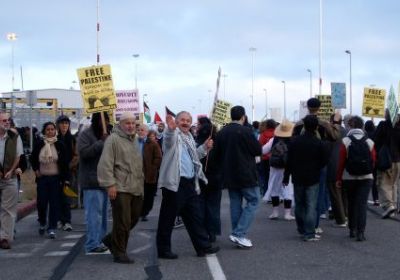 On June 20, US group Act Now to Stop War and Racism (ANSWER) released a statement, abridged below, on the blockade of the docks in Oakland that prevented an Israeli ship unloading its goods as part of the global boycott, divestment and sanctions campaign targetting apartheid Israel. * * *
 -
 The 2010 FIFA World Cup in South Africa began its final round of 16 on June 26. it came amid the unrelenting drone of vuvuzela horns, the knockout of big teams such as Italy and France, and street protests by local residents angry at the 40 billion rand the government has spent on the corporatised event. Meanwhile, South Africa’s poor suffer substandard housing and access to basic services. Football, or “soccer” in Australia, is the “world game”, played by millions of people around the world and watched by hundreds of millions more. But is it truly the “people’s game”?
 -
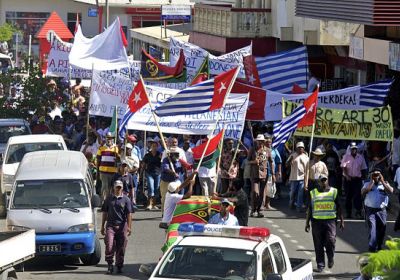 Indonesian military forces have stepped up their campaign of repression in West Papua in recent months. But leaders of the Free Papua Movement (OPM) continue to defy Indonesian demands to surrender. The campaign for West Papuan independence has been amplified by the continuing repression and lack of improvement of living standards under the current “special autonomy” system. An eyewitness report from West Papua Media Announcements (WPMA) posted on Pacific.scoop.co.nz on June 16 described a large military mobilisation in the mountainous Puncak Jaya region in central West Papua.
 -
 A major split over the US blockade of Cuba has emerged between domestic “dissidents” in Cuba and their former partners in Miami. The US corporate media is paying attention to what appears to be a new anti-Cuban strategy. A letter signed by 74 of the “dissidents” on the island calls for an end to Washington’s ban on US citizens travelling to Cuba. On the other hand, most of the Cuban-American members of Congress are fiercely defending the nearly 50-year-old economic blockade in all its forms. The “new contras” are now up against the old.
 -
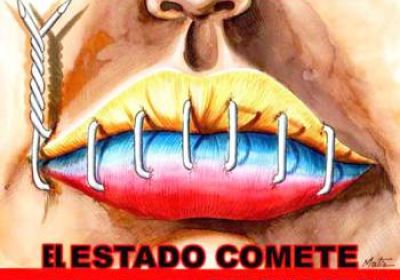 Right-wing candidate Juan Manuel Santos won the second round of the Colombian presidential elections on June 20. This re-affirms Colombia’s position as the US’s chief proxy in the region, playing a similar role to that of Israel in the Middle East. Santos won 69% of the run-off election against Green Party presidential candidate and former Bogota mayor Antanas Mockus. However, IPS said on June 21 that, with just 45% of registered voters taking part in the poll, Santos won with a mere 30% of potential votes.
 -
 The world’s worst ever oil spill is also the biggest methane leak in human history, US government scientists have said. The US Geological Survey’s “flow team” has estimated between 4.5 billion to 9 billion cubic feet of natural gas have escaped from BP’s Deepwater Horizon rig since it exploded in April, Associated Press said on June 19. John Kessler, an oceanographer at the Texas A&M University, told AP the leak was “the most vigorous methane eruption in modern human history”. Scientists think methane makes up 40% to 70% of what is spilling from the damaged BP rig.