-
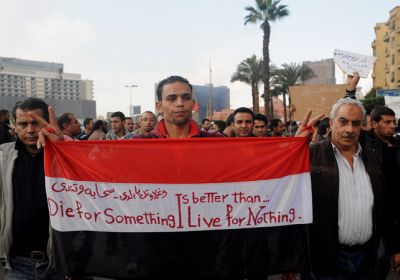
The popular uprising which has swept Egypt over the past two weeks, inspired by the revolt which drove the Tunisian dictator from power in mid-January, is the expression of a people’s power movement in the Arab world which has been 40 years in the making. I have been waiting for this for a long time. I lived in Cairo for six months in the first half of 1967, until the so-called Six Day War forced my family to leave Egypt for Britain. My father was a meteorological scientist working through the United Nations with the Eqyptian agriculture department for a time. -
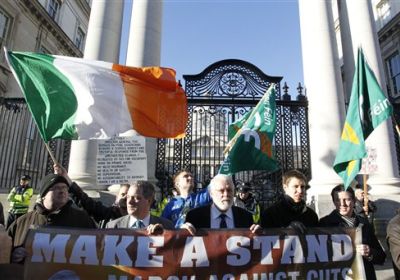
For a decade, Ireland was heralded by the most ardent partisans of neoliberal capitalism as a model to be imitated. The “Celtic Tiger” had a higher growth rate than the European average. Tax rates on companies had been reduced to 12.5% and the rate actually paid by the transnational corporations that had set up business there was between 3 and 4% — a CEO’s dream! By comparison, the company tax rate is 39.5% in Japan, 39.2% in Britain, 34.4% in France and 28% in the US. Ireland’s budget deficit was nil in 2007. In this earthly paradise, everybody seemed to benefit. -
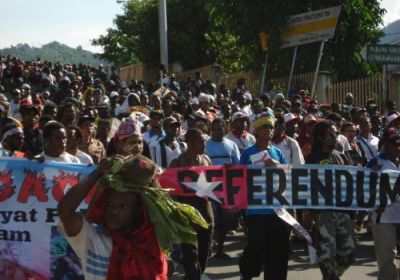
West Papuan refugees in Papua New Guinea have been terrorised and arrested by police, West Papua Media Alerts said on January 28. They were allegedly arrested on behalf of the Indonesian military and local logging interests. Police and soldiers rounded up 79 refugees living in camps around Vanimo, on PNG’s north coast near the border with West Papua, in the early hours of January 23. The soldiers burned down at least 30 refugee houses, destroyed crops and food, and assaulted people, WPMA said. Other refugees have reportedly fled to the jungle. -
Regardless of the outcomes of the Egyptian and Tunisian revolutions, and regardless of whether protests for democracy in Yemen, Jordan and other Arab countries grow into similar uprisings, the Middle East has fundamentally changed.
-
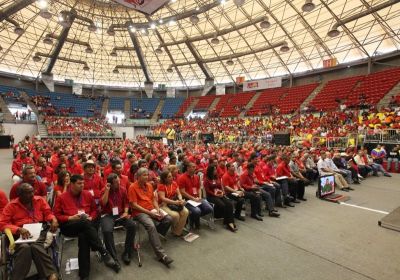
More than 1000 members of the United Socialist Party of Venezuela (PSUV) met with President Hugo Chavez on January 19 and decided on five key strategic lines for the next two years. The discussion included recognition of important weaknesses in the party. Chavez, who is also president of the governing PSUV, presented the document, Strategic Lines of Political Action of the PSUV for 2011-2012, to the “National Assembly of Socialists” in Vargas state. About 1440 party leaders were present. -
Irish Taosiech (prime minister) Brian Cowen resigned as leader of the government Fianna Fail party on January 22. The move came in the midst of a political crisis caused by the Cowen government accepting an 85 billion euro bailout package from the European Union and International Monetary Fund. The package will be accompanied by savage spending cuts that will drastically deepen the austerity imposed on the Irish people in response to the financial crisis that hit the southern Irish state in 2008.
-
David Kato Kisule, described by The New York Times on January 28 as the father of Uganda’s lesbian, gay, bi-sexual and transgender rights movement, was murdered in his home on January 26. Kato was advocacy officer for Sexual Minorities Uganda. The killing came as increasingly violent homophobic tensions continued to escalate in the east African nation. Kato, aged 46, was bludgeoned to death with two blows to the head from a hammer in his Kampala home. The attack was carried out by one or more male attackers.
-
Cuban Revolution leader Fidel Castro said on February 1 that not even the support of the United States will be able to save the Egyptian government. Likewise, he pointed out that for the first time the world is simultaneously facing three problems: climate crises, food crises and political crises. * * * Reflections by Fidel Castro: Mubarak's fate is sealed Egyptian President Hosni Mubarak’s fate is sealed, not even the support of the United States will be able to save his government. -
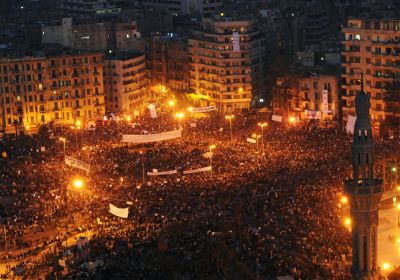
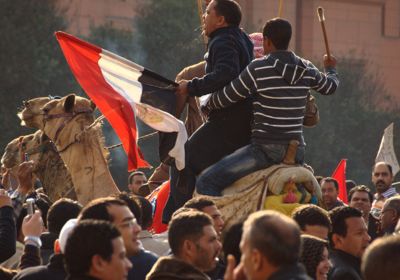
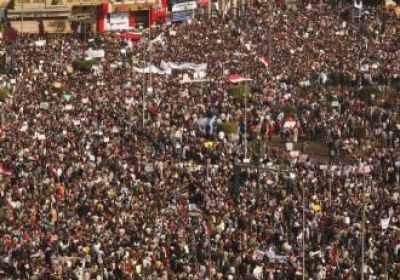
After as many as 2 million people took over Tahrir Square and the streets of Cairo, with millions more across Egypt, on February 1 to demand on end to the US-backed dictatorship of Hosni Mubarak, the regime responded with a violent assault on protesters continuing to occupy the square.
-
All those scenes from Cairo of mass demonstrations look like the perfect expression of the big society. So we can only assume British PM David Cameron wants us to try something similar here. It would certainly encourage more people to take an interest in politics.
-
International Socialist Review editor Ahmed Shawki reports from Cairo on the latest mass protests against Hosni Mubarak--and what the future holds for Egypt's uprising.
-
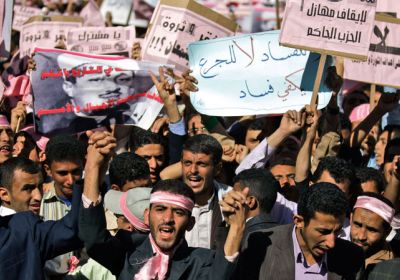
Al Jazeera.net reported on January 29 that new protests had erupted in the Middle Eastern nation of Yemen, which sits at the bottom of the Arab peninnsular, demanding an end to the regime of President Ali Abdullah Saleh. The site reported on January 28 that thousands had also taken to the streets in anti-government protests in Jordan, with people angry over price rises and unemployment.