
Eritreans around the world will mark the country’s national day on May 24. After an epic three-decades-long liberation struggle, in 1991 the liberation forces wrested control of their capital, Asmara, from the occupying Ethiopian army.
Two years later, a new, independent Eritrea was formally established.
But the following years have proved a bitter disappointment for the people of this small (population five million) former Italian colony on the Red Sea.
-
-
The incumbent Conservative Party sailed to victory in Canada’s federal election on May 2 with the first majority government in the federal Parliament since the 2000 election. There was celebration in the boardrooms across the country. The victory caps a decades-long drive by much of Canada’s business elite to fashion a strong national government around a hard-right agenda.
-

May 17 at Plaza del Sol in Madrid. People talk about freedom, democracy and the fight on the streets of Spain. Mostly Spanish-language.
-
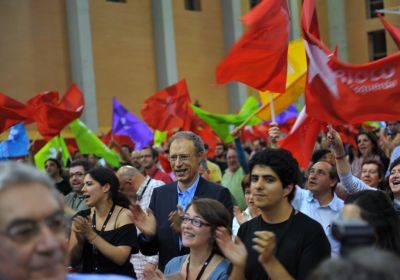 When the 548 delegates to the Seventh National Convention of Portugal’s Left Bloc came together in a vast sports hall in Lisbon onver May 7-8, they had two big questions to answer. The first was what alternative should they propose at the June 5 Portuguese elections to the €78 billion (about $103 billion) “rescue package” negotiated between the European Union, European Central Bank and International Monetary Fund (the “troika”) and the Socialist Party (PS) government of prime minister Jose Socrates?
 -
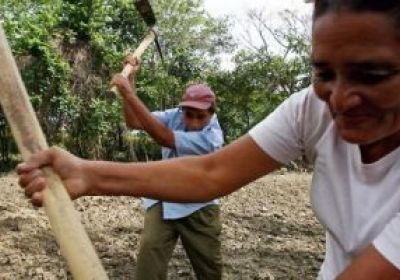
When I asked Alfredo, a dairy farmer and president of the Prolesa milk processing co-operative in Tachira state, what food sovereignty meant to him, he said: “Food sovereignty is not only about being able to produce enough food to feed ourselves, it also means getting to a point where we can export food to other countries.
-
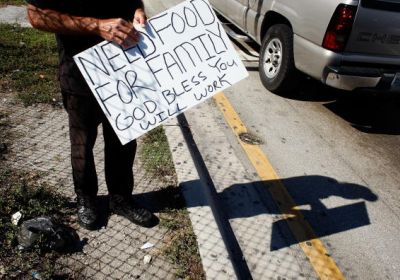 The United States' gross domestic product (GDP) has returned to its pre-financial crisis levels of about US$14.3 trillion. However, this figure obscures a grim social reality. Fareed Zakaria reported in a May 19 Time.com article that while the economy is “producing the same amount of goods and services as in 2007”, it is doing so “with 7 million fewer workers”. Zakaria said: “Usually, productivity gains translate into higher economic output, higher incomes and thus rising employment. That was the experience in the 1990s.
 -
The death of KG Kannabiran (1929-2010) on December 30 came as an anti-climax to an eventful and often turbulent life; in accordance with his wishes his family conducted a private, secular cremation within an hour of his death. For four decades, KG Kannabiran was the most prominent public face in the struggle for human rights, both as a lawyer and activist ― in his home state of Andhra Pradesh and across India.
-
Having arrived back in Caracas after more than two weeks visiting various rural communities, leaders from the National Campesino Front Ezequiel Zamora (FNCEZ) told us that the bodies of two of their comrades, missing since April 12, had been found. Jose Joel Torres Leves and Agustin Gamboa Duran were leading land reform activists in the Comunal City Antonio Jose de Sucre, in Barinas state.
-
Colombian daily El Espectador reported on May 18 that the Colombian Supreme Court of Justice ruled the infamous “FARC files” as inadmissible evidence in court, as they were obtained illegally. The ruling refers to supposed documents acquired from the laptops of Revolutionary Armed Forces of Colombia (FARC) leader Raul Reyes who was killed in the March 2008 Colombian military bombing raid of a guerrilla camp in Ecuador.
-
The following statement was released by the Socialist Alliance in Australia. For more information, visit www.socialist-alliance.org . * * *
-
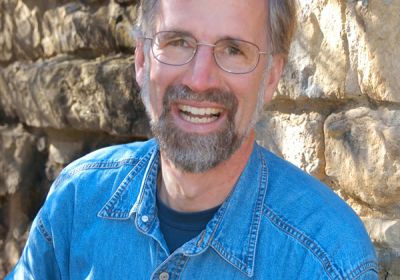 The historian William Cronon has been in the news recently in the US because of assaults on his civil liberties and academic freedom by the Wisconsin Republican Party. This story is likely to be of interest to Green Left Weekly readers because of the collision between university research and powerful corporate interests. However, Cronon's work as an environmental historian since the 1970s means that he deserves to be read by all those who take an interest in environmental issues and ecosocialist politics.
 -
 Tunisia's interim government has again been rocked by protests calling for greater democracy, transparency and for a “new revolution” to defend the gains of the protest movement that overthrew dictator Zine El Abidine Ben Ali on January 14. The protests began on May 5 after Farhat Rajhi, a former interior minister in the post-Ben Ali government, claimed that military and political elites from Ben Ali's regime would carry out a coup d'etat if Islamist parties win a majority in the July 24 constituent assembly elections.