
The new government of Papua New Guinea, led by prime minister Peter O'Neill, has announced plans to revert ownership of minerals and resources to traditional landowners.
Mining minister Byron Chan said in a speech on August 11 the government would seek to give traditional owners legal ownership of resources under the land and sea.
Currently, the PNG government owns anything more than six feet under the surface.
Chan also promised an urgent review of mining and environmental laws, especially those involving deep sea mining.
-
-
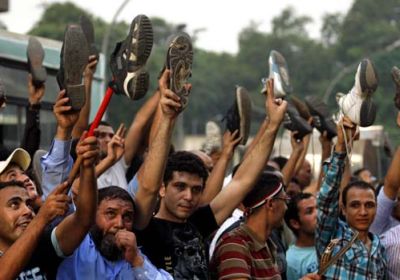
Israel has been rocked by weeks of ongoing protests against high house prices and the cost of living. To avoid being painted as “extremists”, the organisers have avoided the obvious ― the cost of the occupation of Palestinian territory and protecting the illegal Jewish settlers has directly contributed to the Israeli state's neoliberal austerity policies.
-
A further 52 people were arrested at the White House on August 22 for taking part in an ongoing sit-in. They are trying to push President Barack Obama to stand up to Big Oil and deny the permit for a huge new oil pipeline. Obama will decide this year on TransCanada’s permit for the Keystone XL tar sands pipeline. This would send 900,000 barrels a day of the world’s dirtiest oil to US refineries, allowing further development of the Alberta tar sands in Canada. The pipeline would pass through Montana, South Dakota, Nebraska, Kansas, Oklahoma and Texas.
-
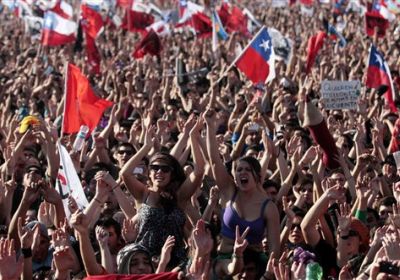
The ongoing student protests in Chile are an unwavering accomplishment aimed at combating the social injustice infecting the country's education system. What started out as a series of peaceful protests in May has become a movement that unites students, artists and much of the general population.
-
A confidential United States cable released by WikiLeaks on July 29 documents the arrest of controversial Malaysian blogger and Malaysia Today editor Raja Petra Kamaruddin. Kamaruddin had been outspoken in his criticism of the government. On September 12, 2008, Kamaruddin was arrested at his residence under the Internal Security Act (ISA) ― which allows for detention without trial. Kamaruddin’s arrest came days after Malaysian Prime Minister Abdullah Ahmad Badawi threatened to use the ISA to repress those purportedly stoking racial and religious tensions.
-
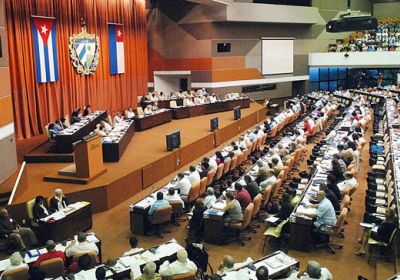 With some exceptions, the powerful international media has ignored a recent Cuban parliamentary bill that would deepen democracy on the island. The reason is obvious: the news is not convenient. The initiative is made within socialist institutions, not in terms of the “transition” that is highly anticipated and promoted by certain hegemonic interests in this world. The idea is to give the green light to an experiment in the new provinces of Mayabeque and Artemisa. If it bears fruit, it would be extended to the whole country through constitutional reform.
 -

There will be no tears for the end of the Gaddafi regime, if that is indeed what we are watching. The Gaddafi regime was a brutal dictatorship and it deserved to be overthrown just as much as that of Ben Ali’s in Tunisia or Mubarak’s in Egypt.
-
 On August 19, a Taliban suicide squad attacked the Kabul offices of the British Council, a government-funded institution that “promotes educational and cultural relations” between Britain and other countries. The August 20 Guardian said at least 12 people were killed, including a New Zealand SAS soldier and three “security contractors” working for multinational security outfit G4S. The company was contracted to guard the offices. Six G4S employees were wounded, including three Nepalese, veterans of the British Army’s Gurkha regiments.
 -
A leaked report from the notorious Indonesian special forces unit Kopassus detailing information about the West Papuan independence movement has drawn attention to Indonesia's brutal occupation of the region. The report is titled “Anatomy of Papuan Separatists” and is believed to have been written in 2009. It profiles opponents of Indonesian rule, including political activists and guerilla fighters. It also listed foreign politicians and journalists who supported Papuan liberation.
-
 Egyptian scholar and researcher Samir Amin spoke with Hassane Zerrouky on the Arab revolts that have broken out this year, for L'Humanite. The interview was translated by Yoshie Furuhashi for www.mrzine.org . Abridged version appears below. What's happening in the Arab world six months after the fall of dictator Ben Ali in Tunisia?
 -
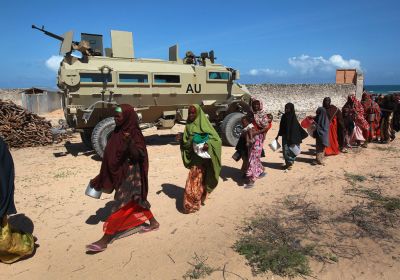 The eastern African nation of Somalia is the site of an unfolding humanitarian nightmare ― a massive famine that has cost tens of thousands of Somali lives in the past few months, the United Nations says. More than 3 million people are affected right now and more than 10 million at risk across the Horn of Africa. The BBC said on August 6 that roughly 640,000 children are acutely malnourished in Somalia, and 3.2 million people need immediate life-saving assistance.
 -
Venezuelan President Hugo Chavez said that his government would nationalise the exploration and exploitation of gold and related activities, AVN said on August 17. Chavez said: "I will soon propose an enabling law so as to begin taking control of the gold area and I expect you to support me, because anarchy rules in this zone, there are mafias, smuggling. "This is a great wealth, one of the world’s largest. There is plenty of gold, precious stones, diamonds, bauxite and iron in Guyana.