
“What the government does, the streets can undo” may seem like just a slogan, but weeks of anti-austerity protests have forced the resignation of Romania's prime minister Emil Boc.
The protests began when a solidarity demonstration with deputy health minister Raed Arafat took a violent turn. Arafat had announced his resignation in opposition to a draft healthcare reform bill that partially privatised the healthcare system.
Riot police used tear gas against protesters, who responded by throwing bricks and Molotov cocktails.
-
-
 “Overall, it is important for the Left to support the ongoing struggles in the revolutions [in the Arab world] as the contradictions of the new regimes continue to sharpen,” Adam Hanieh told Farooq Sulehria. Hanieh is a lecturer in Development Studies at the School of Oriental and African Studies, University of London. He is the author of Capitalism and Class in the Gulf Arab States and a member of the editorial board of the journal Historical Materialism.
 -
Egyptian citizens have accused the police and military of failing to intervene on February 1 to stop clashes at an Egyptian football match that killed at least 74 people. Dozens of angry protesters sealed off Tahrir Square, the centre of the uprising that toppled former president Hosni Mubarak. Others blocked the street in front of the state TV building in central Cairo ahead of planned marches to the interior ministry to denounce the police force.
-
Cutting the working day to a maximum of seven hours, eliminating subcontracted work and raising maternity leave to a period of five months were some of the proposals put forward by thousands of workers across Venezuela for the country's new Labour Law, Socialist Bolivarian Workers’ Central president Will Rangel said on January 31. Venezuelan workers have been mobilising across the country since President Hugo Chavez announced his government would overhaul the country’s Labour Law (LOT). This came after a sustained campaign by workers to have the law changed.
-
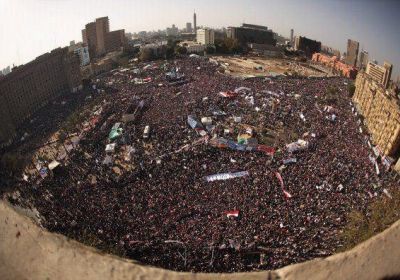
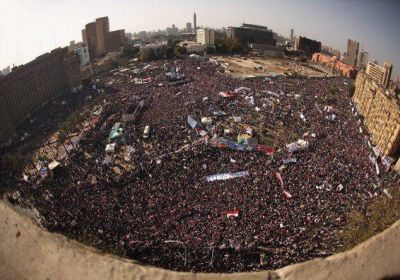 The streets of Cairo were full of protesters on January 27, two days after the first anniversary of the beginning of the revolution on January 25 last. The day was called “Friday of Pride and Dignity". The ruling Supreme Council of the Armed Forces (SCAF) was again defeated by the huge participation of Egyptians in the demonstrations. The protesters' slogans and chants demanded the overthrow of SCAF and direct transition of powers to the parliament. The attempts by SCAF to transform the anniversary of the anti-Mubarak uprising into celebrations were a failure.
 -
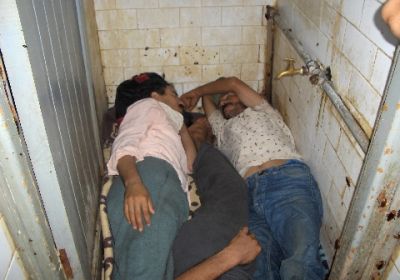 Laayoune is the largest settlement in Western Sahara territory, which has been occupied by Morocco since 1975. The Sahrawi people continue to demand independence after decades of poor treatment under Moroccan rule. Many Sahrawi report being routinely subjected to police brutality and say they suffer widespread discrimination. Activists in Laayoune face a day-to-day struggle with local authorities. The city is touted by the Moroccan government as a regional development hub, but from the ground looks more like an infantry barracks.
 -
Do you remember what happened on February 2 last year? On that day, one year ago, Tahrir Square was attacked by thugs on camels, horses and donkeys. These clashes, which lasted for hours and were watched live on TV all over the world, came to be known as the Camel Battle. It was an unforgettable day in Egypt's 18 days of protests that ended with the toppling of Hosni Mubarak on February 11, 2011.
-
In a big win for environmentalists and the planet, the administration of United States President Barack Obama announced on January 20 that it would deny a permit to build the Keystone XL pipeline to transport oil from the Alberta tar sands in Canada. Anti-tar sands activists in the US and Canada have been seeking to stop the pipeline, planned to transport oil from the Athabasca tar sands in north-east Alberta to refineries in the United States. Mining the Athabasca tar sands is one of the most environmentally destructive practices on the planet.
-
 The Supreme Court hearing in the Julian Assange case has profound meaning for the preservation of basic freedoms in Western democracies. This is Assange’s final appeal against his extradition to Sweden to face allegations of sexual misconduct that were originally dismissed by the chief prosecutor in Stockholm and constitute no crime in Britain.
 -
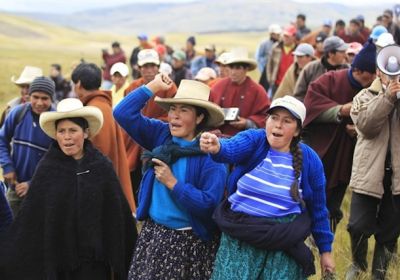 Cajamarca, a town with tragic associations in Peruvian history, is the setting of another devastating imperialist onslaught. In 1532, a band of Spanish conquistadores ambushed the Inca king Atahualpa in the central plaza of this Andean town. The brutal spirit of conquista is alive and well in contemporary Cajamarca, in the form of the US-based Newmont mining corporation, an outfit with a slick PR machine and a very dirty environmental and human rights track record.
 -
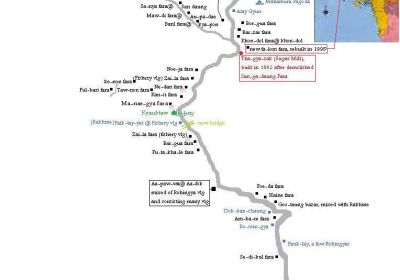 Early in January, the Sa-Ka-Kha-9 military division based near the ancient Falom village seized about 50 houses and a mosque that had been built at the village's edge. It is one of 36 that are Rohingyan (a predominantly Muslim ethnic minority) in the Kyauktaw township in the western Burmese Arakan state along the Kaladan River. These lands had been re-bought from the military by Falom villagers. For 17 years, until re-buying the land, the village consisted of 280 houses and some farm lands. The mosque was demolished by the military in 1995.
 -
 A vast icy pool of Siberian air, the coldest in 50 years, settled over all Europe in late January. At least 150 people without shelter were killed. Yet the suffering from this extreme cold snap will be nothing compared with that of the economic ice age now threatening to entomb Europe’s most vulnerable economies. Over the past fortnight southern Europe’s growth prospects have become increasingly wintry: