
Hamza has memories that no 17-year-old should have.
Last year, he was arrested in the middle of the night on suspicion that he threw stones at Israeli settlers near his school in the West Bank. He was handcuffed, blindfolded and beaten on the way to interrogation.
“They asked me when did I throw stones, and how, what time exactly, at night or in the morning, and who was there with me,” he said.
“When they took me to the prison they put me in a small cell. They used to throw the food through the space between the door and the floor.
-
-
Portgual's largest trade union confederation staged a 24-hour strike on March 22 in defence of workers' rights and against European Union-mandated austerity, the Morning Star said that day. Tens of thousands of trade unionists and their allies rallied in the centre of Lisbon in the afternoon.
-
 In what has been described as New Zealand's most high-profile and bitter industrial dispute since the early 1990s, waterside workers went back to work, after a four-week strike. Auckland's port company agreed to end its lockout of 235 workers on March 30, and pay workers a week's wages for being illegally locked out. The New Zealand Herald reported that Maritime Union president Garry Parsloe told a huge workers' meeting: “You'll all go back to your jobs and until you go back you'll all get paid. “Everything we have done has fallen into place, thanks to your solidarity.”
 -
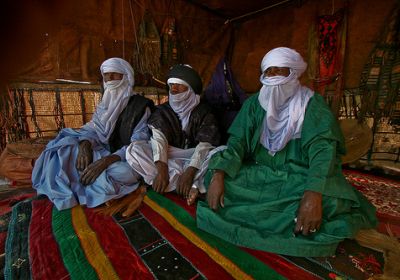 The African country of Mali suffered a coup d'etat against its elected government on March 21. Mali, a landlocked former French colony in western Africa with a population of 15 million, was one month away from a national election. The coup was carried out by the country’s armed forces.
 -
Syria has been rocked by fresh violence despite the agreement of all five permanent United Nations Security Council members and the Syrian government to a six-point peace plan. The plan calls for a “Syrian-led political process to address the aspirations and concerns of the Syrian people”. Unlike previous Western-backed initiatives, the proposal does not call for the resignation of Syrian President Bashar Assad. It calls on the regime to release arbitrarily detained people, ensure freedom of movement for journalists and to respect freedom of association.
-
On March 14 last year, four days before the NATO intervention in Libya, there was a less publicised Western-supported military intervention. A Saudi-led force invaded Bahrain to put down democracy protests against that country’s absolute monarchy. Despite the repression, fresh protests have broken out. Press TV said on March 27 that thousands of Bahrainis rallied calling for the overthrow of King Hamad bin Isa and his Al Khalifa dynasty.
-
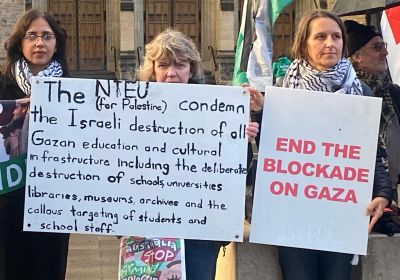
A video put together by Paul Benedek, seeking to expose the dangerous myths behind Invisible Children's viral film "Kony 2012". Is the focus on Kony justified? Should we support the Ugandan army? Will US intevention help? "Kony 2012": viral activism or viral imperialism?
-
The United Nations Human Rights Council had passed a resolution calling for the Sri Lankan government to carry out the recommendations of the Lessons Learnt and Reconciliation Commission. The LLRC was appointed by the Sri Lankan government to appease international concern over atrocities committed by the Sri Lankan Army during its war against the Liberation Tigers of Tamil Eelam.
-
On March 18, Sudan's National Intelligence and Security Services confiscated the entire print run of Al Midan, the Sudanese Communist Party's newspaper. This was the third consecutive issue to be censored by the NISS. The March 18 Sudan Tribune said: "Sudanese authorities routinely confiscate copies of newspapers as a punishment for publishing contents critical of the government. The measure is intended to inflict financial damage on the already hard-pressed papers."
-
On March 17, New York police attacked Occupy Wall Street protesters seeking to re-occupy Liberty Park in Manhattan, leading to 73 arrests. The park was occupied from last September until a violent police raid cleared it in November. In response, OWS protesters occupied Union Square, a public square in Manhattan. It was violently raided by police on March 21. Below is an abridged report from www.occupywallst.org on March 22 on the running battles with police. * * *
-
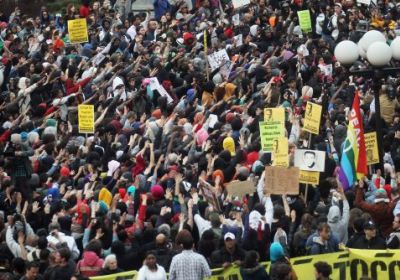 Thousands of people gathered in Union Square in New York City on March 21 for a "Million Hoodie March" to demand justice for Trayvon Martin, as outrage at his racist murder continues to spread across the country and the world. Martin was gunned down in the central Florida town of Sanford in late February as he walked to the home of his father's fiance. His killer was George Zimmerman, a neighborhood watch volunteer who was patrolling a gated community when he spotted Martin.
 -
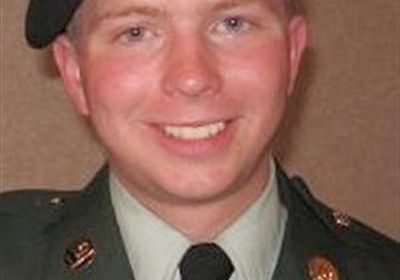 Preliminary court-martial proceedings against United States soldier Bradley Manning have shown the US government's strong desire to make an example of him. Manning is the military analyst accused of leaking hundreds of thousands of secret US diplomatic cables and US military reports from the Iraq and Afghanistan wars to whistleblowing website WikiLeaks. Rather than seek to investigate the serious war crimes revealed in the leaks — and prosecute those responsible — the US government has persecuted Manning.