
Venezuela’s national minimum wage is to rise 32.25% this year, Venezuelan President Hugo Chavez said on April 7.
In a televised address from Miraflores presidential palace in Caracas, Chavez said the wage rise would take place in two phases, ― first on May 1 and then a further rise on September 1.
-
-
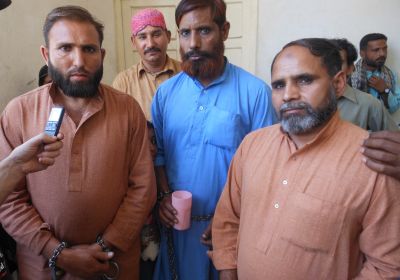 Power loom workers in Faisalabad, a big industrial centre in central Pakistan, launched a series of strikes and demonstrations in mid-2010. Six leaders of the organisation of power loom workers, the Labour Qaumi Movement (LQM), were arrested by the police. The six were charged under anti-terror laws and sentenced to a total of almost 490 years' jail (served concurrently). The jailed LQM leaders are also members of the Labour Party Pakistan (LPP).
 -
About 215,000 public service workers struck on March 27 as a warning to their employers a day before talks between the public sector union and the bosses. Two weeks earlier, 130,000 took part in the first round of strikes. The award being negotiated by the United Services Union (known as ver.di) covers more than 2 million public service workers from national to local level. Ver.di is Germany's second biggest union, with a membership of about 2.1 million people.
-
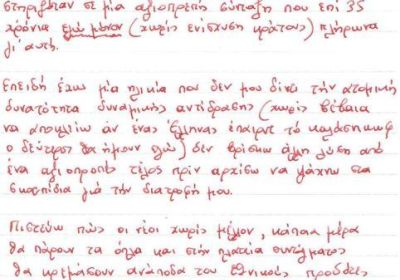
“The Tsolakoglou Occupation government has literally crushed my prospects for survival, so far based on a decent pension, which I alone (without supplementation from the State) financed over 35 years.” That was how the suicide note left by 77-year-old retired pharmacist Dimitris Christoulas began. It likened the current government to the collaborationist regime during the German occupation in World War II, led by Georgios Tsolakoglou. He was arrested and tried for his role.
-
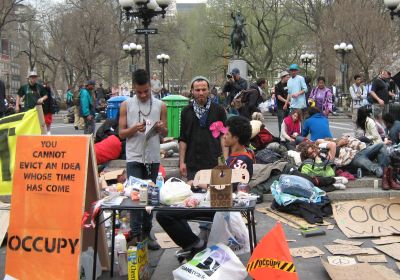 As a visitor, you quickly realise that New York City is unsentimental. New Yorkers are always looking forward. It’s in the nature of Wall Street. No wonder the Occupy movement started here in downtown Manhattan, the financial district. As in all other US cities, there is a dramatic contrast between rich and poor, a Third World within the First World. Yet only 17% of the population thinks this is a problem: most have bought the American Dream that perhaps next year they too will become millionaires. But for many of the poor, it will remain bleak.
 -
 Citizens of the Union of Myanmar, formerly and more commonly known as Burma, went to the polls on April 1 for crucial by-elections that have generated much attention. The by-elections, to fill a few dozen seats in the 664-member parliament, elected leading democracy figure Aung San Suu Kyi to the constituency of Kawhmu, sending the democracy activist into the lower house of parliament. Kawhmu is a small, rural farming town with no paved roads, electricity or running water. It is just one of many impoverished towns that litter Myanmar.
 -

Czech writer Milan Kundera's truism, "the struggle of people against power is the struggle of memory against forgetting", described East Timor.
-
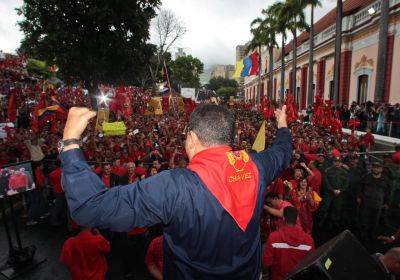 Ever since the US-supported coup attempt against President Hugo Chavez in Venezuela failed in April 2002, Washington has been pursuing a variety of strategies to remove the overwhelmingly popular South American head of state from power.
 -
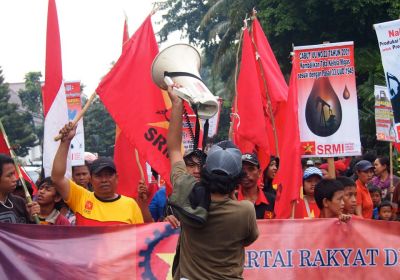 Indonesia has been rocked by an explosion of popular protest against fuel price rises right around the country. Indonesian Police Watch says between March 23 and 26 alone, there were 1063 demonstrations, 16 police stations were damaged and 750 protesters were arrested. Green Left Weekly's Peter Boyle spoke to Dominggus Oktavanius, secretary-general of the Peoples Democratic Party (PRD) of Indonesia on April 4 about the outbreak of mass unrest. * * *
 -
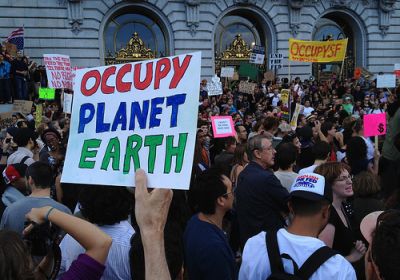 Occupy Wall Street’s original Declaration of the City of New York, last September, listed a litany of issues, from foreclosures and bailouts to outsourcing and cruelty to animals. But it barely mentioned the environment and was silent on global warming and climate change. A resolution passed by consensus at a general assembly (GA) in January more than rectified the omission. It said: “We are at a dangerous tipping point in history. The destruction of our planet and climate change are almost at a point of no return.”
 -
A new report released on March 28 said climate change has already led to changes in the frequency and severity of extreme weather, such as heat waves and heavy precipitation events, in many parts of the world, ClimateCentral.org said that day. The report was released by the United Nations Intergovernmental Panel on Climate Change(IPCC).
-
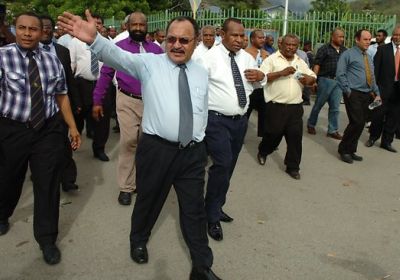 The Papua New Guinean government has backed down in the face of a society-wide revolt over its new power to suspend judges. Prime Minister Peter O'Neill said the law would not be implemented until public consultations were carried out. Thousands of students from the University of PNG rallied in Port Moresby on March 23. Students said in a statement that the law undermines the constitution by removing the separation between the government and courts.