
The illness of Venezuelan President Hugo Chavez has created uncertainty over the future direction of his government, and specifically its commitment to revolutionary change and socialism.
Throughout the 14 years of his presidency, the key to Chavez’s political success was the constant deepening of the process of change, which invigorated the rank-and-file of his movement.
-
-
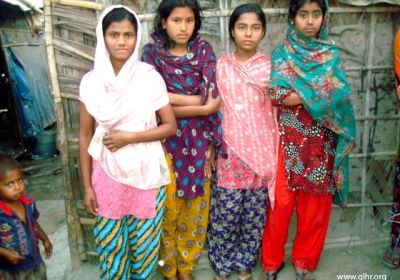 “January 26 was just an ordinary work day at the Smart Fashion Export factory in Dhaka, Bangladesh — until the fire broke out at 2:30 p.m,” Global Labour Rights said on January 29. “As heavy black smoke filled the shop floor, workers rushing to escape found locked exit doors. “Within an hour, seven young women were dead — crushed to death in the panic or asphyxiated by the toxic smoke. Three of them were teenagers, Kohinoor, 15, Razia, 16, and Nasima, 17 years old.
 -
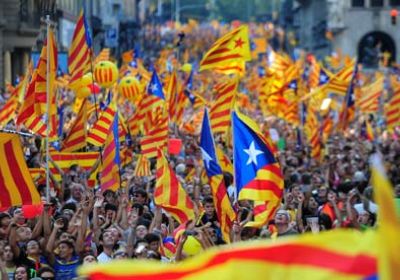 Political tensions within the Spanish state have reached a new pitch after the January 23 declaration by the Catalan parliament of Catalonia’s sovereign right to decide its political future. Antagonism is intensifying between the Catalan and national governments and polarisation continues to rise among and within all main political forces.
 -
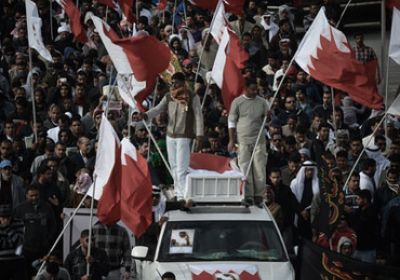 It is now two years since spontaneous mass uprisings against political and economic injustice started to sweep through the Arab countries. This began a period of heightened class struggle known in the West (but not the Arab countries) as the Arab Spring.
 -
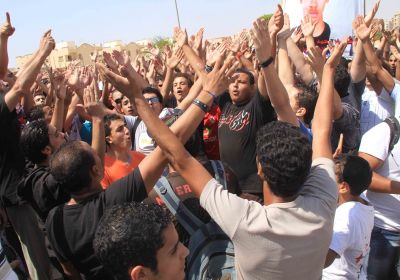 If you want to understand why Egyptian President Mohamed Morsi has declared a “state of emergency” or if you want to understand why the country’s defence minister warned on January 29 of “the collapse of the state”, you first need to understand the soccer fan clubs in Egypt - otherwise known as the “ultras” - and the role they played in the revolution that toppled Hosni Mubarak in 2011.
 -
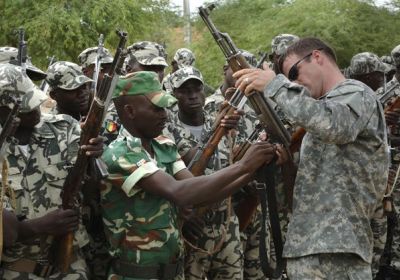
A full-scale invasion of Africa is under way. The United States is deploying troops in 35 African countries, beginning with Libya, Sudan, Algeria and Niger. Reported by Associated Press on Christmas Day, this was missing from most Anglo-American media.
-
 There are awards for everyone. There are the Logies, the Commies, the Tonys, the Theas, the Millies ("They cried with pride") and now the Shammies. The Shammies celebrate the finest sham media. "Competition for the 2013 Gold Shammy," said the panel of judges, "has been cutthroat." The Shammies are not for the tabloid lower orders. Rupert Murdoch has been honoured enough. Shammies distinguish respectable journalism that guards the limits of what the best and brightest like to call the "national conversation".
 -
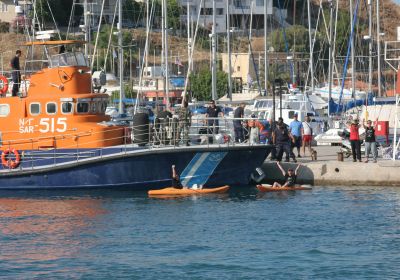 Michael Coleman is an Australian activist in solidarity with the Palestinian struggle who took part in the second “freedom flotilla” in 2011 that sought to break Israel's blockade of Gaza. After Israel attacked the boat he was on, which was carrying humanitarian aid, Coleman was held for a week in an Israeli jail and deported.
 -
Two student leaders from Jaffna University who were detained under Sri Lanka's draconian Prevention of Terrorism Act were released on January 22. Jaffna University Student Union president V. Bavanandan and Science Faculty student activist Shamugam Solomon were taken into custody with two other students on November 29 and 30.
-
The Israeli right-wing may not have lived up to expectations, but the real losers of Israel's national elections on January 22 were the Palestinian people. Though they lost ground to more “centrist” parties such as Yesh Atid and Labor, the right-wing Likud-Beitenu alliance remains the largest bloc in the assembly. Although he will remain prime minister, Benjamin Netanyahu will probably have to compromise with moderates to form a coalition.
-
On Monday 7 January, Foreign Minister Bob Carr announced that Australia has been chosen to head the United Nations Security Council (UNSC) sanctions committees on Iran, and on the Taliban al-Qaeda. The committees are tasked with monitoring the implementation of UNSC sanctions and recommending further measures.
-
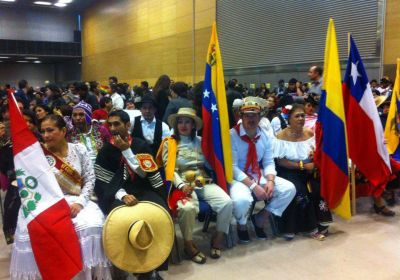 About 7000 people joined the “International Meeting with Social Movements” festival in Barcelona on December 9, which features Bolivia's left-wing President President Evo Morales, the Andean nation;'s first ever indigenous president. The event was largely attended by the Bolivian diaspora, many of whom travelled hours from Madrid and Valencia. However, flags of Catalonia, Palestine and Argentina reflected a broad internationalist gathering.