
Following the implementation of measures to tackle shortages in some basic food and household items, both private Venezuelan media and the government report that the level of shortages is now decreasing.
Shortages hit their highest level in five years in April, provoking a flurry of international media criticism of the government and affecting the popularity of president Nicolas Maduro in the lead-up to the 14 April election.
-
-
For much of the past two years, Israel stood sphinx-like on the sidelines of Syria’s civil war. Did it want Bashar al-Assad’s regime toppled? Did it favour military intervention to help opposition forces? And what did it think of the increasing visibility of Islamist groups in Syria? It was difficult to guess.
-
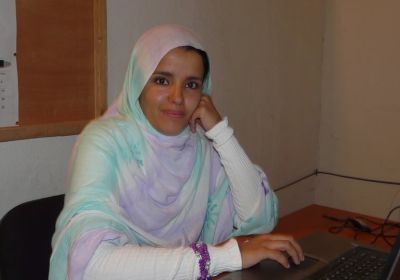 Minetu Larabas Sueidat is a young Saharawi woman living in refugee camps in Tinduf in the south-west of Algeria. Western Sahara, the land of the Saharawi people, has been occupied by Morocco since 1975. In 1991, the United Nations brokered ceasfire between Morocco and the pro-independence Polisario Front that supposed to include a referendum on self-determination, which has still not occurred.
 -
 In his 1928 book Propaganda, Edward Bernays wrote: “The conscious and intelligent manipulation of the organised habits and opinions of the masses is an important element in democratic society. “Those who manipulate this unseen mechanism of society constitute an invisible government which is the true ruling power of our country.” The American nephew of Sigmund Freud, Bernays invented the term “public relations” as a euphemism for state propaganda. He warned that an enduring threat to the invisible government was the truth-teller and an enlightened public.
 -
Representatives of more than 30,000 groups held a historic Popular Assembly in Caracas on June 9 to reinvigorate the Great Patriotic Pole (GPP), which united the governing United Socialist Party of venezuela (PSUV) with pro-revolution political parties and socioal movement groups. The assembly was held to discuss the future of the revolutionary alliance, and specifically the question of unified candidates for the upcoming municipal elections in December.
-
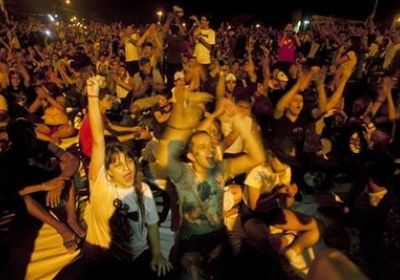 I travelled to Brazil last September to investigate preparations for the 2014 World Cup and 2016 Olympics. It was painfully evident that the social disruption of hosting two mega-events in rapid succession would be profound. Everyone with whom I spoke in the community of social movements agreed that these sports extravaganzas were going to leave major collateral damage. Everyone agreed that the spending priorities for stadiums, security, and all attendant infrastructure were monstrous given the health and education needs of the Brazilian people.
 -
AS PRESIDENT Obama weighs whether to give the Keystone XL pipeline his approval, climate scientists have warned that the volume of greenhouse gases released by the pipeline could push the planet over a climate tipping point.
-
In Venezuela's April 14 presidential elections, called after the tragic death of president Hugo Chavez, the candidate from Chavez's United Socialist party of Venezuela (PSUV), Nicolas Maduro, was elected with just over 50% of the vote. In response, the right-wing opposition cried fraud and organised days of often-violent protests that lead to the deaths of eight Chavez supporters and the torching of PSUV and government offices, as well as health clinics from the government's pro-poor programs.
-
More than 50 people gathered in the Newtown Community and Cultural Centre in Wellington on May 31 and June 1 for the annual conference of the socialist organisation Fightback. The sessions were filled with lively and respectful debate across a number of different perspectives within the left on national and international issues. Fightback 2013 featured speakers from Fightback, the International Socialist Organisation (Aotearoa), the Socialist Party of Australia, and the Australian Socialist Alliance.
-
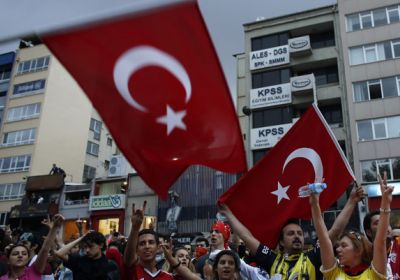 Mark Twain's maxim that "History does not repeat itself, but it does rhyme" is echoing in the streets of Istanbul. The echo is heard in everything that makes Turkey resemble a sequel to the 2011 Egyptian Revolution that toppled assumed President-for-Life Hosni Mubarak. Turkey and Egypt are of course two very different countries with different leaders, different political systems and different histories. But the revolt of the highly intense, usually apolitical "ultra" football-fan clubs must be noted.
 -
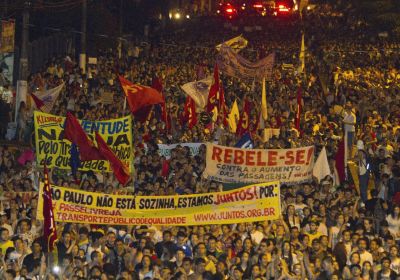 An increasingly vocal movement against fare rises on public transport has swept Brazil in the past two weeks, resulting in street demonstrations in several cities and angry confrontations between protestors and police. In Sao Paulo, the night of June 13 was marked by the fourth demonstration in the space of a week, drawing a crowd of almost 10,000 people. Nearly 130 people were arrested and 105 people were injured, according to march organisers, the Movimento Passe Livre (MPL).
 -

Huge, angry protests have broken out in Brazil over public transport fare rises and poor services. The largest protests in years in Brazil come as large amounts of money is spent in preparation for the 2014 World Cup and 2016 Olympics, which is helping drive up prices and causing wide spread anger