
Iran's presidential election on June 14 resulted in a large victory for self-described moderate, Hassan Rouhani, who received 50.7% of the vote in the first round, a high enough vote to ensure a second round vote was unnecessary.
Rouhani's win led to celebrations in many cities across Iran, as his candidacy had picked up momentum during the campaign. There were big pro-Rouhani mobilisations ahead of the vote.
-
-
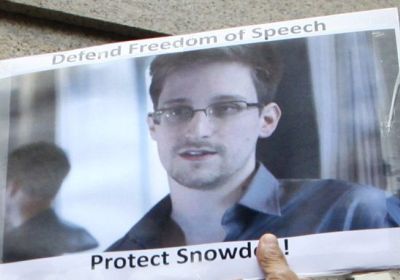
Edward Snowden remained in the transit area of the Moscow airport as of June 26, as Washington stepped up its threats against China and Russia for not turning the NSA whistleblower over to the US.
-
The United States Supreme Court, the nation’s highest judicial body, made two very significant rulings that affect the rights of oppressed peoples across the US on June 26. The Supreme Court voted to strike down the Defence of Marriage Act, which allowed individual states to outlaw equal marriage without any repercussions from the federal government. The court ruled that such a law was unconstitutional, as it repressed the civil rights of a certain section of the population, in this case LGBTI people.
-
The protests and demonstrations over the announced closing of the whole Greek Public Television and Radio Network (ERT) by the Greek government on June 11, are not only about the proposed firing of 2650 workers, nor are they simply a protest about the severe blow to quality broadcasting and entertainment.
-
The Food and Agriculture Organisation of the United Nations (FAO) recognised Venezuela on June 16 as one of 18 countries that had achieved exceptional progress toward reducing the prevalence of malnutrition. Measuring progress from 1990-1992 until 2010-2012, the FAO determined that 20 countries had cut the proportion of hungry people by half, satisfying the first of the United Nations’ Millennium Development Goals (MDG) originally set for 2015.
-
Brazil is in revolt. What started as a protest about a R$0.20 rise (about $0.10) in bus fares has turned into a mass nationwide movement against corruption, the rising cost of living, starved public services and money squandered on sporting mega-events. Events are moving fast with protests growing and spreading to new cities each day, and it is far from clear when or how it will end.
-
Democratic Left pulled its ministers out of Greece's ruling coalition cabinet on June 21 after talks to resume state television broadcasts collapsed. MPs from the party, which makes up the third part of the ruling coalition, were angered by the abrupt shutdown of broadcaster ERT on June 11 and met to decide whether to continue backing Prime Minister Antonis Samaras.
-
In an atmosphere of festive social mobilisation, the National Assembly of Ecuador adopted the Organic Communications Law on June 14, mandated by the 2008 Constitution. It has taken more than four years for the law to come to light. The law is part of a new democratising trend with respect to communications that is taking shape across Latin America. The most significant antecedent for this is Argentina’s Audiovisual Media Law.
-
“In light of news that every day the entirety of telecom giant Verizon’s call system records are handed over to the NSA, news that Occupy Wall Street protest attendees’ cellphones were logged should hardly come as a shock,” said Salon.com on June 7. “It nonetheless bears noting that cellphone metadata of march and rally participants was likely specifically logged, as security expert Steven Ramdam recently noted. “This means that individuals were directly targeted for their engagement with First Amendment-protected activity.”
-
 Sireen Khudiri is a 24-year-old Palestinian teacher, human rights activist and political prisoner. She studied computer science at the Open University in Tubas, on the West Bank. Khudiri is an advocate of the rights of children in the Jordan Valley in the West Bank to have a decent education and has been active in non-violent campaigns against the abuses imposed by the Israeli occupation authorities. Khudiri also writes to publicise the struggle of the Palestinian people for their rights.
 -
Edward Snowden said on June 17 that it was as a compliment to have former US vice President Dick Cheney call a “traitor” for leaking classified information from the National Security Agency. Sowden, who has been charged with espionage by US authorities, made the comment in a June 17 live web chat with investigative journalist Glenn Greenwald hosted by The Guardian.
-
Following the implementation of measures to tackle shortages in some basic food and household items, both private Venezuelan media and the government report that the level of shortages is now decreasing. Shortages hit their highest level in five years in April, provoking a flurry of international media criticism of the government and affecting the popularity of president Nicolas Maduro in the lead-up to the 14 April election.