-
-
-
-
-
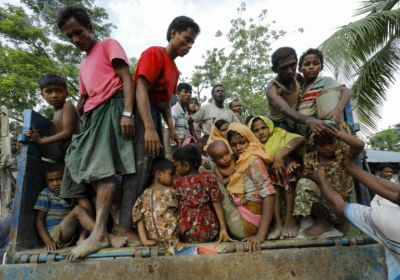
During the early hours of August 25, some 20 to 30 police posts were attacked in Maungdaw, Buthidaung and Rathedaung townships in the north of Rakhine State in Myanmar (also known as Burma). Twelve police were killed along with 16 attackers.
Responsibility for these attacks was later claimed by the Arakan Rohingya Salvation Army (ARSA).
In the two weeks since, the Myanmar military’s response has been brutal, widespread and indiscriminate. While accurate figures are not available, between 400 (military’s estimate), and “around a thousand” (United Nations estimate) Rohingya have been killed by the army.
-
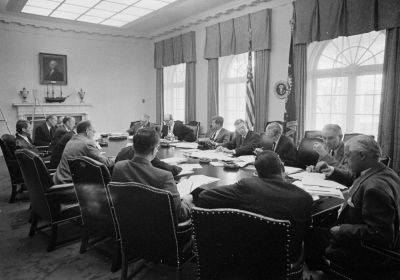
The unthinkable possibility of nuclear war is once again in the headlines after US officials reacted with shrill threats to the North Korean government claim to have tested its most powerful nuclear bomb yet.
This is the latest escalation in a game of nuclear chicken, with calculated provocations on all sides. But to judge from the mainstream media, it is only North Korea’s Kim Jung-un who is driving the world to the brink of a nightmare.
This is false.
-
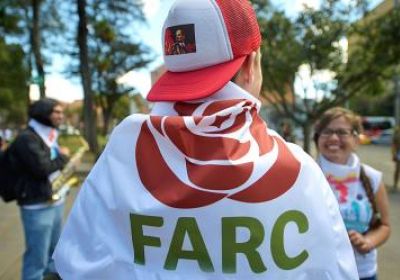
Colombia’s communist army, the Revolutionary Armed Forces of Colombia (FARC), relaunched itself as a political party on September 1 at a concert for “reconciliation and peace” in Bolivar Square, Bogota.
The guerrilla movement, which fought one of the longest civil wars in history until agreeing to a ceasefire with the government last year, confirmed its new name the day before at the end of its five-day congress.
It is now known as the Revolutionary Alternative Forces of the Commons, which will allow it to retain the FARC acronym.
-
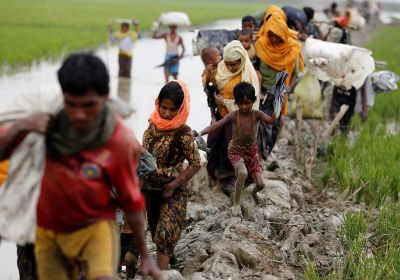
Rohingya are an ethnic Muslim group who have lived for centuries in the majority Buddhist Myanmar.
Many Rohingya came to Myanmar from what is now Bangladesh during the British colonial period (1820s to 1940s) to expand rice cultivation in Rakhine State.
About 1 million Rohingya live in Myanmar, mostly in Rakhine State, making up some 2% of the country’s population and about 30% of the state’s population.
-
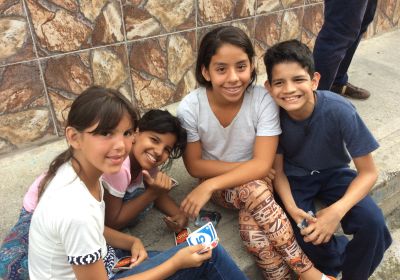
Flying into Caracas, the plane was full of middle class Venezuelans travelling home from Miami. On board, no one spoke to the passenger next to them for fear of finding out they were on the opposite side of the political divide.
In highly polarised Venezuela, these things are best left unsaid.
-
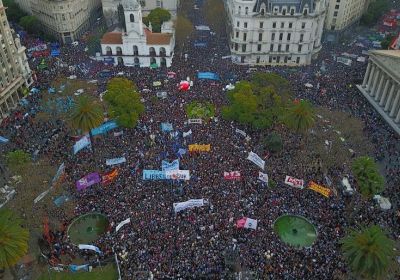
More than 100,000 people filled the Plaza de Mayo in the country’s capital, Buenos Aires, on September 1 to demand the reappearance with life of indigenous rights activist Santiago Maldonado. The rally was held to mark a month since 28-year-old Maldonado was last seen.
Maldonado had been participating in a protest with a group of indigenous Mapuche people on August 1 in Chubut province, in Argentina’s iconic Patagonia region. The protest was repressed by Border Force officers, who witnesses allege were seen dragging Maldonado into a van.
-

The huge devastation, death and misery that Hurricane Harvey wreaked upon Texas and Louisiana has been seen around the world.
Meanwhile, fresh havoc is being wreaked upon the Caribbean and the US’s south-east by Hurricane Irma. In less reported news, more than 1400 people have been killed in recent weeks by horrific flooding in South Asia. The consequences of such disasters caused by extreme weather reveal the intersection of crises caused by the capitalist system.
-
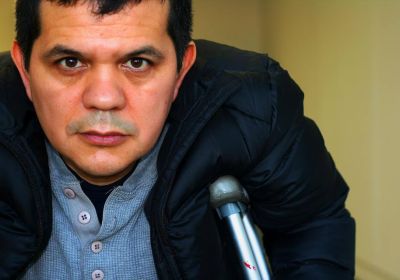
“The US is doing the same thing as it did with the economic blockade on Cuba, to try and suffocate the Venezuelan economy” explained Williams Camacaro, a long-time Venezuelan grassroots activist based in New York.
Speaking to Green Left Weekly in Caracas, Camacaro said “The sanctions will cause a lot of difficulties for Venezuela”, but “the reality is that a lot of time has passed since [the blockade was first imposed on Cuba]. Many things have changed.”
World
World