-
-
-
-
-
-
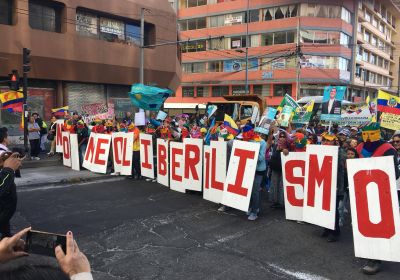
July 5 marked the final breaking point between the increasingly right-leaning government of Lenin Moreno and his leftist predecessor, Rafael Correa, writes Denis Rogatyuk from Quito,
-

In the aftermath of Turkey’s June 24 elections, “won” amid fraud and intimidation by President Recep Tayyip Erdoğan and the alliance between his Justice and Development Party (AKP) and the far-right Nationalist Movement Party (MHP), Muhsin Yorulmaz takes a look at the post-election climate.
-
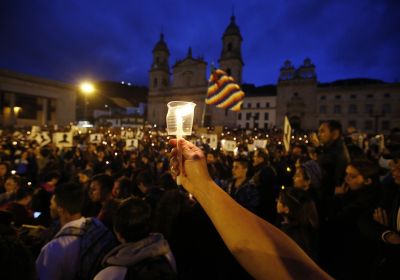
Candlelight vigils were held in Colombia and cities around world on July 6 to demand an end to the political violence that since January has cost the lives of more than 125 social leaders in the South American country.
Political violence against social activists has risen in recent years despite the signing of a peace accord between the government and the leftist guerrilla group, the Revolutionary Armed Forces of Colombia (FARC). According to Colombia’s Ombudsman, more than 311 political murders have been registered since the accords were signed in November 2016.
-
Colombia’s authorities seem unable or uninterested in curbing the wholesale slaughter of the country’s social leaders that has occurred since a peace process came into force, with nine leaders being murdered in the last week of June alone.
The violence is threatening Colombia’s peace process that not only sought the demobilisation of the Revolutionary Armed Forces of Colombia (FARC), but also the increased political inclusion of the left and minorities in general.
-
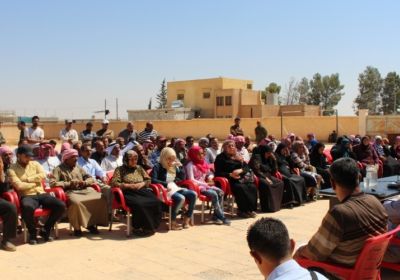
Manjib is an ethnically diverse city in northern Syria. In 2014, it was occupied by ISIS (also known as Daesh). In 2016, the Syrian Democratic Forces (SDF, an alliance of armed groups supporting the model of grassroots democracy associated with the Rojava Revolution) had liberated the city.
Emel Dede is one of the Manbij Turkmen women who lived under the Syrian regime first, and then the Free Syrian Army and Daesh. She has been working for two years now for her future and the future of Manbij. She talked to Bêrîtan Sarya and Axin Tolhildan about this.
-
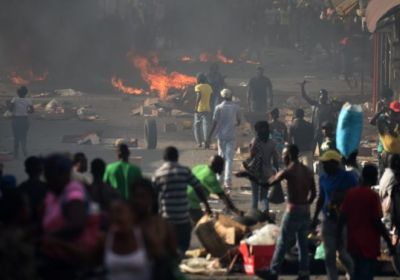
Haiti exploded in early July in a nationwide uprising whose Kreyòl watchwords are nou bouke — we are fed up, writes Kim Ives.
-
World
World