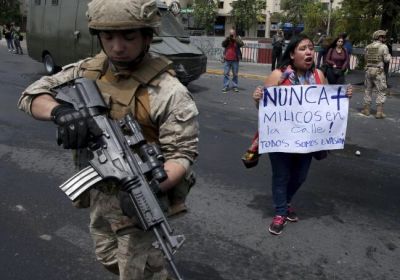
The popular revolt in Chile is rocking neoliberalism's laboratory and exposing the violence of the system, writes Pablo Leighton, in the first of a two-part series.
The popular revolt in Chile is rocking neoliberalism's laboratory and exposing the violence of the system, writes Pablo Leighton, in the first of a two-part series.
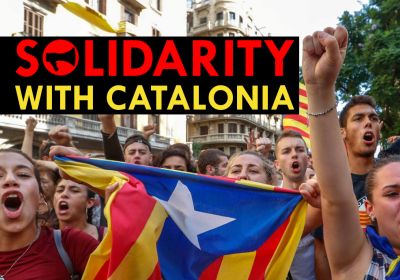
After the Spanish Supreme Court sentenced nine political and social Catalan leaders on October 12 to a total of 99.5 years jail for organising the October 1, 2017 independence referendum, the struggle for the country’s right to self-determination entered a new phase.
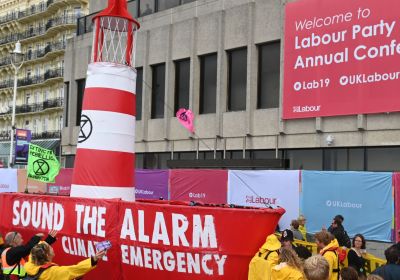
Politics in Britain is in turmoil. An early election will most likely happen as soon as December, or at the latest within a few months — the second early election since 2017.
This election will pit the Jeremy Corbyn-led Labour Party against various parties representing the interests of the 1%, including the governing Conservative party (Tories), the Liberal Democrats and the recently-formed, far right, Brexit Party.
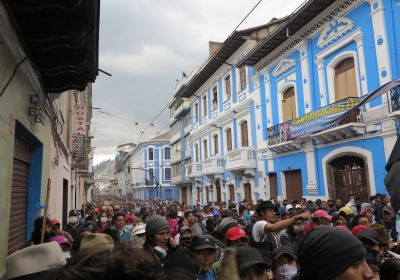
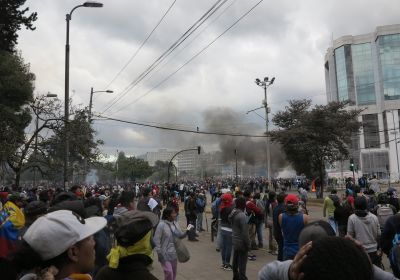
In a victory for the social movement that brought Ecuador’s capital, Quito, to a halt for 11 days, Decree 883 — which had scrapped fuel subsidies — was finally repealed on October 15, writes Jelena Rudd from Quito.

The gap between the 75%–80% of Catalans who uphold their country’s right to self-determination, and the Spanish elites and parts of Spanish society that do not want to know anything about it, was already very wide before October 14.
But on that day, when the Spanish Supreme Court condemned nine Catalan political and social movement leaders to a total of 99.5 years jail, it most likely became unbridgeable, writes Dick Nichols from Barcelona.
The people of Ecuador took part in a massive national strike on October 9, called by a number of organisations against the neoliberal reforms of President Lenin Moreno.