-
Despite all the rhetoric on climate change, both the NSW and federal governments consider it acceptable to allow seismic testing and drilling to explore for gas and potentially oil off Australia's east coast. Despite the potential to develop entire new industries in clean, renewable energy, governments will not or cannot break their addiction to fossil fuels. They have literally placed the entire offshore Sydney Basin on the market for fossil fuel extraction; an area of 6000km², extending from Wollongong to Port Stephens. -
On 20th October a group of students from the Unviersity of Wollongong peacefully occupied the office of the Defence Material Technology Centre (DMTC) on campus.
-
Australia’s big banks would like you to think they care about climate change and the environment. But don’t believe them. A new report by Greenpeace Australia has revealed the “big four” — Westpac, ANZ, Commonwealth and NAB — are investing billions of dollars in Australia’s dirty coal boom. Burning coal for energy is Australia’s single biggest contributor to climate change, making more than a third of the country’s greenhouse gas pollution. Australia is also the world’s biggest coal exporter — and the export trade is growing fast. -
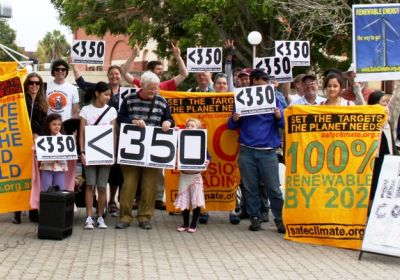
About 40 people attended the launch of a No New Coal campaign by Safe Climate Perth on October 10. The launch took place as part of the 350.org “global work party” — an international day of action involving more than 7000 events around the world. As part of the campaign, activists aim to get 10,000 signatures in 10 weeks on a petition opposing new coal developments in Western Australian. -
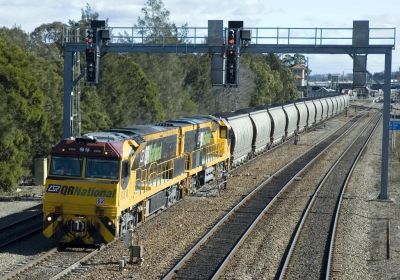
Union and community opposition has firmed against Labor Premier Anna Bligh’s bid to privatise Queensland Rail National (QR), as the government prepares to launch shares in the rail freight corporation on November 22. QR National, a 140-year-old public asset, will be sold off at an estimated $2.50-$3 a share, raising up to $7.3 billion, ABC’s Lateline said on October 11. -
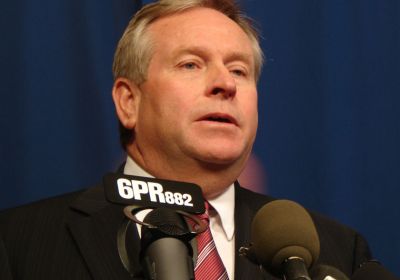
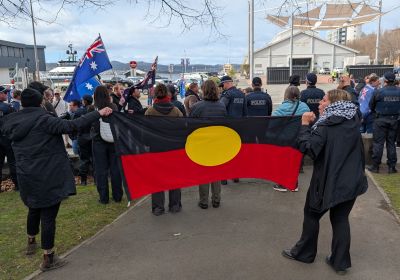
Western Australian Liberal Premier Colin Barnett has said many of the 200 remote Aboriginal communities in WA will be shut down. ABC Online reported on October 14 that Barnett said: "There's no doubt that under policies really initiated by the Federal Government, small, isolated Aboriginal communities were promoted. "The reality is that there's no employment prospects in those areas, or very limited." Barnett’s comments were in relation to the small community of Oombulgurri, where there are 50 residents and 14 public servants.
-
The Australian federal government spends more money on private schools than most other wealthy countries, and spends less than most on public education. A recent report by the Organisation for Economic Cooperation and Development, Education at a Glance 2010, showed Australia gave 16.9% of education money to private schools and 71.9% to government schools. The US spends 0.2% and 99.8% respectively. Most money for private school funding comes from the federal government, which argues that “grants” and “subsidies” make private schools more affordable. -
The campaign against South Australian Labor treasurer Kevin Foley's latest budget is gathering strength. The second rally protesting against the wide-ranging budget cuts — particularly to the public sector — organised by SA Unions, attracted up to 10,000 people on 14 October. Members of the Legislative Assembly were invited to speak, including independents, the Liberal Party and Family First. The campaign has called on the Upper House MPs to block the legislation. -
The elegant, seaside town of Queenscliff on the Bellarine Peninsula in Victoria was once a quiet “sleepy hollow”, according to Chris Johnson, a local resident and public housing tenant for 30 years. But recently the Victorian Office of Housing realised its tenants were sitting on a goldmine. Some tenants have been relocated to shoebox-sized units in less attractive areas. Meanwhile, on October 9, two heritage-listed pilot cottages owned by the department were sold for $1.2 million.
-
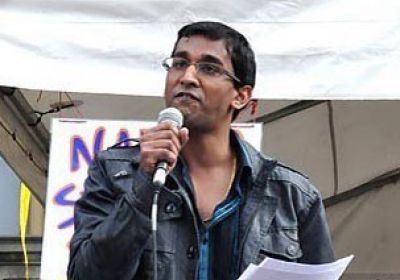
This year is the 15th anniversary of the Nargar Kovil school massacre in Tamil Eelam, the Tamil area of Sri Lanka. On September 22, 1995, the Sri Lankan Air Force (SLAF) bombed Nargar Kovil Maha Vidyalayam schoolyard, which was crammed with 750 children on their lunch break. Reports of the number of children killed vary from 26 to 70. Twelve of the children killed were six or seven years old. One hundred and fifty were injured, including 40 seriously. Twenty-two children had their limbs amputated. Ten of the amputees were under 12.
-
Gippsland unions and community organisations took part in the fourth in a series of “transition jobs seminars”. The seminar took place on October 13 under the auspices of the Gippsland Trades and Labour Council (GTLC) and the Royal Melbourne Institute of Technology (RMIT). It dealt with the region’s current skills base in brown-coal mining, dairy and other industries, and the sort of training needed to skill workers for environmentally sustainable production. -
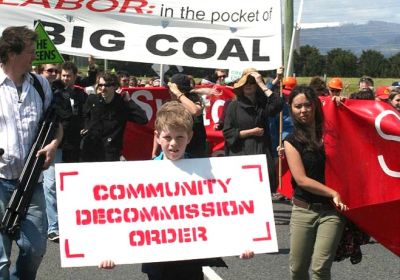
The “Switch off Hazelwood, Switch on Renewable Energy” protest targeted Australia’s dirtiest coal-fired power station, in Victoria’s Latrobe Valley, on October 10. It was successful but muted in contrast to its predecessor in 2009. The mood was no less festive, but this year, there was no climate camp, no mass actions and no arrests.