-
In The Shadow of Gallipoli: The Hidden History of Australia in World War 1 By Robert Bollard New South Publishing, 2013 223 pages (PB), $32.99 Every year, around ANZAC day on April 25, hordes of Australian tourists and backpackers descend on the shore of Gallipoli in Turkey to commemorate the first battle in which Australians took part in World War I in 1915. ANZAC day has experienced a resurgence in popularity over recent years. Governments have helped by promoting nationalistic myths about how the unsuccessful campaign was “where Australia was born”. -

Kerser is one of the best-known acts in Australian Hip-Hop. The south-west Sydney emcee has built a huge following by pitching his hardened battle-rap skills against some of the biggest names in the game.
-
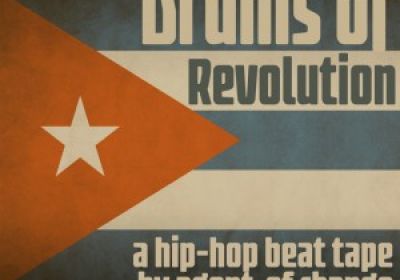
On July 26, radical hip-hop producer Agent of Change released a "beat tape" to mark the 60th anniversary of the start of the Cuban Revolution. Agent of Change, also known as London-based activist and writer Carlos Martinez, said: "The 18 hip-hop instrumentals - with a couple of feature verses from Fidel Castro and Nelson Mandela - celebrate Cuban culture, drawing influence and samples from Cuba’s diverse musical heritage."
-
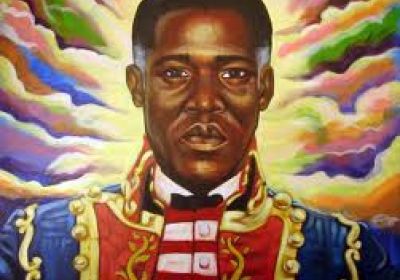
Toussaint Louverture: The Story of the Only Successful Slave Revolt in History; A Play in Three Acts CLR James, edited by Christian Hogsbjerg Duke University Press 2013 222 pp., $47.99 Hegel, Haiti & Universal History Susan Buck-Moss University of Pittsburgh Press 2009 176 pp., $89.99 “I was born a slave, but nature gave me the soul of a free man,” said Toussaint Louverture, the leader of the successful Haitian slave revolt of 1791 to 1804. -
Where on my body are your eyes zigzagging? I die for you!! The hungry bludger gambling With the lice in my empty pocket and still hung over in the Zipper’s ducts Where have muted body parts been penetrated by the drill With shafts as thick as Imperialism Whose begging is never ending, as the “Taleban” that you are? Laughter is wounded, And Samarkand, with a skirt full of pebbles And a hole, the forbidden commodity of the black market. Hole, hole! Oh, so ruthless Fascism has had no mercy To the body, to the rectum, to the shoulder blade, Even to the damp pants -
"Land rights is a load of crap," says Kaylah Truth. They are not the kind of words you'd expect to hear from a radical, politically-savvy Indigenous rapper. But Truth, of militant Murri hip-hop group Impossible Odds, says she has learnt from bitter experience to pursue sovereignty instead.
-
Left-wing Welsh rockers The Manic Street preachers were the first British rock band to tour Cuba and have dedicated songs to radical miners union leader Arthur Scargill.
-
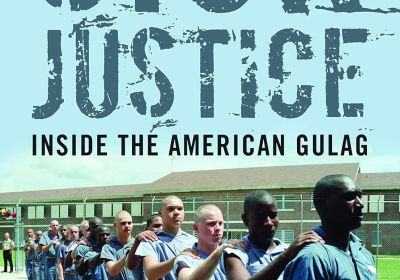
Justice is criminally unjust in the United States. Its predatory bankers and warmongers rarely face charges, but the nation's prisons are packed with impoverished small-time crooks. If the cells were a city, it would be the largest after New York, Los Angeles and Chicago: 2.3 million Americans live behind bars.
-
Musical artist Stevie Wonder vowed to “never perform” in the state of Florida while the National Rifle Association-backed “stand your ground” law is in effect.
-
As if we needed proof that the acquittal of George Zimmerman was -- in the words of Jay Smooth -- going to create more George Zimmermans. A mere hour before that shameful verdict came down, the great Lester Chambers was assaulted, on stage, by a crazed attendee at the Hayward Russell City Blues Festival. What did she assault him for? Dedicating a song to Trayvon Martin. -
Project Republic: Plans & Arguments for a New Australia Edited by Benjamin T Jones & Mark Mckenna Black Inc, 2013 251 pages, $29.99 (pb) If the Australian Republican Movement (ARM) represents those who wish to make Australia a republic, yet the ARM sends congratulations to the Queen last year on her 60th year of rule from London, what hope is there for Australia becoming a royal-free zone? Not much, must be the conclusion, after reading the ARM’s call-to-republican-arms book, Project Republic.
-
One has to hark back to 1968 in Mexico City, when thousands of students and workers marched against the Olympics, to find a sports-related demonstration that compares to the size and militancy of the mass anti-World Cup/Olympic protests taking place in Brazil. As in Mexico City, thousands of people in Brazil took to the streets — and outside of stadiums hosting Confederations Cup matches — raising slogans that connect the spending and austerity that surround these mega-events to a much deeper rot in the nation’s democratic institutions.