-
-
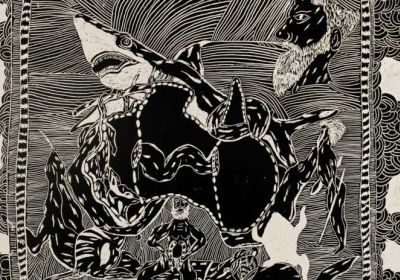
Two very different exhibitions communicate critical evidence about the Aboriginal experience of the 1967 referendum, through which the Australian constitution was amended to remove the racist provisions of sections 51 and 127.
That victory certainly did not end racism in Australia, but opened up the possibility of a broader, unfinished struggle.
-

In June 1940, Winston Churchill described the German rout of the French, Belgian and British armies and the seaborne evacuation of 338,000 troops from Dunkirk in northern France as a “colossal military disaster”.
For a nation whose national identity is intimately bound up with victory and conquest, it is paradoxical that the retreat from Dunkirk has become such an important part of British mythology.
-

Shashi Tharoor’s brilliant speech in 2015 to the Oxford Union on the motion “This house believes Britain owes reparations to her former colonies” went viral, receiving coverage across the world.
Tharoor, an MP for the Indian National Congress, former senior United Nations official, novelist and scholar, has now expanded the argument he made at Oxford into Inglorious Empire.
-

Walking into any souvenir shop in Australia, tourists see the walls lined with Aboriginal designs and artwork. What is less obvious is the fact that most of these items are mass produced in parts of Asia.
Banduk Marika, a Youngu artist, said: “We’re not making those. Indigenous people, even Australians, we’re not making those. Who is making this?”
Aboriginal communities say the answer is corporations.
-

There are few subjects more reliably depressing than the problem of impending climate chaos.
In some ways, the daily dumpster fire that is the Donald Trump administration is a welcome distraction from the increasingly dire predictions of the Hell on Earth awaiting us if we do not drastically and immediately alter our trajectory.
It is worth going to see An Inconvenient Sequel: Truth to Power, however, for the same reason that it was valuable to see it’s prequel, An Inconvenient Truth, over a decade ago: Through these films we can come to understand how the liberal establishment proposes to tackle this, the mother of all capitalism’s crises.
-
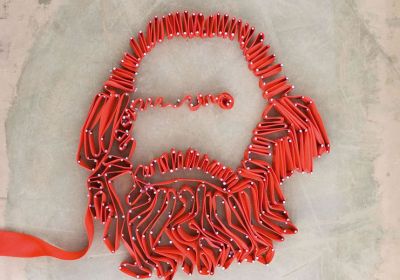
“The general idea of this little book is to understand and explain why Marx will still be read in the twenty-first century, not only as a monument of the past, but as a contemporary author — contemporary both because of the questions he poses for philosophy and because of the concepts he offers it,” French philosopher Etienne Balibar writes in The Philosophy of Marx.
With some reservations, I feel he achieves this goal. It is a thought-provoking book, but it may disappoint readers who seek either an introduction to Marx’s philosophy or a straightforward account of how Marx’s ideas can inspire focused political action in the 21st century.
-
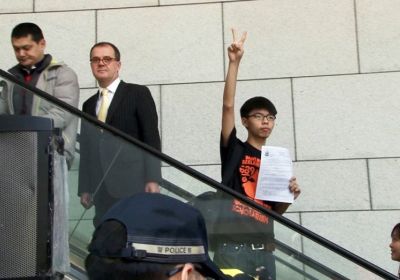
In Joshua: Teenager vs. Superpower, which premiered at the 2017 Sundance Film Festival, director Joe Piscatella depicts Hong Kong pro-democracy activist Joshua Wong and his comrades struggles from 2011-16 against Chinese government attempts to impose control on the former British Colony.
-

-
-
-
Culture
Culture