-
McKillop’s real miracle For those of us in solidarity with East Timor, now Timor Leste, the real miracle is the work of Mary McKillop East Timor, with its people, notably Sr Josephine Mitchell and Sr Susan Conelly. They and others in MMET have done miracles in literacy in Timor, honouring the indigenous Tetum language. -
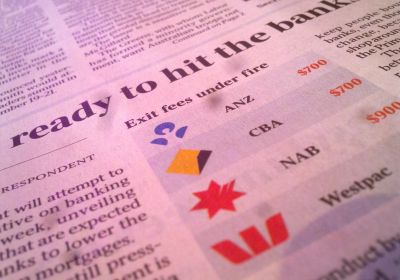
Westpac was the last of the big four banks in Australia to announce its annual profit. It made the biggest — a whopping $6.3 billion, 84% higher than 2008-09. The Commonwealth Bank made the second biggest profit this year, $6.1 billion (up 42%). It was also the first bank to announce it would raise its interest rates for home mortgages more than the latest Reserve Bank interest rate rise. ANZ made $5 billion (up 53%) and NAB $4.6 billion (up 63%). The big four made a total profit of $23 billion. -
Divisions about a carbon price are hardening among Australia’s big businesses. Two distinct positions seem to have emerged in the corporate boardrooms. Some corporate groups are backing the federal government’s call for a price on carbon because they say it will allow for a more certain environment for investment. Nine CEOs of big Australian fund managers and superannuation companies linked to the Investor Group on Climate Change have formed a new panel to lobby the government for a carbon price. -
Socialist Alliance released a statement on South Australia’s budget cuts on November 3. * * * The Socialist Alliance opposes the public service cuts in South Australia. The effects of the global financial crisis have hit South Australia with this budget. But who will pay for it? The bankers and corporate heads that caused it? No, Premier Mike Rann and deputy premier Kevin Foley want the working people of South Australia to pay for the crisis they did not create. -
Fremantle Council is grappling with the rights and conditions of the workers who it expects to implement the city’s projects. I’ve proposed a policy called “Employment Values for the City of Fremantle”. For supporters of workers’ rights, the policy is straightforward and modest. It seeks to entrench the following principles: 1. Respecting the right of workers to union organisation and representation. 2. Limiting the use of fixed-term contracts and creating a guaranteed path to permanency. 3. Remunerating employees on the basis of equal pay and conditions for work of equal value.
-
Prime Minister Julia Gillard used a series of meetings with Asian leaders at the UN Regional Summit on October 30 to lobby for her government’s proposal to build a “regional” detention centre for refugees in East Timor. She met with Vietnamese President Nguyen Minh Triet, Indian Prime Minister Manmohan Singh, Prime Minister Bouasone Bouphavanh of Laos and President Benigno Aquino of the Philippines, the October 30 Australian reported. She also met with United Nations secretary general Ban Ki-Moon, who “noted” her proposal — the only outcome reported. -
Mining magnate Andrew “Twiggy” Forrest had an opportunity on ABC’s November 1 screening of Q&A to defend his record on Aboriginal employment. He didn’t do very well. “You can see that through Generation One, a real challenge to fill those jobs, because we've proven for all time that corporate Australia — in fact every Australian — isn't racist”, Forrest said. “We do love our first Australians. We do want to help them as much as we can but we can do it without just throwing money, and I believe I could do more.” -
Phil Golby was the president of the Port Curtis and Hinterland branch of the ALP until October 20. Then, along with five leading members, he publicly resigned to protest against the Queensland Labor government’s proposal to sell off public assets despite mass opposition from rank-and-file ALP members.
-
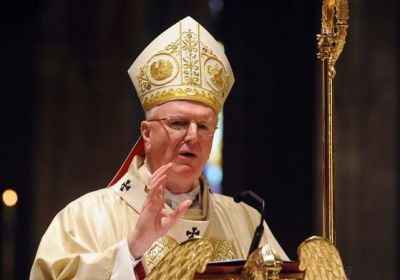
Melbourne Catholic Archbishop Denis Hart is at it again. In 2004, he told a woman who had been sexually abused by a priest to “go to hell, bitch”. In 2009, he unsuccessfully attempted to pressure Father Bob Maguire, a progressive Melbourne icon, to retire from his local parish. -
Corporations trying to construct a gas processing hub at James Price Point “might have a bit of difficulty getting their power plant built” if Premier Colin Barnett completes compulsorily acquiring the Aboriginal land, WA Australian Manufacturing Workers Union state secretary Steve McCartney told a Fremantle Socialist Alliance forum on October 28. -
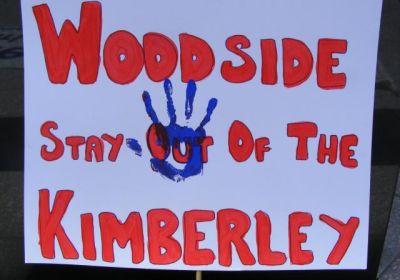
On September 2, the Western Australian government moved to compulsorily acquire over 2500 hectares of pristine wilderness on James Price Point, 60 km north of Broome on the Kimberley coast. The land grab was to make way for a $30 billion liquefied natural gas (LNG) processing precinct. Premier Colin Barnett described the decision as “compulsory acquisition of unallocated Crown Land”, on ABC Kimberley radio that morning. Barnett cited delays and costs to the tax payer of ongoing negotiations with the Kimberley Land Council (KLC) as the main reasons for initiating compulsory acquisition. -
How much is QR National worth? With the sell-off of the massive freight and rail infrastructure part of Queensland Rail launched on October 10, will the “investment community” here and overseas gobble up at least 1.46 billion of the 2.44 billion shares on offer at between $2.50 and $3? If it does, the float will be worth between $6.1 billion and $7.32 billion for Queensland’s coffers (including at least $1.525 billion in QR National shares) and QR National’s managers, like those of Goldman Sachs and Merrill Lynch, will have “earned” $65 million in fees.