
Venezuela foreign minister Nicolas Maduro said on June 2 that Venezuela’s announced cancelling of Haiti's debt of US$395 million with Petrocaribe was now official.
Petrocaribe is a program under which the Venezuelan government offers discounted oil, to be paid back over long-term low-interest loans, to Caribbean and Central American nations.
Maduro made the announcement after the World Summit on the Future of Haiti. The summit was held in the Dominican Republic with the participation of representatives from 50 countries.
-
-
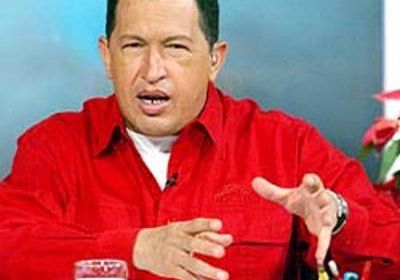 Bolivarian Republic of Venezuela Ministry of People's Power for Foreign Affairs Caracas, May 31, 2010 The President of the Bolivarian Republic of Venezuela, Commander Hugo Chavez, emphatically condemns the brutal massacre perpetrated by the State of Israel against the members of the Liberty Flotilla, as a result of the war action started by the Israeli Army against defenseless civilians, who tried to carry humanitarian aid supplies to the Palestine people of the Gaza Strip, who are victim of the criminal blockage imposed by the State of Israel.
 -
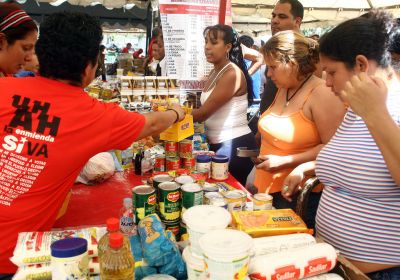
 To guarantee access to essential foods amid price inflation and supply shortages in some items, the Venezuelan government recently nationalised a major flour producer, granted low-interest credits to small and medium-sized producers, opened new subsidised food markets, sanctioned price speculators and hoarders, and is in the process of reforming its land reform law.
 -
 Australia Venezuela Solidarity Network statement: The Dateline program “Power politics”, aired on SBS TV on May 23, 2010 (and on SBS2 on May 24) was one of the most blatantly biased reports on Venezuelan politics yet to be aired on Australian TV. The anti-Bolivarian line unashamedly pushed by reporter David O'Shea mirrors (in fact was shaped by) the most right-wing of Venezuela’s opposition parties.
 -
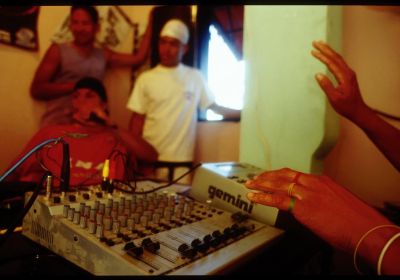 Sergio Arriasis is the head of the office of strategic development for Vision Venezuela Television (ViVe), a government-funded channel inaugurated in 2003. Arriasis is in charge of future planning and development of its communications. Coral Wynter, a Green Left Weekly journalist based in Caracas, spoke with Arriasis about the struggle to counter the private corporate media in Venezuela, and create a radical alternative. How is ViVe different from other TV channels?
 -
 In recent weeks, local and international media have attacked the left-wing Venezuelan government over alleged “economic woes”. Pointing to Venezuela’s inflation rate — the highest in Latin America — and an economy that shrank 3.3% last year, the private opposition media is raising fears of a serious economic crisis. These same media outlets, which have been predicting the fall of President Hugo Chavez for years, argue recent government actions will worsen the situation. Venezuelan business federation Fedecamaras warned on May 5 that Venezuela faces an “economic and social crisis”.
 -
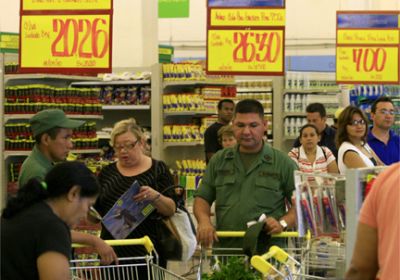 In further moves to strengthen the state’s role in the economy, Venezuelan President Chavez announced on May 11 the creation of a publicly owned import-export company as part of a broader plan to combat “the hegemony of the bourgeoisie”, speculation and inflation. Despite price controls and a fixed exchange rate, inflation reached 25.1% in 2009 — the highest in Latin America. Central bank figures reported inflation climbed 5.2% in April (double that of March), bringing accumulated inflation for 2010 up to 11.3%.
 -
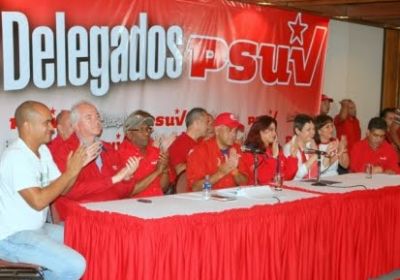 The May 2 internal pre-selection of United Socialist Party of Venezuela (PSUV) candidates for the September 26 national elections was an example of the mobilising force of this mass party in construction. More than 2.5 million party members participated. This demonstrated the PSUV is the largest national political force, and highlighted its democratic and participatory nature. The participation rate was greater than the 2.3 million people who voted to pre-select PSUV candidates for governors and mayors in 2008.
 -
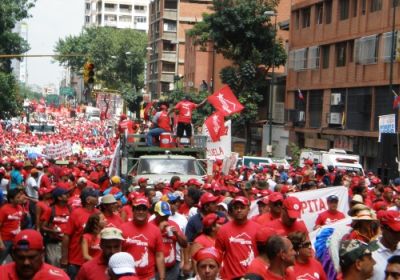
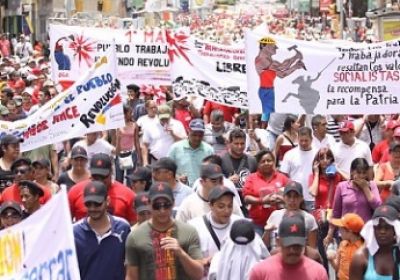 Venezuelans staged a big demonstration in Caracas on May one to mark the international workers’ day, Venezuelanalysis.com said. President Hugo Chavez also announced a 15% wage increase and broader social security entitlements. “While there were no official or police estimates, various participants in the march told Venezuelanalysis they estimated that ‘hundreds of thousands’ of people turned out, celebrating the achievements of the Bolivarian revolution and its promotion of ... better life conditions for the poor majority.”
 -
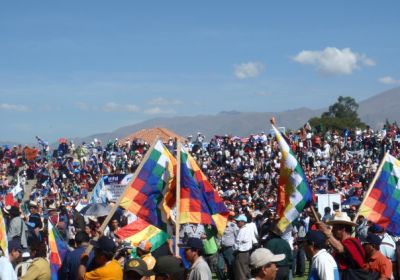 In the Cochabamba football stadium on April 22, diverse indigenous peoples paraded around the track, thousands of local peasants sat in the stands, and thousands more activists from around the globe waved flags and chanted on the field. A common sentiment flowed through the crowd: something historic had occurred over the previous three days during the April 19-22 World People’s Conference on Climate Change and the Rights of Mother Earth organised by the Bolivian government in Cochabamba.