
Venezuelan President Hugo Chavez said that his government would nationalise the exploration and exploitation of gold and related activities, AVN said on August 17.
Chavez said: "I will soon propose an enabling law so as to begin taking control of the gold area and I expect you to support me, because anarchy rules in this zone, there are mafias, smuggling.
"This is a great wealth, one of the world’s largest. There is plenty of gold, precious stones, diamonds, bauxite and iron in Guyana.
-
-
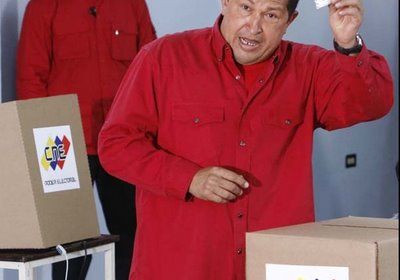 In early July, Venezuela’s Social Investigation Group XXI (GIS) released new comparative data on electoral fairness in the country compiled by the Canada-based Foundation for Democratic Advancement (FDA) which found Venezuela’s elections to be “exceptionally fair, and thereby highly democratic”.
 -
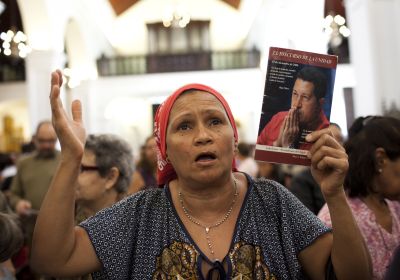 No sooner had information come out that Venezuelan President Hugo Chavez was undergoing surgery in Cuba than the international media was full of speculation and rumours regarding his imminent demise. Projecting their hopes that an illness could succeed in removing Chavez where military coups and assassination attempts had failed, the right-wing Venezuelan opposition went into overdrive. They demanded the president step down and hand over power to the vice president.
 -
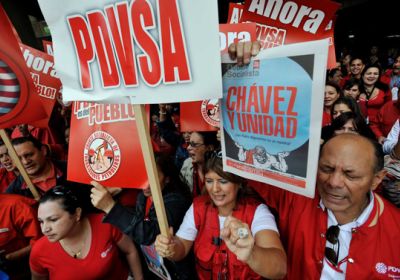 The statement below was released on May 28 by the Australia-Venezuela Solidarity Network. For more information on the AVSN, visit www.venezuelasolidarity.org . * * * On May 24, the United States’ State Department unilaterally imposed sanctions against Venezuela’s state-owned oil company, Petroleos de Venezuela, S.A. (PDVSA). The State Department accused PDVSA of undermining the US sanctions against Iran by sending two cargo ships delivering US$50 million worth of reformate ― a gasoline blending component used to improve the quality of gasoline.
 -
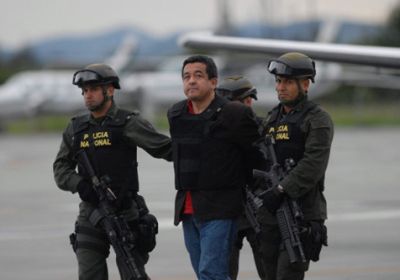
The Socialist Alliance calls on the Colombian government to immediately release independent media activist Joaquin Perez Becerra, who is now facing charges of “terrorism”.
-
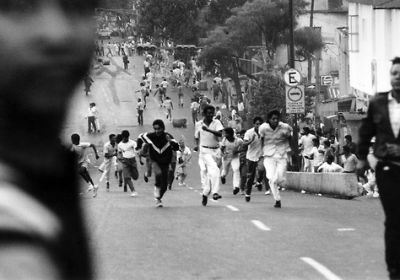 As the wave of popular uprisings has spread across the Arab world, a flurry of articles have appeared suggesting Venezuelan President Hugo Chavez could be the next “dictator” to be overthrown. Such arguments follow a pattern in the corporate media of slandering the Chavez government and the revolutionary process it leads. They aim to conceal the real threat that haunts imperialism: that the Arab world may follow the example of Venezuela and other countries in Latin America — and break away from Western hegemony.
 -
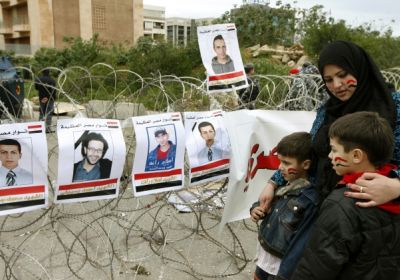
Venezuelan foreign ministry official statement The president and commander-in-chief of the Bolivarian Republic of Venezuela, Hugo Chavez, in the name of the Venezuelan people, applauds the genuine lesson of political and democratic maturity that the courageous Egyptian people have brought before the eyes of the world.
-
Venezuelan President Hugo Chavez expressed his support for workers in a dispute at a Venezuelan Coca-Cola plant conflict in a televised address on February 4. “If Coca-Cola doesn’t want to comply with the constitution and the law, well, we can live without Coca-Cola,” he said to cheers from the crowd. Chavez was speaking in Valencia, the capital of Carabobo state, where 1230 workers are striking in a bottling and distribution plant of Coca-Cola Femsa.
-
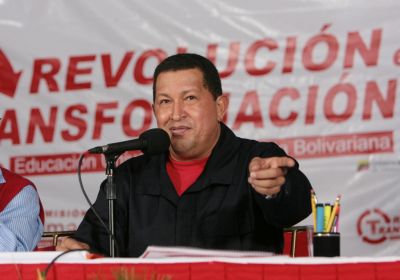 Venezuela marked the 12th anniversary of President Hugo Chavez’s first oath of office in February 1999 on February 2. Chavez won presidential elections in December 1998 on a pro-poor program that pledged to break the corrupt, two-party system that had dominated Venezuela since 1958. To commemorate the occasion, Chavez and supporters held four televised site visits in Caracas. The visits highlighted gains in education, food, health and people’s power that have occurred as part of the “Bolivarian revolution” the Chavez government is leading.
 -
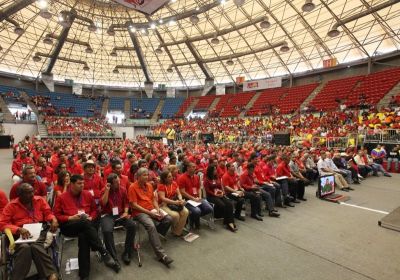 More than 1000 members of the United Socialist Party of Venezuela (PSUV) met with President Hugo Chavez on January 19 and decided on five key strategic lines for the next two years. The discussion included recognition of important weaknesses in the party. Chavez, who is also president of the governing PSUV, presented the document, Strategic Lines of Political Action of the PSUV for 2011-2012, to the “National Assembly of Socialists” in Vargas state. About 1440 party leaders were present.
 -
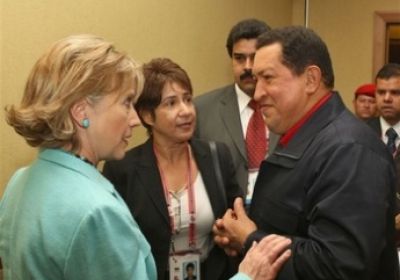 In response to the U.S. State Department’s condemnation of the unauthorized release of more than 250,000 diplomatic cables by the website Wikileaks, Venezuelan President Hugo Chavez praised the whistleblower site and called for the resignation of U.S. Secretary of State Hillary Clinton.
 -
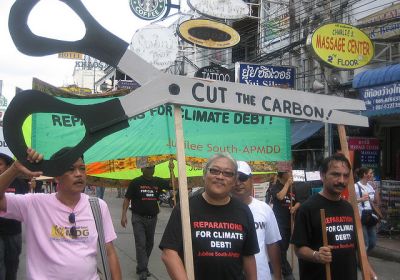 If at first you don’t succeed, redefine success. This phrase has become the unofficial motto of this year’s United Nations climate conference in Cancun, Mexico. A week out from Cancun, which runs over November 29 to December 10, there is little hope of meaningful progress. Yet key players have sought to throw a shroud of official optimism over the looming failure. Few Western politicians want a repeat of last year’s Copenhagen climate conference. They consider it a public relations disaster.