-
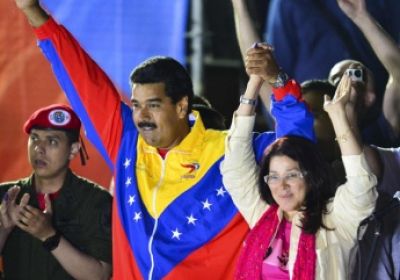
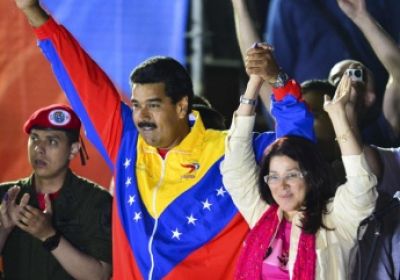
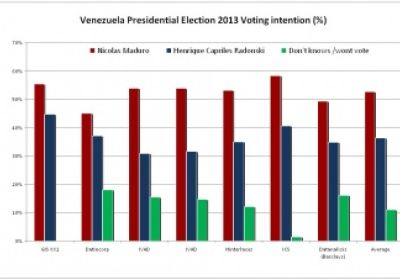
When Venezuelans return to the polls in new presidential elections on April 14, analysts are predicting a decisive win for Nicolas Maduro, the candidate of the United Socialist Party of Venezuela (PSUV). In December, the late president Hugo Chavez urged his supporters to back Maduro as PSUV candidate should Chavez’s worsening health prevent him from fulfilling his presidential term. Under the Venezuelan constitution, new elections must be held within 30 days of the resignation or death of the president. -
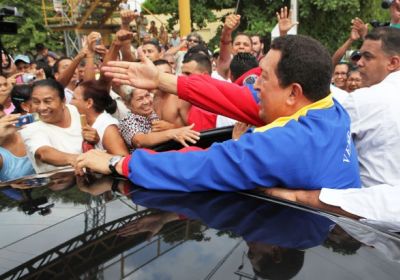
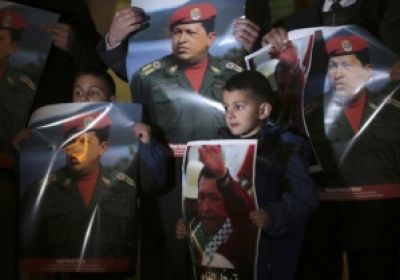
The huge, genuine and spontaneous outpouring of grief that has enveloped Venezuela in the days since Hugo Chavez passed away on March 5 show that the late Venezuelan president was no ordinary politician. Hundreds of thousands of people flooded the streets to accompany Chavez's coffin on its way from the hospital where he died to the military academy where his body is currently lying in state, clad in the red that symbolises the Bolivarian revolution and chanting “the people united will never be defeated”. -
The Nepal Venezuela Solidarity Network organised a condolence ceremony at Maitighar Mandala, Kathmandu, on March 6 to mark the death of the Venezuela's President Hugo Chavez. Fifty-eight candles were lit and 58 seconds of silent mourning was observed. -
We have known for some time that the death of Venezuela's socialist President Hugo Chavez was probably coming soon. But that did not make it any easier for many of us when it came. Cynics, and worse, have started to pour scorn on the mass grief in Venezuela and around the world. Chavez wasn't just a leader of a revolution in a faraway Latin American country. He was a hero and champion of people all around the world precisely because he broke so radically from the ugly mould of most 21st century politicians. -
Venezuela Analysis journalist Tamara Pearson's passionate and insightful report on the feeling among the Venezuelan people after the passing of President Hugo Chavez, the response of the opposition, the people's determination to continue their revolution, and the importance of international solidarity. Film by Green Left TV.
-
At about 5.30pm on March 5, life in Venezuela came to a sudden halt. In a speech broadcast live, Vice President Nicholas Maduro publicly announced that President Hugo Chavez had lost his two year battle with cancer. Maduro stated that at 4.25pm, Chavez was pronounced dead after the emergence of a severe respiratory infection the previous day. After urging for calm, the Maduro announced a number of security measures, including the deployment of the Bolivarian National Guard and police to maintain order. -
The Australian Socialist Alliance released this statement on March 6. * * * The Socialist Alliance in Australia expresses its deepest sympathies with the people and government of Venezuela on the death of Companero Hugo Chavez Frias on March 5. His passing is a huge loss for all peoples, across Latin America and the globe, struggling for a world free of inequality, exploitation and oppression. -
Hugo Chavez has died — undefeated. Yes, undefeated. Chavez, no matter how many times the corporate media and the cheerleaders of the status quo call him a dictator, was elected repeatedly with overwhelming majorities. No matter how many times this slur is moronically or mendaciously repeated, people know the truth. No less than Jimmy Carter certified Venezuela's elections as amongst the most fair and transparent his organization has ever observed. And the voter turnouts that elected Chavez were usually far, far higher than those in the U.S.
-
Venezuelan media today announced that Venezuelan President Hugo Chavez has died. At approximately 5.30pm local time on March 5, Vice-President Nicolas Maduro addressed the nation, stating that after nearly three months of treatment in Cuba and Venezuela, Chavez passed away in the Dr. Carlos Arvelo military hospital in Caracas. “Those who die for life, can’t be called dead,” he stated, after announcing that the president has lost his two year battle with cancer. -
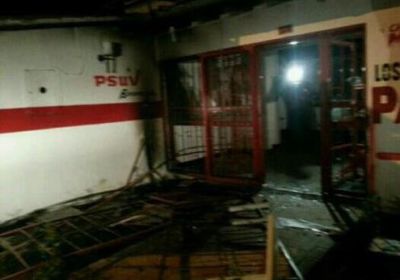
As Washington ramps up anti-Venezuelan rhetoric, its proxies in the South American nation appear to be following a US-backed plan to bring down the democratically elected government. On February 15, opposition students began a four-day protest outside the Cuban Embassy. The group of about students allegedly assaulted an elderly passer-by. In the past, members of the same group have allegedly been involved in blockading roads and burning tires during protests in the city of Merida. -
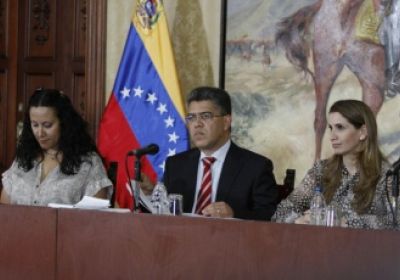
Leaders of the developing world made renewed calls for greater solidarity and opposition to Western imperialism at the third Africa-South America Summit (ASA), despite some criticism of the role of Brazil in Africa. Over February 20-23, 66 African and South American countries took part in the Summit, held in Malabo, Equatorial Guinea. In an open letter read by Venezuelan foreign minister Elias Jaua, Venezuelan President Hugo Chavez denounced Western intervention in Libya and Mali, and urged the building of a “true pole of power” in the global South.
-
WikiLeaks has published over 40,000 secret documents regarding Venezuela, which show the clear hand of US imperialism in efforts to topple popular and democratically elected leader Hugo Chavez.