
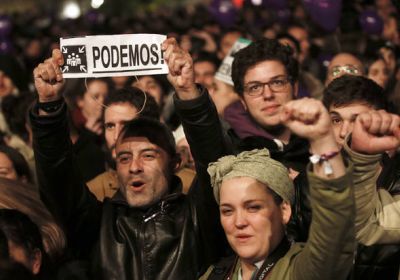
Since Spain's December 20 elections produced no clear majority, debate has raged over what sort of government should be formed.
The governing conservative People's Party (PP) won 123 seats in the 250-seat Congress and the right-populist Citizens won 40. On the left, the main opposition Spanish Socialist Workers Party (PSOE) won 90 seats, while radical anti-austerity party Podemos and the three alliances in which it took part together with nationalist forces won 69.
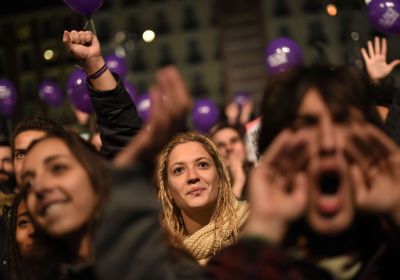
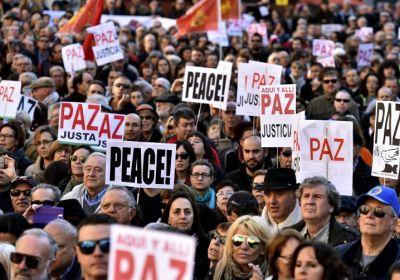
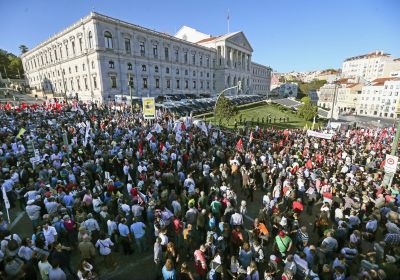

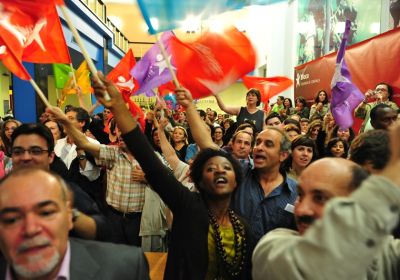
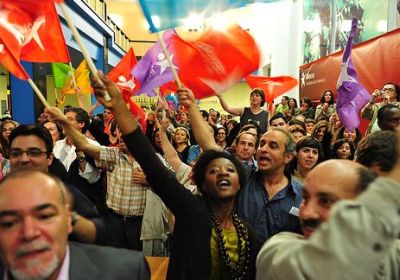
 Podemos activists
The December 20 elections in the Spanish state will attract the usual large field of runners. Challengers will represent every imaginable position along the Spanish state's two main political dimensions — the left-to-right social axis and the axis of national rights.
This second dimension reaches from the centralism of the ruling People's Party (PP) to the pro-independence stance of various Catalan, Basque and Galician parties.
Podemos activists
The December 20 elections in the Spanish state will attract the usual large field of runners. Challengers will represent every imaginable position along the Spanish state's two main political dimensions — the left-to-right social axis and the axis of national rights.
This second dimension reaches from the centralism of the ruling People's Party (PP) to the pro-independence stance of various Catalan, Basque and Galician parties.
 SYRIZA pulled off a remarkable victory at the September 20 Greek election. Although burdened by its acceptance of the draconian austerity measures in the third memorandum imposed by Greece's creditors and eight months of rule in the midst of recession, closed banks and capital controls, SYRIZA's vote fell by only 0.88% and its parliamentary seats by just four.
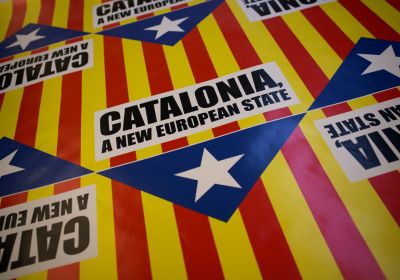
 More than 1 million people took part in a pro-independence march in Barcelona on September 11, Catalonia's national day.
A year has passed since the British establishment won the September referendum on Scottish independence with a final campaign week of blackmail, dirty tricks and multi-party sworn promises yet to be kept.
More than 1 million people took part in a pro-independence march in Barcelona on September 11, Catalonia's national day.
A year has passed since the British establishment won the September referendum on Scottish independence with a final campaign week of blackmail, dirty tricks and multi-party sworn promises yet to be kept.