
An outbreak of the deadly hantavirus on a cruise ship this month may well be contained, but its emergence in such a setting raises important questions about vulnerability to infectious disease. It also reminds us, so soon after a global pandemic, how few lessons have been learned and how ill-prepared the world is to face another such threat.
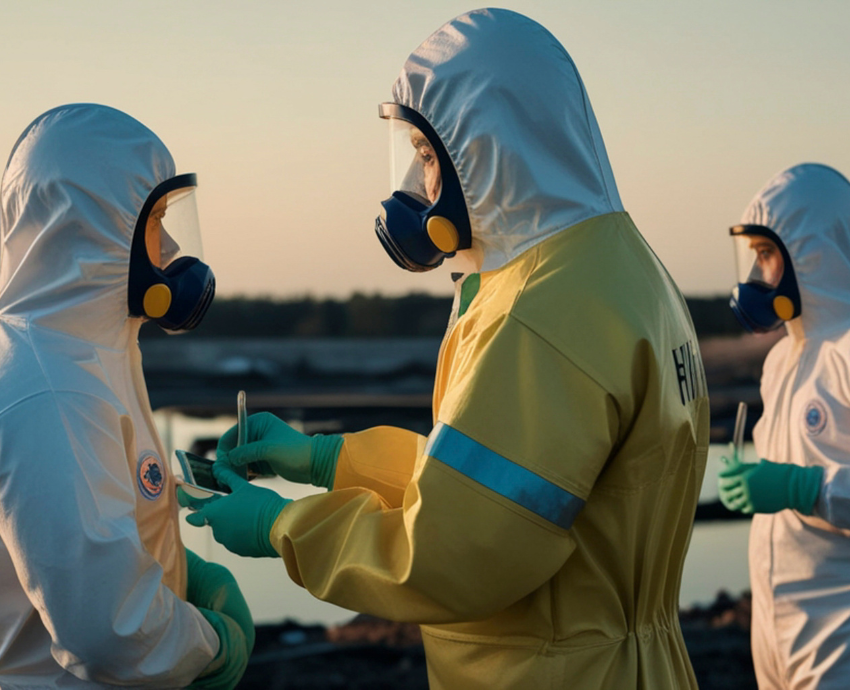
The CBC reported, on May 11, that nations “around the world on Monday [May 11] repatriated passengers from a cruise ship hit by a deadly hantavirus outbreak and quarantined or isolated them” and that personnel “in full-body protective gear and breathing masks had escorted the travellers from the MV Hondius to shore in Tenerife”, in the Canary Islands. At that point, the outbreak had claimed three lives, with an additional six cases of the disease confirmed.
Hantavirus is usually contracted through exposure to rodent droppings, but the strain known as the Andes Virus, which took hold on the ship, can sometimes be spread through human-to-human contact. Those evacuated from the ship are being quarantined to minimise the risk of further transmission.
It seems clear that the hantavirus, in its present form, is not a good candidate for the generation of widespread international infection. Newsweek points out that it’s “not the case fatality rate that matters for pandemic potential, it’s the ability to transmit between humans. If transmission happens efficiently enough before people become seriously ill, then there are very few constraints on virulence.” The Andes Virus, moreover, which has a lethality rate of between 30% and 60%, doesn’t infect others until the stricken person is too ill to transmit the disease effectively.
Warning sign
If this particular virus is likely to be contained effectively, the outbreak that occurred is clearly a warning sign with regard to the level of global risk. Though the spread of COVID-19 is no longer of pandemic proportions, the millions of lives that it claimed, the continued impact it has through “long COVID”, and its stubborn presence in our communities, have all created a sharp awareness of the threat of infectious disease and a fear that another pandemic is entirely possible.
This thinking is far from misplaced, as an article this month in the Guardian strongly suggests. It points out that the deadline that was set on drawing up a comprehensive global pandemic treaty has been disgracefully missed. An effort had been made to hammer out an agreement on how countries “should share information on pathogens, such as bacteria or viruses, that could cause pandemics, and what access to any resulting vaccines, tests and treatments they should be guaranteed in return” but to no avail.
Several European countries have doggedly blocked agreement around such an approach, arguing that “this could stifle research and development and [they have] reportedly proposed a hybrid model, with a mix of mandatory and voluntary requirements”. These imperialist powers, working on behalf of pharmaceutical and other major companies, have thwarted the efforts of poorer countries to obtain greater protections for their populations. Because of this, any resolution of the dispute will be impossible until the 2027 World Health Assembly. Even then, it is massively unlikely that the Western powers will act in good faith and give any significant ground on these issues.
In light of this shameful behaviour, the World Health Organization (WHO) panel that is driving the effort to obtain an effective accord declared candidly that if “a new pathogen emerged today, the world remains largely unprepared for it. A lack of action to prevent and prepare for the next pandemic threat is a disservice to humanity.”
Psychology Today pointed out in February last year that future “pandemics are inevitable, so we need to be better prepared. The ultimate goal is to pre-empt and prevent future pandemics. History has shown this requires a wide range of interventions and government support of public and private research on an international scale.”
The article also stressed that financial and healthcare support also “must be prioritised in low-to-middle-income countries, which will undoubtedly be at a higher risk, suffer a greater burden of disease, and experience less vaccine equity and access”. The stalling tactics being used by Western countries in the WHO negotiations are the most solid example imaginable of how to ensure that the world will not be “better prepared” for the next “inevitable” pandemic.
A lack of preparedness to respond effectively to pandemics, however, is only part of the picture. Of even greater importance is the way that the systems of production and the networks of distribution that exist within global capitalism maximise the risk of catastrophic outbreaks.
‘Human activity’
In 2020, a report was issued by the Intergovernmental Science-Policy Platform on Biodiversity and Ecosystem Services, a United Nations initiative, on “the links between pandemic risk and the degradation of nature”. It “stressed that although the new disease [COVID-19] has its origins in microbes carried by animals, like all pandemics, its emergence has been entirely driven by human activities”.
Dr Peter Daszak, the chair of the working group, stated that the “same human activities that drive climate change and biodiversity loss also drive pandemic risk through their impacts on our environment. Changes in the way we use land; the expansion and intensification of agriculture; and unsustainable trade, production and consumption disrupt nature and increase contact between wildlife.” According to the report, “it is estimated that another 1.7 million unknown viruses currently exist in mammals and birds, up to 850,000 of which could potentially infect humans”.
In light of this enormous threat, escaping “the era of pandemics is possible … but will require ‘a seismic shift’ in approach, from reaction to prevention”. As those who drafted the report show, an approach based on prevention would require a major re-evaluation of the forms of economic activity currently underway.
The important and scientifically grounded conclusions of the report notwithstanding, it contains one serious deficiency. A clue is to be found in its use of the term “human activity”, which needs to be broken down and properly evaluated. The activity that has ushered in the “era of pandemics” has been developed, of course, under the economic and social system of capitalism. Without recognising and acting upon this, we are left with useless moral appeals to the capitalists and the governments that serve their interests.
As with the failure to address the escalating planetary climate disaster, the lack of an effective response to the threat of catastrophic pandemics is an expression of the inability of a system based on short-term profit-making and a competitive drive to accumulate to develop a sustainable relationship with the natural world. Without challenging this system, no threat is dire enough and no body of evidence convincing enough to effect a change of course for humanity.
There is some bitter irony to the fact that the recent hantavirus scare was related to a cruise ship. This is a form of activity that involves many of the destructive, profit-driven approaches that have led us to confront an intensified pandemic threat.
In an article I wrote for Canadian Dimension in 2022, I argued that it “is very easy to regard luxury cruises as an expression of capitalism’s worst instincts. They involve crass consumerism and appalling levels of environmental degradation. They also reinforce the inequalities and distorted development that underlie global tourism. At the same time, the backdrop to the recreational setting they provide is the intensely exploitative ‘sweatshop’, with its dreadful working conditions.”
Though the outbreak of hantavirus in the Canary Islands is unlikely to spread catastrophically, this tragic incident is a reminder of just how vulnerable populations are in the era of pandemics. As with climate change, deforestation, the loss of habitat and various rampant forms of pollution, the elevated and intensifying threat posed by infectious disease is attributable to a system of global capitalism that is engaged in an assault on nature that also poses an increasing threat to human populations.
This horrible incident should serve to sharpen our understanding that the defining struggle of our times is to create a just and rational society that is also sustainable.
[Reprinted from Counterfire with the author’s permission. John Clarke was an organiser with the Ontario Coalition Against Poverty and has been involved in mobilising poor communities under attack since 1990.]