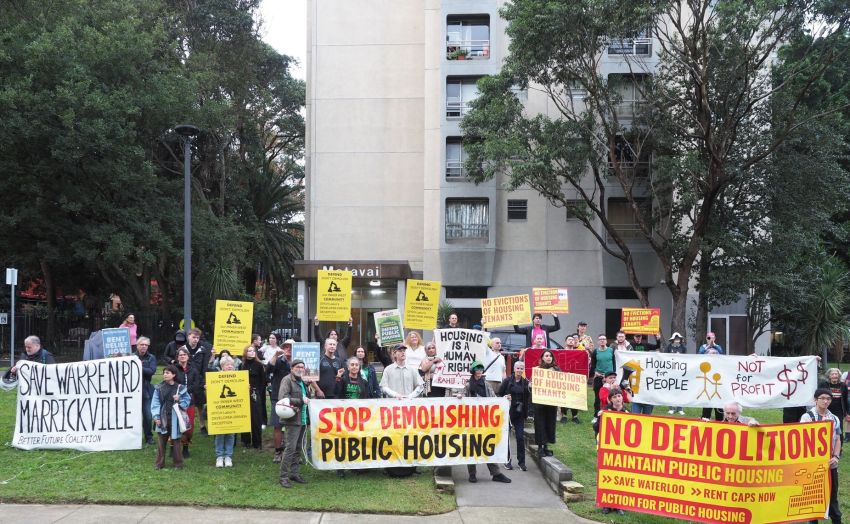
Housing activists are trying to stop demolition teams from starting to fence off public housing units at Waterloo public housing estate on the corner of Cope and McEvoy Streets, Waterloo.
The Chris Minns Labor government wants to demolish and privatise 150 units in a low-rise section of this post-war estate, after having promised before the 2023 elections that his government would preserve public housing.
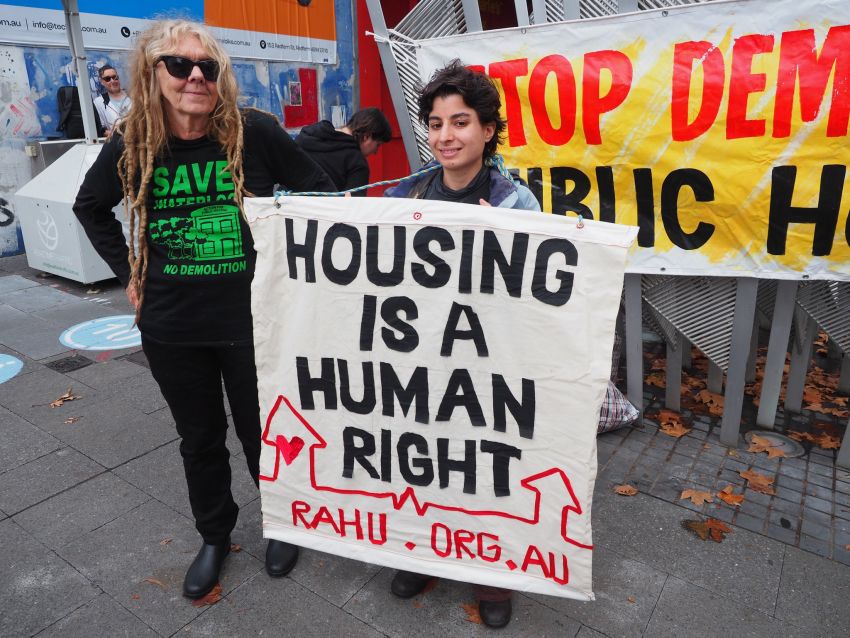
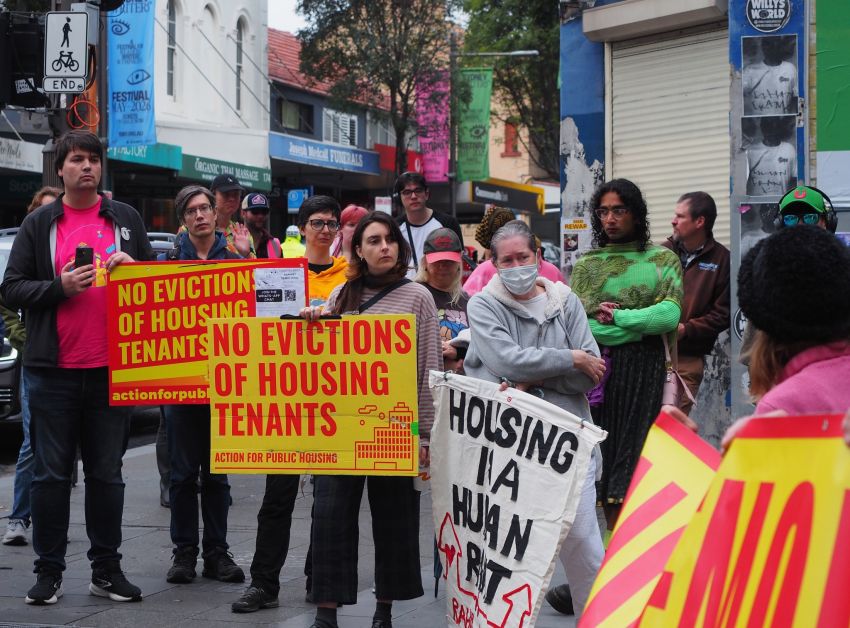
Around 200 people rallied on May 24 in Waterloo to highlight the wanton destruction of perfectly liveable apartments in a housing crisis. The demolition teams were sent in on May 25, but faced community opposition.
Karyn Brown, a resident of Waterloo South, told the protest that Homes NSW had letter boxed tenants with the news of the demolition. She said 15 people were still living in those blocks “because they had no where else to go”. Labor keeps saying people will be rehomed, but they haven't found places where they can go, Brown said.
Rachel Evans, another spokesperson for Action for Public Housing and the Socialist Alliance candidate for the seat of Heffron, said the destruction is “social vandalism”.
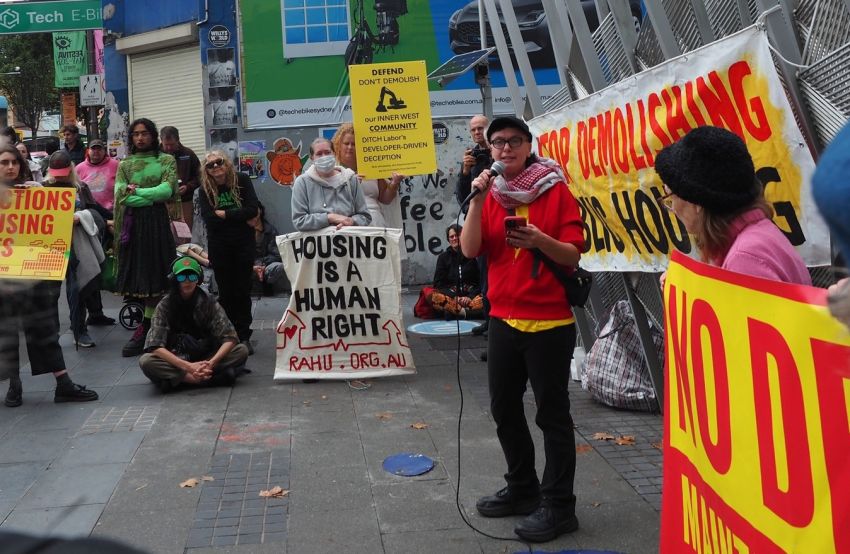
“More than 67,000 people are on the waiting list for public housing. Over 150,000 people are homeless across this continent and, in NSW, 37,000 people. Around 1 million properties are empty every night and the government is set to fail in its Housing Australia Future Fund target of 55,000 new social and affordable homes by 2029,” Evans said.
Brown, another spokesperson for Action for Public Housing said NSW Labor “is making the housing crisis worse by demolishing my community’s homes”.
She said that Phase 1, 2 and 3 will evict 750 tenants from their homes, which will be bulldozed for the private developer Stockland to build 3300 homes — 50% or 1650 of them will be over-priced, luxury homes.
“They’re saying 20% will be ‘affordable’ housing, and 30% of the 3300 will be ‘social’ housing. Only 7% of this ‘affordable housing’ is in perpetuity. That’s not good enough.
“When Waterloo tenants get evicted, we get shoved right up to the top of the list of the public housing waiting list and we get a home, but at the expense of everyone else who is on the list.”
Evans said while federal Labor is making out that its budget has bought down the most comprehensive housing reforms Australia has seen in generations it only peels back a small fraction of property investor tax concessions, worth a staggering $29 billion a year to the public purse.
“It will not alleviate the homelessness crisis, reduce the national waiting list for public housing or cap astronomical rents. The changes will only help home owners. Not the 30% of the population who rent or the 918,000 people considered ‘extremely at risk’ of defaulting on their mortgage.”
Despite the hype, Evans said, rents and house prices will still rise. Labor’s Housing Australia Future Fund that offered $10 billion for 55,000 new social and affordable homes in 2023, but is way behind target. “Only 1450 homes have been built in three years.”
Paul Keating from the Maritime Union of Australia and Jenny Leong, Newtown Greens MP, also spoke, outlining reasons why Labor might be targeting some of the most marginalised people.
Leong said Labor was more interested in cosying up to their “developer mates” rather than looking after the vulnerable.
Catherine, a resident at another of the Waterloo towers for the last 16 years, told Green Left during the protest that she was angry that the government is helping to destroy an important public legacy.
Carrying her dog the whole way, she said when she first moved to Sydney she knew she would never be able to afford to buy, so put herself down on the public housing wait list. “These days more people cannot afford to buy, so where are they going to end up?”
Residents have given members of the community permission to set up a camp at the site under threat, from where they have been organising to get the word out.
[Andrew Chuter is an activist with Action for Public Housing.]