
Blanca Missé is an associate professor at San Francisco State University, a Workers’ Voice member, and active with the Ukraine Solidarity Network and the Labor for Palestine National Network. In part two of our interview, Green Left’s Federico Fuentes spoke to Missé about the need to confront all imperialisms with a class-based internationalism.
* * *
In general terms, how can we understand the dynamics within the global imperialist system?
The Cold War world order with the United States as the undisputed global hegemon, backed by other Western imperialist powers, is over. We are witnessing a crisis of historical proportions of the old world order, akin to the one that preceded World War I and World War II.
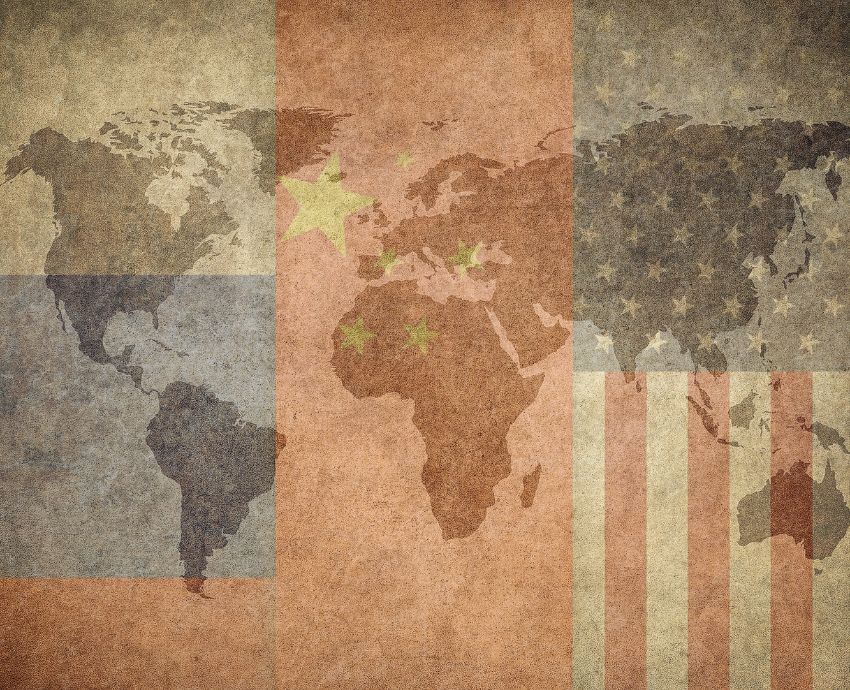
Our new world order is marked by the rise of new imperialisms — China and Russia — and growing inter-imperialist rivalry as the US and China compete for world hegemony.
This rivalry is asymmetric and unstable, and the emerging alliances and blocs around the two dominant powers are by no means set in stone, as multiple contradictions persist in the different alignments.
However, Donald Trump’s arrival to power in the US in 2025 accelerates the ongoing dynamics of the imperialist crisis, with a further boost to the arms race and, potentially, the return to more aggressive, militaristic or annexationist imperialist policies.
It is also marked by rising competition between imperialist states seeking to exploit and dominate the semi-colonial world, national liberation and democratic struggles becoming intertwined with inter-imperialist competition, and complex hierarchies among different imperialist powers with fluid, changing alliances.
There are also emerging sub-imperialist or regional powers, such as Turkey and Saudi Arabia, who play the role of junior partners of imperialist powers when contradictions sharpen, while maintaining their own regional ambitions.
How should we understand the US-China rivalry, given that the two economies are more integrated than ever?
The growing US–China conflict definitely marks a drastic change in the commercial and economic status quo of so-called neoliberal globalisation. We are witnessing a ferocious rivalry, combined with an established interdependence and a reversal of roles.
The ideological and diplomatic roles are changing, almost reversed. The US and Europe — the decaying imperialist bloc — are increasingly turning to protectionism and threats of military force, while the rising one is paradoxically projecting universalist ambitions and privileging the use of its soft power.
The central conundrum today, though, remains the dialectical relation between the rivalry and interdependence of the US and China.
China and the US’s economies are more deeply integrated than ever, yet unevenly. This interdependence, in turn, fuels escalating competition over markets, technologies and geopolitical influence to reach a greater autonomy.
US imperialism remains the world’s dominant economic and military power. An article earlier this year in Foreign Affairs noted its corporations still control the commanding heights of the global economy: “As of March 2024, nine of the world's ten largest firms by market capitalization were American; China’s largest firm, Tencent, ranked twenty-sixth.”
The US also continues to attract the most foreign investment and high-skilled immigrants. In 2022, US firms generated 38% of global corporate profits, with their allies accounting for another 35%, compared to China’s 16%.
And Western companies still dominate high-value sectors — finance, aerospace, biotechnology and digital technologies — anchored by the so-called Magnificent 7 (Apple, Alphabet, Amazon, Meta, Microsoft, Nvidia and Tesla). US leadership in AI and quantum computing is being challenged, but its overall technological ecosystem remains unmatched.
China, however, has emerged as the most dynamic rising imperialist power, leveraging state planning, industrial policy and global infrastructure projects to expand its reach.
It has overtaken the US in several key areas, particularly raw materials and manufacturing, accounting for 30% of global production compared to 15.9% for the US. It is rapidly advancing in electric vehicles, green technologies and scientific investment, now contributing 19.5% of global GDP, versus 12.7% for the US.
This ascent represents not the reversal of globalisation but a profound reconfiguration of it — one where China has embedded itself at the centre of global supply chains once dominated by the West.
This integration creates contradictions for Washington. A recent study suggests that a large-scale decoupling could hit China’s GDP by 15–51%, inflicting 5–11 times more disruption on its economy than on the US, while also severely harming Germany and Japan, two key US allies. A premature trade war, thus, is not in the US’s interest, as it could deepen its own structural weaknesses and accelerate the decline of Western hegemony.
Financial interdependence further complicates this rivalry. China remains the second-largest foreign holder of US debt, owning $768 billion (8.9%) as of November last year, second only to Japan.
Economic ties between the two powers make confrontation costly. Yet, those same ties mean that every technological or geopolitical advance by one is perceived as an existential threat by the other.
In the Marxist tradition, we know that the only ways out of a growing inter-imperialist rivalry of this magnitude are world war … or world revolution.
What do you see anti-capitalist and anti-imperialist internationalism looking like in the 21st century?
Clearly, any anti-imperialist internationalism begins with opposing all imperialisms, including regional and minor ones.
We know that Lenin wrote Imperialism in 1916 to lay the theoretical groundwork for two principal axes of the Marxist program during a deep crisis in the Second International: organising workers to refuse to support either imperialist power in the war by actively combating all chauvinist tendencies, and the need to most coherently defend the right of nations to self-determination to the final consequences.
Today, socialists and Marxists need to confront the prospect of imperialist wars by refusing to capitulate to pressures by either imperialist bloc, thereby opposing the ongoing arms race while supporting, in a principled way, the national liberation and democratic struggles that will continue emerging.
Regarding national liberation struggles, let us imagine that the US attacks Venezuela or Iran. We should unequivocally defend the right of both countries to self-determination. If there is a war, socialists need to take a resolute military side with the semi-colonial country under attack, regardless of criticisms of its regime.
This means providing direct material aid to working people in those semi-colonial countries, while explaining the limits of their capitalist governments in defending them and carefully criticising those governments’ wrongdoings.
This is most effective and accurate when it comes from independent social forces within the resistance movements themselves; therefore, there is an urgent need to link ourselves with them.
It also means exposing rival imperialist manoeuvres aimed at co-opting these liberation struggles.
Inter-imperialist rivalry does not eliminate the potential for successful national liberation struggles, nor does it lessen the duty of socialists to stand with the oppressed — it merely makes this task more complex and challenging.
When the old imperialist world order is in crisis, and a new one is emerging, there are no “pure” conflicts. All national liberation struggles are inevitably wrapped in inter-imperialist rivalry, and imperialist manoeuvres to coopt them. The challenge is to combine the struggles.
Now comes the anti-capitalist aspect of internationalism. In both efforts for democratic freedoms and national liberation, and in opposition to imperialist wars, socialists inevitably find themselves engaging in unity of action with broader social forces — nationalist, reformist or even bourgeois — that oppose imperialist domination for their own reasons.
While supporting the resistance movements of the oppressed, we must maintain our political independence and find the best ways to express our criticism of the bourgeois and petty-bourgeois leaderships guiding such struggles.
This is most effective and accurate when it comes from independent social forces within the resistance movements themselves; therefore, there is an urgent need to link ourselves with them.
Let us consider Ukraine, as it is a good example of how the tasks of national liberation have, during the war, become more closely linked to socialist ones.
The Volodymyr Zelensky government, due to its bourgeois character and direct collaboration with US imperialism and local capitalist interests, serves as a barrier to mobilising all social forces of resistance against Vladimir Putin’s invasion. In fact, Zelensky has already mortgaged Ukraine’s future through the economic concessions and rebuilding deals signed with Western powers.
Yet, this betrayal must not be used to stop supporting the military victory of Ukraine against Russia in this just national liberation war. It means that workers need an independent stance in the war, one that sides with the resistance without giving political support to the Ukrainian government.
The key to winning the Ukraine war and laying the foundations for a truly independent Ukraine is the independent political organisation of working people in Ukraine and abroad to provide Ukrainians with all the material support they need. This logic applies to all national liberation struggles.
This means placing at the centre a workers’ program of action capable of addressing the urgent needs of the exploited and oppressed, promoting concrete initiatives of self-organisation to strengthen the class’s capacity for independent struggle and advancing an emergency environmental plan that confronts capitalist destruction and imperialist war.
[Abridged from a much longer version published at links.org.au.]