
Venezuelan President Nicolas Maduro announced his country was severing all diplomatic and economic ties with Panama after its government sought the intervention of the Organization of American States (OAS) into Venezuela’s domestic affairs.
The move came as the US House of Representatives approved a motion calling on countries in the region to stand in solidarity with protesters currently seeking to topple Maduro.
Maduro saidright-wing Panamanian president Ricardo Martinelli has been “actively working against Venezuela”.
-
-
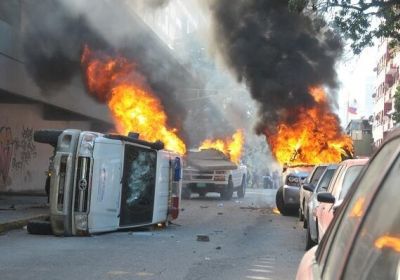
Below, Australia Venezuela Solidarity Network activist Federico Fuentes, provides answers to common questions about recent events in Venezuela. Key facts are referenced, largely from media outlets that could not be identified as pro-government.
-
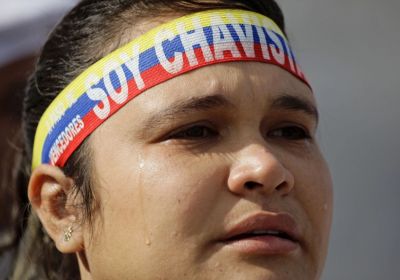 With few exceptions, most international media coverage of the recent protests in Venezuela gives little sense of the response from the popular social movements who support the government of President Nicolas Maduro but operate independently from it. As researchers who have carried out long-term fieldwork in the urban barrios (poor neighbourhoods) of Caracas, we felt compelled to translate and publish the statement of one of these barrio groups.
 -
Cusco, a city of 400,000 in south-eastern Peru, was totally paralysed on February 25. It was the first day of a 48-hour general strike initiated by trade unions and other civic groups.
-
Venezuelan car workers have slammed multinational car manufacturers for cutting back production in the country. The country's largest trade union federation has called for the industry to be nationalised. Accusing multinational car companies of being “imperialist”, the National Workers' Union (UNT) has called on the government to place car factories under worker control. The UNT said: “It's clear that building socialism relies on the working class, indeed the workers' control of the factories.”
-
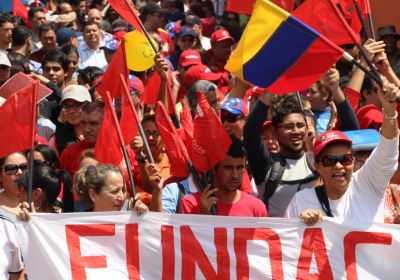 Almost a year has passed since the death of Hugo Chávez on March 5, 2013. Arguably this has been the most difficult one for the Bolivarian Revolution. Many people, both on the left and the right expressed doubt that there could be Chavismo without Chávez. Perhaps a year is still too short of a period to assess the situation after Chávez’s passing. Yet, the dynamic developments over the past twelve months call for some preliminary remarks.
 -

Millions of dollars worth of damages to public property may have been caused by a wave of violence across Venezuela, according to government sources. The assessment comes after Venezuelan President Nicolas Maduro called for a “National Peace Conference” as a means of resolving the on-going violent opposition protests in Venezuela.
-

In response to the violence instigated by the Venezuelan elite, the working classes of Venezuela took to the streets this week.
-
 Since the 1990s, many critics of the United States have accused Washington of promoting the dismemberment of nations such as Yugoslavia, in accordance with neoliberalism’s drive to weaken central governments and nation states. Today, Washington’s official policy in nations like Syria and now the Ukraine has been support for rebels seeking to overthrow the government, even though their chances of success are minimal.
 -
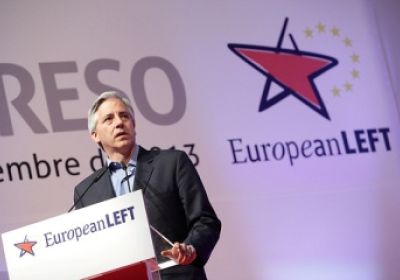
Bolivia's Vice-President Alvaro Garcia Linera, a veteran left activist and Marxist academic, spoke at the December 13-15 congress of the Party of the European Left (PEL).
-
When is it considered legitimate to try to overthrow a democratically-elected government? In Washington, the answer has always been simple: when the US government says it is. Not surprisingly, that is not the way Latin American governments generally see it.
-
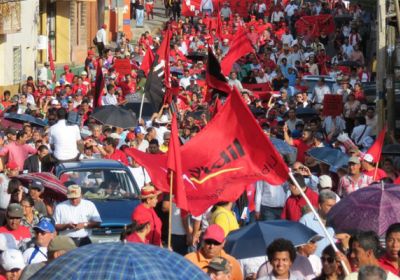
For days after the National Party (NP) was declared the winner of widely disputed elections on November 24, thousands of people protested on the streets of the Honduran capital Tegucigalpa.