-
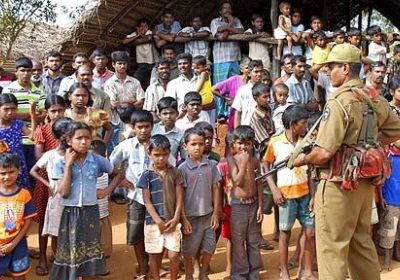
The Global Tamil Forum issued a statement on May 1 evaluating the first months of in office of Sri Lanka's new president Maithripala Sirisena. In presidential elections in January, Sirisena defeated the incumbent Mahinda Rajapaksa, who had presided over a genocidal war against the Tamil people and then kept them under military occupation. The GTF praised Sirisena for amending the Sri Lankan constitution to cut the power of the president and increase the power of parliament. -
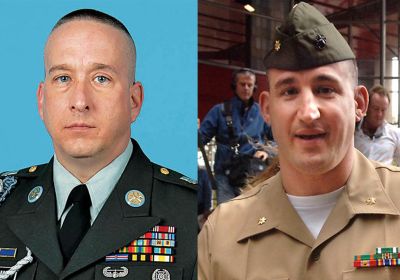
In The Company Of Cowards: Bush, Howard & Injustice at Guantanamo Michael Mori Viking, 2014 292 pages, $29.99 (pb) Murder At Camp Delta: A Staff Sergeant’s Pursuit Of The Truth About Guantanamo Bay Joseph Hickman Simon & Schuster, 2015 245 pages, $29.99 (pb) Major Michael Mori was a Republican-leaning, US military lawyer who “embraced the values I had been taught in scouts, sports, high school, college, law school and the Marines” — above all the ideal of fair play. -
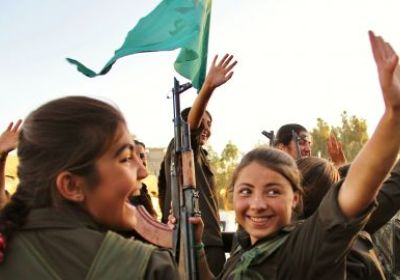
War planes from the US and its allies bombed the village of Birmehli in northern Syria on the night of April 30. US Central Command spokesperson Major Curtis Kellogg claimed that at least 50 fighters from the self-styled Islamic State (IS) group were killed and there was “no indication that any civilians were killed”. However, human rights groups, including the Britain-based Syrian Observatory for Human Rights (SOHR), have reported that all the casualties were civilians: 64 people, including 31 children. -
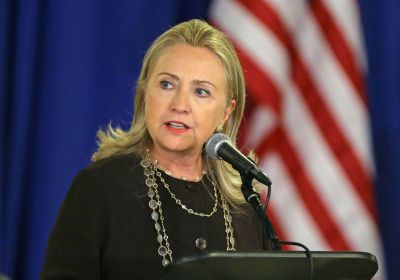
Democrat Hillary Clinton has finally announced she is running for United States president in next year's elections. In the goof-ball electoral farce that US elections have evolved into, the electoral campaign actually began shortly after the 2012 election. So it is not odd that the campaigns of both the Republicans and Democrats are now in earnest, nineteen months before the actual election — something not seen in any other “advanced” country. -
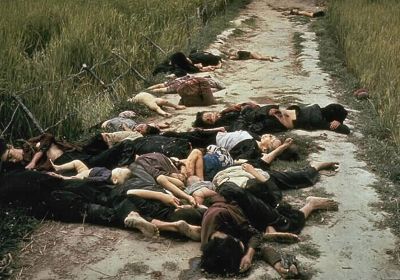
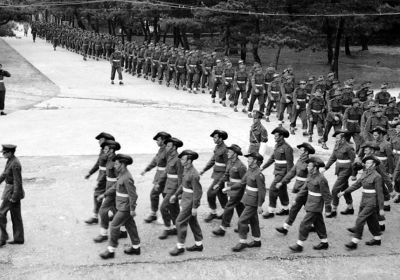
The 40th anniversary of the end of Vietnam War, which claimed the lives of millions of Vietnamese as a result of the United States aggression against the country, was marked on April 30. The war lasted from 1955 to 1975.
-
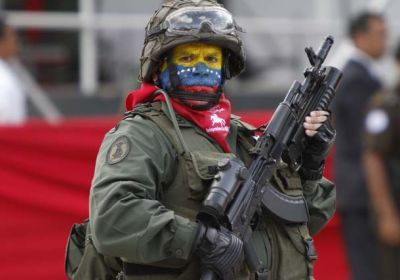
A new report by the Stockholm International Peace Research Institute found Venezuela cut its military budget by 34% last year, leading the region in arms spending cuts. In contrast, United States political allies Paraguay and Mexico led the region in upping military spending, raising military budgets by 13% and 11%, respectively.
-
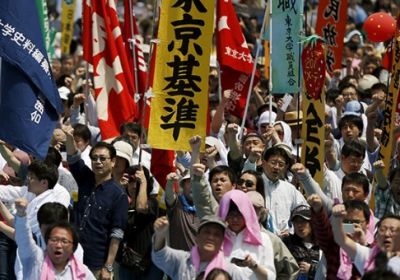
People around the world took to the streets on May 1 to mark May Day, the international workers' day. The day started in the United States in the late 1800s, when unions first called for an eight hour work day, but countries throughout the world soon followed suit in demands for better working conditions. -
An irony of the sacking of SBS sports journalist Scott McIntyre for a series of tweets he made on Anzac Day is that the hysterical reaction from politicians and the media, and the consequences he has faced, has only served to prove his initial point. Anzac Day is not about remembering history. To remember what actually happened at Gallipoli 100 years ago, and in Australia’s involvement in wars more generally, is not permissible. Whatever the Anzacs fought and died for, it was not free speech. -
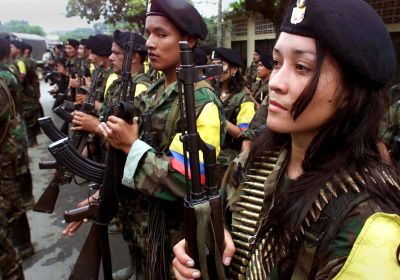
The Revolutionary Armed Forces of Colombia (FARC) will continue its unilateral cease-fire, as long as the Colombian armed forces suspends all military operations against it, TeleSUR English said on April 20. FARC representatives made the commitment at peace talks in Havana with the Colombian state, which aim to end the decades-long civil war that has wracked the South American nation.
-
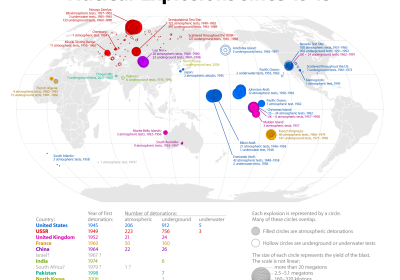
In April last year, the government of the Marshall Islands announced it would be taking nine nations — China, France, India, Israel, North Korea, Pakistan, Russia, Britain and the US — to the International Court of Justice (ICJ) in The Hague over their possession of nuclear weapons.
-
A Short History Of Social Democracy: From Socialist Origins To Neoliberal Theocracy By John Rainford Resistance Books $20, 184pp. The rise and then fall of social democracy as a movement for fundamental social change is a modern tragedy of Shakespearean proportions. It is one of the epic stories of the 19th and 20th centuries.
-
Saudi Arabia’s month-long aerial offensive against Yemen resumed on April 22, one day after the Saudi regime announced it was over. Yemen is undergoing a humanitarian crisis, with millions of Yemenis lacking basic access to food, clean drinking water and health care. The Saudi bombardment has only worsened the plight of the Yemenis, with schools destroyed, hospitals and healthcare facilities targetted, and electricity supplies cut off. Basic infrastructure is being shattered, threatening a catastrophic health crisis for Yemeni residents.