-
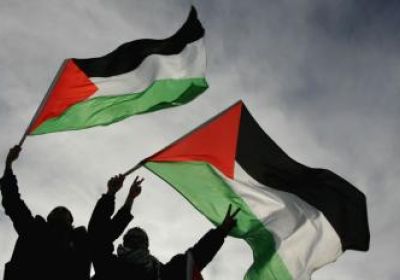
People around the world took to the streets on May 1 to mark May Day, the international workers' day. The day started in the United States in the late 1800s, when unions first called for an eight hour work day, but countries throughout the world soon followed suit in demands for better working conditions. -
An irony of the sacking of SBS sports journalist Scott McIntyre for a series of tweets he made on Anzac Day is that the hysterical reaction from politicians and the media, and the consequences he has faced, has only served to prove his initial point. Anzac Day is not about remembering history. To remember what actually happened at Gallipoli 100 years ago, and in Australia’s involvement in wars more generally, is not permissible. Whatever the Anzacs fought and died for, it was not free speech. -
In April last year, the government of the Marshall Islands announced it would be taking nine nations — China, France, India, Israel, North Korea, Pakistan, Russia, Britain and the US — to the International Court of Justice (ICJ) in The Hague over their possession of nuclear weapons.
-
A Short History Of Social Democracy: From Socialist Origins To Neoliberal Theocracy By John Rainford Resistance Books $20, 184pp. The rise and then fall of social democracy as a movement for fundamental social change is a modern tragedy of Shakespearean proportions. It is one of the epic stories of the 19th and 20th centuries.
-
Saudi Arabia’s month-long aerial offensive against Yemen resumed on April 22, one day after the Saudi regime announced it was over. Yemen is undergoing a humanitarian crisis, with millions of Yemenis lacking basic access to food, clean drinking water and health care. The Saudi bombardment has only worsened the plight of the Yemenis, with schools destroyed, hospitals and healthcare facilities targetted, and electricity supplies cut off. Basic infrastructure is being shattered, threatening a catastrophic health crisis for Yemeni residents.
-
The Revolutionary Armed Forces of Colombia (FARC) will continue its unilateral cease-fire, as long as the Colombian armed forces suspends all military operations against it, TeleSUR English said on April 20. FARC representatives made the commitment at peace talks in Havana with the Colombian state, which aim to end the decades-long civil war that has wracked the South American nation.
-
Australia has again declared war on its Indigenous people, reminiscent of the brutality that brought universal condemnation on apartheid South Africa. Aboriginal people are to be driven from homelands where their communities have lived for thousands of years. In Western Australia, where mining companies make billion dollar profits exploiting Aboriginal land, the state government says it can no longer afford to "support" the homelands.
-
Results for Sudan’s parliamentary and presidential elections, held between April 13 and 15 and extended for a further day after low voter turnout, will be announced on April 27. Yet no one doubts the return to government of President Omer al-Bashir and his National Congress Party. -
We live in a time of growing inequality between the rich and poor, when the environment is being destroyed to the point of threatening our very existence, because of a system that prioritises profit. Here are 10 reasons why socialism is the way forward to solve society’s problems. 1. THE DESTRUCTION OF CLASS DIVISION Under capitalism, people are divided on the basis of class. There are the 1%, who own the wealth and the means to produce wealth, and the rest of us, the 99%, who sell their labour to produce profit for the 1%. -
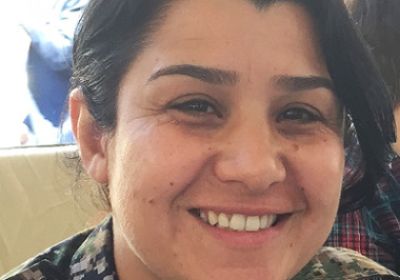
Meral Cicek (pictured) is the chair of Kurt Kadin Iliskiler Merkezi, the Kurdish Centre for Women's Affairs in Erbil, in the autonomous Kurdish Region in northern Iraq). Cicek spoke to the Rosa Luxemburg Foundation’s Florian Wilde during the World Social Forum (WSF) in Tunis last month. It has been translated by Leandros Fischer. * * * -
Sudan’s ruling National Congress Party (NCP) persisted with April 13-15 national elections, despite widespread condemnation of the process from inside and outside the country. Sudanese President Omer al-Bashir, who came to power in a 1989 coup, contested the presidency among 15 mostly unknown candidates. The election was boycotted by opposition groups. They have called for an inclusive consultation process to resolve the country’s substantial problems, establishing a transitional government, and immediately ending the repression of dissent as prerequisites for free and fair elections.
-
A recently published report has revealed that the 2003 US invasion and occupation of Iraq was responsible for the deaths of about 1 million Iraqis, or 5% of the population. The report also tallies hundreds of thousands of casualties in Afghanistan and Pakistan as a result of the US-led war.