-
When the early morning fog rises and drifting skeins from wood fires carry the sweet smell of India, the joggers arrive in Lodi Gardens. Past the tomb of Mohammed Shah, the 15th century Mughal ruler, across a landscape manicured in the 1930s by Lady Willingdon, wife of the governor-general, recently acquired trainers stride out from ample figures in smart saris and white cotton dhotis. -
When the paramilitaries of the United Self-Defense Forces of Colombia (AUC) arrived in San Onofre in northern Colombia in the late 1990s, they came after dark, dragging people from their homes and disappearing into the night. Soon, they did not need the cover of darkness. People were executed in public plazas in broad daylight. Women and young girls were openly raped and abused.
-
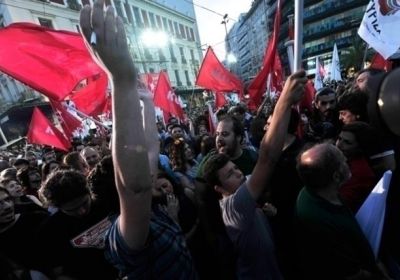
Last year it was the indignado movement that filled Spain’s city squares with hundreds of thousands of protesters. On February 19, it was the union-led movement against the Popular Party (PP) government’s new labour law. On February 29, another mass protest flooded the squares: tens of thousands of students protesting against cuts to education in 25 cities and towns across Spain. They had paid no attention to the plea of Prime Minister Mariano Rajoy, who on the eve of the protest asked Spaniards “to understand that things are not that easy”. Huge support -
Chicago workers occupy plant, score win Workers facing layoffs at a Chicago window factory have declared victory after occupying their plant for 11 hours, OccupyWallSt.org said on February 24. The Occupy Wall Street website said: “Through direct community action, including the support of Occupy Chicago, the workers and their union prevented the California-based Serious Energy company from closing the plant for another 90 days. The workers hope this will give them time to keep the plant open, possibly by purchasing it themselves and creating a worker-owned co-op.”
-
There is a growing disconnect between the official rosy picture of the Australian economy and mounting public anxiety about job insecurity. The latest official unemployment rate (January 2012) was steady at 5.2% and Treasury secretary Martin Parkinson insists there is no reason to worry. Australians, he said, should shake off their misplaced “boom with gloom” attitude.
-
Writer and Occupy Melbourne activist Wil Wallace took part in a March 1 protest against the Trans-Pacific Partnership Agreement, a new free trade agreement currently under negotiation between nine nations, including Australia and the United States. Wallace’s account of the protest is below. * * * -
Chanting “no cuts, no way, this is what the staff say”, 200 staff and student supporters defied rain to march through the University of Sydney on February 29 to protest against the university management’s move to axe 340 university staff. The rally, organised by the National Tertiary Education Union (NTEU), took place on the first student orientation day. -
Lynas, an Australian mining company, is building a rare earth refinery close to the heavily populated area city of Kuantan in Malaysia. The ore is to be shipped from a mine in Western Australia but the highly toxic and radioactive waste which the refinery will produce will not be accepted back by the WA government. -
The crackdown on whistleblowers to protect national security is "neo-McCarthyist hysteria" and Julian Assange says he has the emails to prove it.
-
Among the 5 million emails and documents leaked by WikiLeaks from the US-based private intelligence firm Stratfor are details of some of its secret media partners. The company’s “Confederation Partners” are spread across four continents. -
Whistleblowing website WikiLeaks released the statement below on February 27.
-
Vultures’ Picnic Greg Palast 416 pages, 2011 Penguin www.gregpalast.com Investigative reporter Greg Palast is back ― and this time, it’s personal. The former United States corporate crime investigator, who exposed the 2000 and 2004 elections of George W Bush as frauds, has gone for a more intimate feel in his latest book, Vultures’ Picnic.