
Olympic organisers and their corporate sponsor Visa were still keeping mum on August 1 after yet another ironic twist to their “cashless Olympics”.
Hungry spectators at Wembley to see Team GB women's victory over Brazil took to social networks on the night of July 31 to complain of a second breakdown in three days of payment systems at food counters “proud to only accept Visa” under the company's exclusive sponsorship deal.
-
-
In a victory for free speech, the Counter Olympics Network held a demonstration of 500 people on July 28 against the corporate takeover and militarisation of the Olympic Games. Under pressure from local campaigners, Tower Hamlets Council was forced to lift its ban on the arranged speakers for the demonstration. Speakers included MP John McDonnell, Ruth Tanner from War on Want, and Stop the Olympic Missiles campaigner and vice-chair of Stop the War Coalition, Chris Nineham.
-

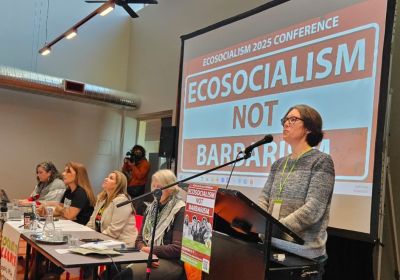
Members of the socialist youth organisation, Resistance, came from around the country to Adelaide over July 20-22 for the 42nd Resistance Conference.
-
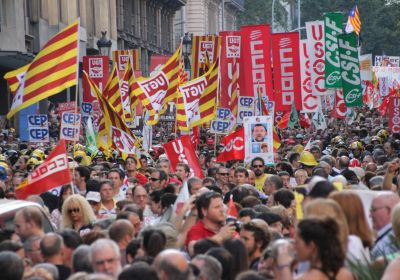
When 3.5 million people protested on July 19 in more than 80 Spanish cities and towns ― against the austerity measures announced a week earlier by the Popular Party (PP) government of Mariano Rajoy ― it came as little surprise. It built on the growing wave of popular anger.
-
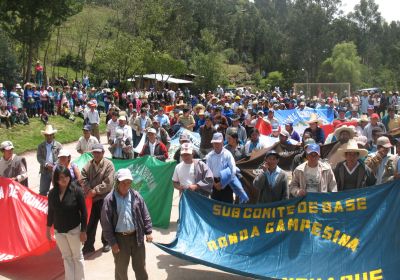 Adopting a centre-left reforming image, Peruvian President Ollanta Humala was narrowly elected last year on the back of widespread discontent with destructive neoliberal development policies and a widening wealth gap. His supporters were filled with the hope that real and substantive change was imminent. Other progressives welcomed the Humala victory more cautiously, arguing that it was at least the lesser of two evils. The alternative was ultra right-winger Keiko Fujimori.
 -
 There is a lot of discussion about the nature of the Chinese economy and its developing role in global capitalism. Much of the debate has focused on the tensions between a seemingly declining United States and rising China ― and possible changes in the global distribution of power. In the context of a global domination of US-backed neoliberalism, the “Chinese model” has been put forward by some as a possible alternative. However, not only is China's rise far from inevitable, its “model” has its own contradictions ― as the rise of labour struggles helps reveal.
 -
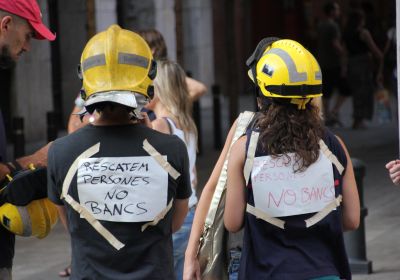
Waving banners, lighting fireworks and chanting against budget cuts, millions of people in Spain were on the march in more than 80 towns on July 19.
-
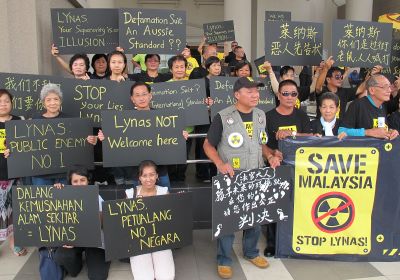
Lynas, an Australian corporation that is trying to operate a toxic rare earth refinery in Kuantan, Malaysia, failed in its latest attempt to silence criticism from community groups opposed to the refinery.
-
What an ideal opportunity that was, to at last engage the local residents with the Olympics. When it turned out there weren't enough security staff, they should have employed east London's famous criminal community.
-
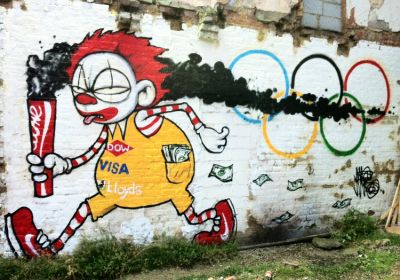
This is a story of two letters and two Britains. The first letter was written by Sebastian Coe, the former athlete who chairs the London Olympics Organising Committee. He is now called Lord Coe.
-
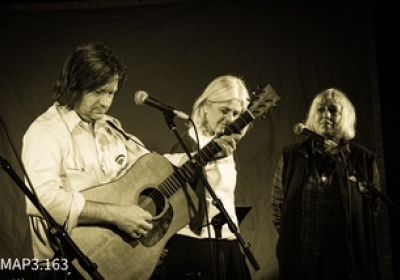
In one of the biggest Coles supermarket occupations to date, dozens of Resistance activists and other attendees of the Resistance National Conference stormed the Adelaide city Coles store to offer solidarity to striking Coles warehouse workers in Melbourne.
-
Anti-uranium protesters' peaceful message of "uranium is just not cricket" was clearly too frightening for South Australian police who mobilised on horses and attacked the protest. Thirteen activists were arrested in the music festival at Roxby Downs Olympic Dam mine.