-
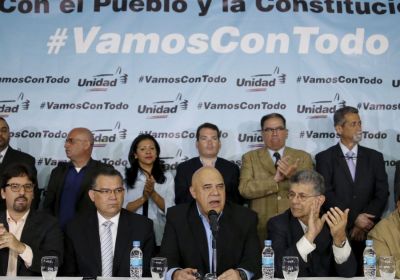
On December 6, Venezuela held its 20th election in 17 years and one of its most difficult yet. With the opposition upping the ante in terms of media attacks and sabotage, 2.5 years of economic difficulties and since the passing of revolutionary leader Hugo Chavez, not to mention a recent right-wing victory in Argentina, the left and right around the world turned anxious eyes to Venezuela. -
Venezuela's Bolivarian Revolution will face its toughest challenge yet this Sunday, when voters go to the polls to elect a new National Assembly. Amid an economic crisis marked by currency instability and inflation, many Venezuelans are understandably going to be thinking hard before casting what would be seen as a vote in support of President Nicolás Maduro. -
Over the last 18 months there has been a flurry of editorials and full page opinion pieces in Perth's only daily newspaper, The West Australian, demanding the state government keep its promise to build light rail to Mirabooka and unfavourably comparing Perth's infamous car dependent urban sprawl to European cities. It even ran a "tale of two cities" special feature celebrating the decision by Vancouver in the 1970s not to allow freeways into its inner city. -
The fight to stop WestConnex intensified in November with the release — finally — of the motorway's Strategic Business Case. Four months after roads minister Duncan Gay's promised release date, a heavily redacted Strategic Business Case for WestConnex was released. This was testament to the ongoing pressure of campaigners. -
Campaigners hoping to save the Ballerrt Mooroop former Aboriginal school site in Glenroy were in shock after Victorian Labor education minister James Merlino sent them a letter on November 23 announcing that the site would be sold. Ballerrt Mooroop Working Group chairperson Dorothy Bamblett challenged the government's decision. “It is still possible to save the site,” she said. “The fight isn't over. We have to rally around to stop the government selling off the site. If we lose the site, it will be gone forever. We have to act now.” -
Residents of the Millers Point public housing area in inner-city Sydney face "Sophie's Choice" on the future of their accommodation, Chris Hinkley, of the Millers Point community working party, and a 44-year resident of the suburb, said on November 19. He was commenting on the decision by the NSW Coalition government to offer 28 non-heritage listed apartments to the estimated 90 remaining residents, in exchange for their agreement to move out of their existing homes. -
The agreement to end the longstanding dispute between Hutchison Ports and the Maritime Union of Australia (MUA) appears near to resolution after nearly four months of conflict. The dispute began on August 6 with the sudden sacking by text and email of 97 waterfront workers at Hutchison's two facilities at Port Botany and Port of Brisbane. -
The campaign against the Perth Freight Link freeway continues to gather momentum with more than 3000 people participating in its contingent at the Fremantle Festival Parade on November 1 and a similar number converging on the Beeliar Wetlands on November 22. The Rethink Perth Freight Link Alliance has now linked 32 organisations opposed to the freeway and in support of alternative transport solutions, including better public transport, more freight on rail and the building of a second container port in Cockburn Sound. -
More than 2000 People's Climate Marches were held over the weekend of November 27 to 29. In Australia more than 140,000 people took to the streets to show they care, passionately, about climate change. They are also angry at government inaction, as illustrated by the many homemade placards and props. These marches were the biggest national anti-government mobilisations for many years. The Melbourne march — a huge 60,000 people — was the biggest street march there since the anti-Work Choices protests of 2005. -
The use of the drug ice in Australia is said to be at “epidemic'' levels. There is nothing new in this claim for both Australia and much of the rest of the world. Epidemics have accompanied the use and misuse of stimulants since the late-19th century. John Rainford traces that history in the final part of this three-part series. * * * The rise in the use of crystal methamphetamine, or ice, shows the self-defeating mechanism of drug prohibition. -
One side event at the COP21 United Nations climate change conference in Paris was the launch of the Fossil-Fuel Subsidy Reform Communique. Almost 40 countries signed onto the statement, which pledges to eliminate subsidies to the fossil fuel industry. The communique said: “The International Energy Agency (IEA) highlights fossil fuel subsidy reform as a key component of a set of energy measures to combat climate change and estimates that even a partial phase-out of fossil-fuel subsidies would generate 12% of the total abatement needed by 2020 to keep the door open to the 2°C target.”
-
“We, the developing countries, are dignified and sovereign nations and victims of a problem that we didn’t cause.” This statement was made six years ago, the Bolivarian Alliance for the Peoples of Our America (ALBA) at the Copenhagen Climate Conference.