
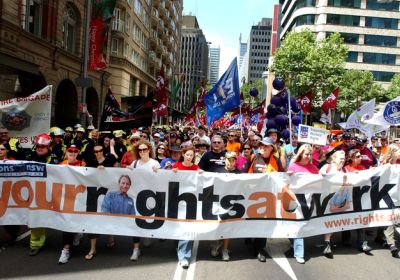
Malcolm Turnbull's very slim majority is no mandate to re-introduce the Australian Building and Construction Commission (ABCC) and other anti-worker legislation that he could not get through the previous Senate.
The silence from the government was deafening during the election campaign, even though the ABCC legislation was the trigger. The ABCC was hardly mentioned. It only highlights the fact that Turnbull did not want to give the average worker the opportunity to scrutinise the finer details of his proposals to attack workers' rights.

 A Black Lives Matter protest in New York on July 9.
Once again the deep racism and racial divide in the United States has burst upon the national scene, dominating newspapers, TV and social media.
Since 2014, videos taken by witnesses of police murders of Black people spurred the rise of the Black Lives Matter movement. In spite of the overwhelming visual proof of the guilt of the police murderers, they have almost all gotten away with it.
A Black Lives Matter protest in New York on July 9.
Once again the deep racism and racial divide in the United States has burst upon the national scene, dominating newspapers, TV and social media.
Since 2014, videos taken by witnesses of police murders of Black people spurred the rise of the Black Lives Matter movement. In spite of the overwhelming visual proof of the guilt of the police murderers, they have almost all gotten away with it.
 Jill Stein, the presumptive Green Party presidential nominee, is seeing an unprecedented surge of energy for her campaign in the wake of Bernie Sanders’ endorsement of Hillary Clinton.
Stein said donations to her campaign increased tenfold in the 24 hours after Sanders’ July 12 endorsement.
Jill Stein, the presumptive Green Party presidential nominee, is seeing an unprecedented surge of energy for her campaign in the wake of Bernie Sanders' endorsement of Hillary Clinton.
Jill Stein, the presumptive Green Party presidential nominee, is seeing an unprecedented surge of energy for her campaign in the wake of Bernie Sanders’ endorsement of Hillary Clinton.
Stein said donations to her campaign increased tenfold in the 24 hours after Sanders’ July 12 endorsement.
Jill Stein, the presumptive Green Party presidential nominee, is seeing an unprecedented surge of energy for her campaign in the wake of Bernie Sanders' endorsement of Hillary Clinton.
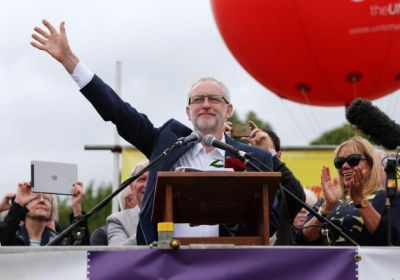

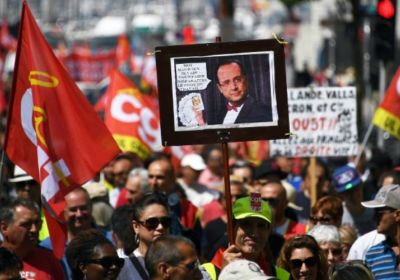
 French unions protested on July 5 as the government forced a bill attacking workers’ rights through a hostile parliament.
“This is a counter-productive law, socially and economically,” said Marie-Jose Kotlicki, a member of the General Confederation of Labour (CGT). “The government is making a mistake in underestimating the level of discontent over this law.”
French unions protested on July 5 as the government forced a bill attacking workers’ rights through a hostile parliament.
“This is a counter-productive law, socially and economically,” said Marie-Jose Kotlicki, a member of the General Confederation of Labour (CGT). “The government is making a mistake in underestimating the level of discontent over this law.”