
On election night in Tunisia, as it became clear that moderate Islamist party Ennahda had won most seats in the Constituent Assembly and would be forming government, many Tunisians feared for the revolutionary struggle that has continued since the uprising that overthrew Zine El Abidine Ben Ali in January.
In the final count, Ennahda received just under 37% of the popular vote, and won 90 seats out of the 217-member assembly. The next largest vote was won by the centre-left Congress for the Republic Party (CPR), with 30 seats.
-
-
EMERGENCY OCCUPY SYDNEY PROTEST AT THE SUPREME COURT Defend our right to protest! The NSW police are taking Occupy Sydney organisers to the Supreme Court on November 4 to try to ban our planned march through the Sydney CBD.
-
For a lighthearted look at some of the difficulties and frustrations with the democratic process of the Occupy movement, have a look at The Meeting: A Democratic Satire, by Kahtia Lontis. It is described as "a short satirical fiction piece based on the painful process of grassroots democracy". It is something anyone who has taken part in the movement could identify with.
-
Inside Pine Gap: The Spy Who Came in from the Desert By David Rosenberg Hardie Grant Books, 2011 216 pages, $35 (pb) David Rosenberg found 1960s television show Mission Impossible “irresistible” with its patriotic tales of high-tech US government spies thwarting the “bad guys”. After an 18-year career as a US National Security Agency (NSA) electronic signals analyst at the CIA’s Pine Gap spy base in Australia’s remote interior, Rosenberg’s book, Inside Pine Gap, makes it clear that he has yet to grow up.
-
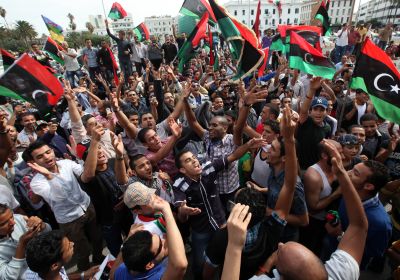 The October 23 declaration of Libya’s “liberation” by the National Transitional Council (NTC), the de-facto government since taking Tripoli from former dictator Muammar Gaddafi on August 21, was a showcase victory for the West’s vision of how the Arab democratic awakening should progress. An uprising began in Libya on February 17 — part of the popular rebellion that has broken out against dictatorial regimes across the Arab world. The Gaddafi regime's brutal repression — carried out with Western-supplied weapons — meant the rising turned into a civil war.
 -
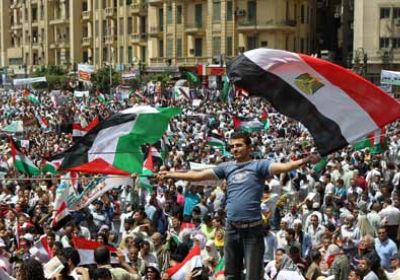 In September, Green Left Weekly spoke to Mamdouh Habashi and Dr Muhammad Hesham, members of the Egyptian Socialist Party (ESP), about developments in Egypt since the popular uprising overthrew dictator Hosni Mubarak on February 11. The ESP is one of several new parties formed since Mubarak's ouster. A longer version of this interview can be found at ThawraEyewitness.blogspot.com. * * * What is the role of the Supreme Council of the Armed Forces (SCAF, who has been in power since Mubarak's ousting)?
 -
The whistleblowing website WikiLeaks sits on the precipice. With it sits freedom of expression and freedom of the press — two fundamental human rights encapsulated in the charter of the Universal Declaration of Human Rights. WikiLeaks is under a series of attacks and could be forced to close some time next year if it is unable to break a United States-backed financial blockade, editor-in-chief Julian Assange said on October 24.
-
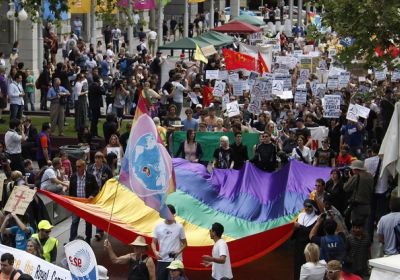 About 1000 people took part in a march on the Commonwealth Heads of Government Meeting (CHOGM) in Perth on October 28. The peaceful march and rally involved people from many different movements and causes who united under the banner: “Justice and climate action, not racism and war.
 -
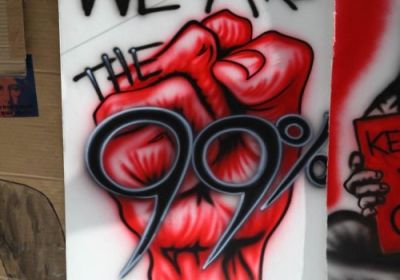
Occupy Melbourne and Occupy Sydney have regrouped since the brutal police attack on the two camps in the Melbourne and Sydney CBDs on October 21 and 23.
-
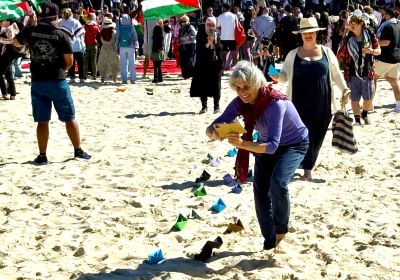
Seamus Doherty is a long time human rights activist, particularly with the Western Australia Deaths in Custody Watch Committee. The WA Liberal government has put him on the CHOGM excluded people's list.
-
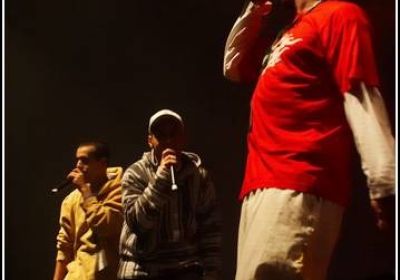
Electronic Intifada (EI) brought together three stories in early October that paint a vivid picture of the need for a cultural boycott of Israel. This certainly is no surprise, given that EI is without a doubt the best source out there on the Palestinian struggle.
-
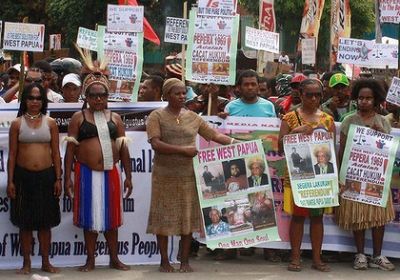 Indonesian army forces brutally attacked the Papuan national conference in Abepura on October 19. The conference was attended by up to 20,000 people discussing West Papua's struggle for independence from Indonesia. WestPapuaMedia.info said on October 21 that local sources confirmed six people were killed. New Matilda.com reported on October 20 an account from a priest who saw a truck full of arrested people who were “covered with blood” and had been “beaten and shot”.