-
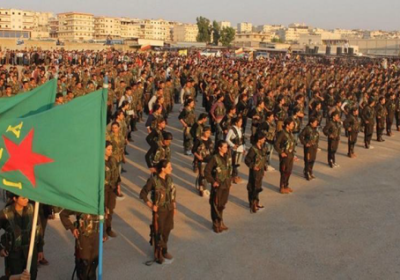
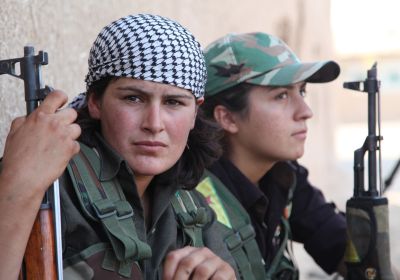
A desperate battle by progressive Kurdish-led resistance fighters is seeking to defend Kobanê from ISIS fundamentalist forces. Kobanê is in Rojava, or Western Kurdistan, is a predominantly Kurdish area in northern Syria that is a semi-autonomous “liberated zone” experiencing a social revolution. -
"Venezuela: The revolution continues," was the theme of a solidarity conference held at Redfern Town Hall here on October 6. About 120 people attended the conference, which was organised by the Embassy of the Bolivarian Republic of Venezuela, in conjunction with the Australia-Venezuela Solidarity Network (AVSN), the Bolivarian Circle, the Latin American Social Forum (LASF), other solidarity organisations, unions, and political groups, including Socialist Alliance. -
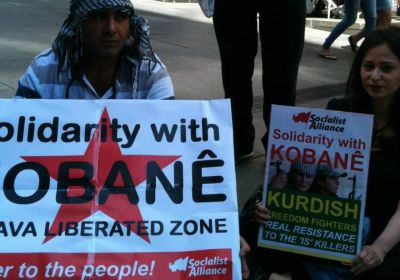
Snap protest was held on September 29 and October 7 in Sydney by members of the progressive Kurdish community. It was called in response to news that ISIS killers had entered the besieged town of Kobane, which is part of the Rojava Kurdish liberated zone in northern Syria. On Friday morning (October 10) members of the community will a protest fast in Sydney Town Hall Square from 9am. A flyer by the Kurdish Association distributed by the Kurdish protesters/hunger strikers in Sydney says:
-
Below is the first part of a statement initially released by Socialist Alliance in Australia on September 24 and updated on October 4. In Sydney, on Friday morning (October 10), members of the community will a protest fast in Sydney Town Hall Square from 9am.
-
The statement below was released by the foreign affairs committe of the Turkish left-wing People's Democratic Party (HDP) on October 3. The HDP is a strong support of Kurdish rights. HDP presidential candidate, Kurdish activist Selahattin Demirtas, won almost 10% o0f the vote in Turkey's presidential elections in August. The statement is reprinted from HDPEnglish.wordpress.com and has been edited for clarity. *** -
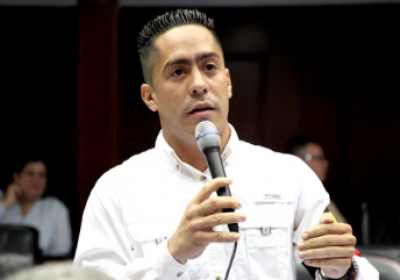
Robert Serra, a 27-year-old legislator of the governing United Socialist Party of Venezuela (PSUV), and the National Assembly's (AN) youngest parliamentarian, was found dead in his Caracas home yesterday. Authorities confirmed last night that Serra and his partner Maria Herrera had been murdered in their residence. According to daily newspaper Ultimas Noticias, unofficial reports say that Serra’s body showed signs of torture before he was killed. -
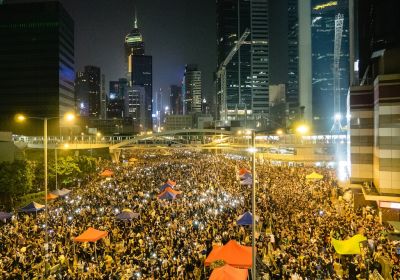
Amid ongoing large protests in support of democratic reforms, Chinese authorities warned of “chaos” on October 2 if protesters carried through their threat to storm Hong Kong government buildings if the region’s Chief Executive Leung Chun-ying did not resign, the Morning Star said that day. -
After speaking at the United Nations climate change summit on September 23, Venezuelan President Nicolas Maduro seized the chance to visit community leaders, local activists and grassroots groups in an event hosted by Hostos Community College of the South Bronx in New York City. About 1000 people attended the event, which was organised by Citgo, a subsidary of Venezuela's state-own oil company. Many arrived early to wait outside for good seats and to hold signs welcoming Maduro as “president of the people”. The Bronx community
-
Those who were expecting to see the supporters of Scottish independence dispirited ― and who hoped that the issue of independence was settled for at least a generation ― were quickly disappointed after the September 18 referendum. This defeat, in which the pro-independence vote lost by roughly 45% to 55%, bears the seeds of future victory ― for at least three reasons. -
The Burglary: The Discovery of J. Edgar Hoover’s Secret FBI Betty Medsger Knopf, 2014 596 pages, $46.95 (hb) As far as burglaries go, this one was pretty audacious. On March 8, 1971, nine anti-Vietnam-war activists in Pennsylvania burgled the FBI. They stole secret files in the regional FBI office in the small town of Media. With careful planning, a little luck and plenty of pluck, the amateur burglars exposed, for the first time, the FBI’s political spying and suppression of democratic dissent.
-
Cables from the first term of Ecuadorian President Rafael Correa show how the US sought to defend the interests of US companies in Ecuador, and protect the position of foreign investors in general. Moves against the power of transnational corporations by Correa's government, first elected in 2006, were seen as attempts to increase control over the economy, which the US government views as the domain of private interests. The US Embassy in Quito therefore tried to influence Ecuadorian economic policy in conjunction with allies from other embassies and from within the private sector.
-
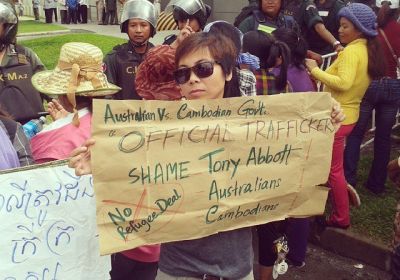
The Cambodian Human Rights Action Committee(CHRAC), a coalition of 21 NGOs, issued the statement below on September 26 in response to the deal with the Australian government to resettle asylum seekers in the impoverished south-east Asian nation. * * * CHRAC is urgently calling for the Australian government to release much needed information regarding this deal that has allegedly been struck between the two governments, including: * The number of refugees that will be resettled from Nauru, Papua New Guinea and other offshore detention centers?