Put Rudd on a boat so that he can see
what it feels like to be a refugee
trying to run from imperial slaughter,
on a leaky boat in shark-infested waters
How can these arseholes be so heartless?
— lock people up in bureaucratic darkness
They say they're Christian, but where’s the compassion?
They put Aboriginal people back on rations
It’s the Lib-Lab; hypocrisy reigns supreme,
they've got their redneck corporate Australian dream
they want to
make you think you're playing on the same team as them
as they are skimming off your share of the cream
-
-
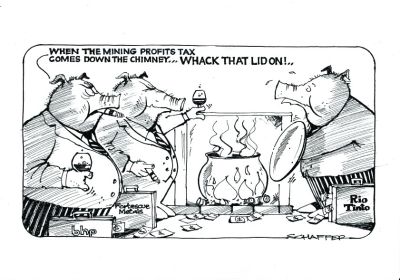
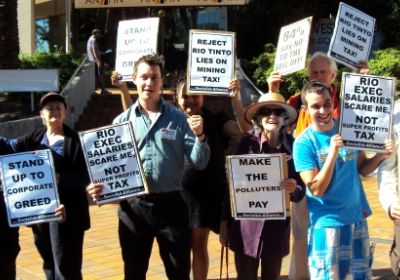
BRISBANE — On June 4, a picket of Rio Tinto Coal offices highlighted opposition to the big mining companies' scare campaign about the federal government's proposed tax on mining "super-profits”. Socialist Alliance federal election candidates condemned corporate greed and said mining tax revenue should be used to fund renewable energy programs. -
Dutch prosecutors fired the opening salvo on May 31 in a notorious case involving a Swiss-based oil trader which dumped hazardous waste in Ivory Coast, the British Morning Star said on June 1. The dumping was allegedly to save itself the paltry sum of €400,000 (about A$576,000). The article said prosecutor Luuk Boogert accused oil trader Trafigura AG and local authorities of putting “self-interest above people’s health and environment” at the criminal trial in Amsterdam. The ship had docked at Amsterdam en-route to Ivory Coast.
-
At the G20 Economic Forum in Pittsburgh in September, President Barack Obama said his administration would combat climate change by phasing out the US government’s grandiose subsidies to the fossil fuel industry. But a report released on April 13 by Synapse Energy Economics (SEE) said Obama hadn’t followed through on his promise to cut dirty energy handouts. -
Writing in the May 27 West Australian, Paul Murray said WA Labor senators facing election will have to “explain to voters why they intend to support a tax that is so palpably against WA’s best interests”. For Murray, who was referring to the Rudd government's proposed Resource Super Profits Tax (RSPT), it is simply a given that the interests of the people of Western Australia coincide with the interests of the big mining companies that operate in the state. -
Five hundred farmers from the Darling Downs agricultural region attended a protest meeting at Cecil Plains, west of Toowoomba, on May 19. They protested against the expansion of coal seam gas mining on their properties. The May 19 Courier-Mail said the farmers called on the state government to place a moratorium on mining development while its environmental impacts are properly assessed. The protesters surrounded a paddock with a one-kilometre barrier of farm machinery in a demonstration of their abilityto stop the mining companies from entering their properties. -
Prime Minister Kevin Rudd's proposed tax on mining industry super-profits has, to the surprise of no one, attracted a great deal of whining from the mining sector. Andrew Forrest of Fortescue Metals accused those who supported the tax of engaging in “class warfare” and threatened to sell his mining interests overseas if the tax goes ahead, reported the May 19 Herald Sun. On May 20, he said that he had shelved $17.5 billion in new mining projects as a result of the tax. -
The decade-long campaign against the Bickham coal project, north of Scone in New South Wales, ended in victory on May 14, when NSW Premier Kristina Keneally announced the government would reject the proposed mine. The open-cut mine would have extracted 36 million tonnes of coal over 25 years. Keneally's decision came after the May 3 publication of the state Planning Assessment Commission's (PAC) report, which recommended the mine not proceed. It could be the first time the NSW government has ever blocked the development of a coalmine. -
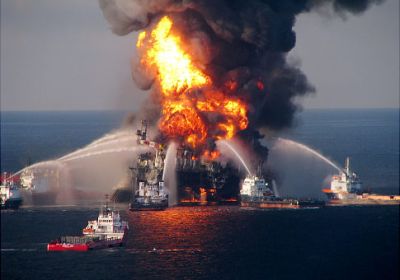
An ex-oil worker has told the May 12 Huffington Post that oil giant BP often faked reliability tests for equipment meant to stop spills such as the Deepwater Horizon spill, which began on April 20. Mike Mason, an oil worker in Alaska for 18 years, said he personally witnessed more than 100 occasions when BP employees manipulated tests on safety valves designed to cut off oil flow in case of emergencies. He said the tests would determine whether the valves could withstand certain amounts of pressure for five minutes at a time. -
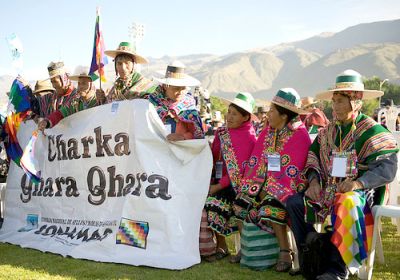
The tremendous success of the April 19-22 World Peoples Summit on Climate Change and Mother Earth Rights held in Cochabamba, Bolivia, has confirmed the well-deserved role of its initiator — Bolivian President Evo Morales — as one of the world’s leading environmental advocates. Since being elected the country’s first indigenous president in 2005, Morales has continuously denounced the threat posed by the climate crisis and environmental destruction. Morales has pointed the figure at the real cause of the problem: the consumerist and profit-driven capitalist system. -
Under the new constitution approved in January 2009, the state now controls all minerals, metals, precious and semi-precious stones in the country. While respecting previously granted concessions to private companies, it has restricted new concessions to joint ventures with the state In 2007, the Bolivian government returned 100% control of the Huanuni tin mine to the state-owned Comibol. On May 3, the government nationalised the Glencore-owned antimony smelter, which has been out of operation for more than two years. -
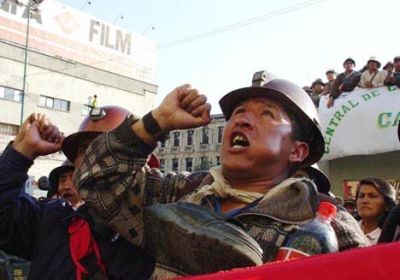
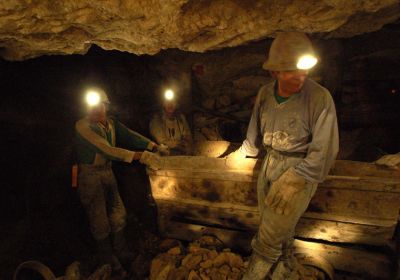
Perhaps no other sector better exemplifies the challenge the Bolivian government faces in lifting the country out of the poverty and dependency afflicting South America’s poorest nation than its all-important mining industry. Mining minister and former miners’ union leader Jose Pimentel told Green Left Weekly: “Bolivia has been a mining country for more than 500 years, ever since the Spanish came and discovered the legendary wealth [of the silver mines] of Potosi.”