
Big Coal: Australia’s Dirtiest Habit
Guy Pearse, David Mcknight, Bob Burton
Newsouth Publishing, 2013, 257 pages, $34.99 (pb)
You don’t have to look far to see why Australians are locked in an absurd and vicious circle of climate change, burning more coal to, for example, run more air conditioners to cope with the more severe heat waves from the global warming resulting from burning more coal.
-
-
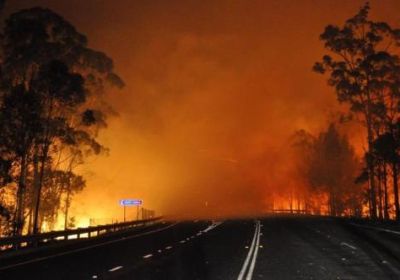 With Tony Abbott ruling the roost in Canberra, it is important for the climate movement in Australia to take stock and have a discussion about where to go next. It is easy to be discouraged by the election of Abbott. However, it should not be forgotten that the election was more than just a “referendum on the carbon tax”, it was also an electoral snapshot of a country that has been subjected to an exceptionally strong barrage of brainwashing for the past few years. The ideas spread through the media are powerful, but they are not invincible.
 -
"We are at a critical point in human history," prominent Canadian environmentalist David Suzuki told an audience of about 500 people at a public forum at Sydney University, on September 25. "What we do or do not do in the next period will determine the future of the human species and the planet,” he said. The meeting, called "The challenge of the 21st century: Setting the real bottom line”, was sponsored by the Sydney Environment Institute, University of Sydney. It was part of a series of talks and media appearances by Suzuki on his Australian visit.
-
 The Queensland government has approved a $6.4 billion coalmine to be owned by Clive Palmer. The huge mining project, located in the Galilee Basin in central Queensland, is expected to produce about 40 million tonnes of coal a year for 30 years, much of which will be shipped to booming industrial centres in China. On top of that, hundreds of kilometres of railway will be laid to the Abbot Point coal terminal near Bowen, one of the many ports along the Queensland coast that is used to ship coal overseas.
 -
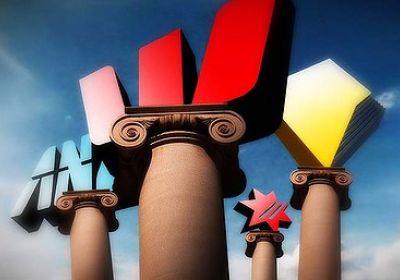 I want to start by acknowledging that we’re meeting here today on stolen Aboriginal land, the land of the Jagera and Turrbal people, and that their sovereignty over this land was never ceded, and that it always was, and always will be Aboriginal land. We all know that Australia has experienced an unprecedented mining boom over the past decade. This boom is slowing now, but it is still producing huge wealth. Over the last decade, profits of the mining companies have gone up by 400%. The big mining corporations now make almost a quarter of all profits in this country.
 -
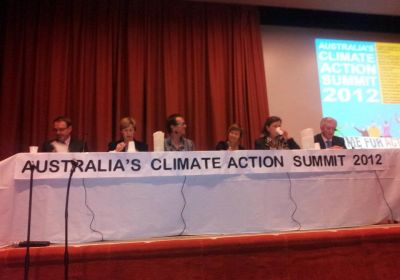 About 400 activists from across Australia converged on Sydney over June 21-23 for Australia’s Climate Action Summit 2013. As the science of climate change becomes ever more alarming, and as the refusal of business and political elites to act becomes ever more glaring, the activists met to share ideas and strategies to build a strong movement for a safe climate.
 -
Democratic Left pulled its ministers out of Greece's ruling coalition cabinet on June 21 after talks to resume state television broadcasts collapsed. MPs from the party, which makes up the third part of the ruling coalition, were angered by the abrupt shutdown of broadcaster ERT on June 11 and met to decide whether to continue backing Prime Minister Antonis Samaras.
-
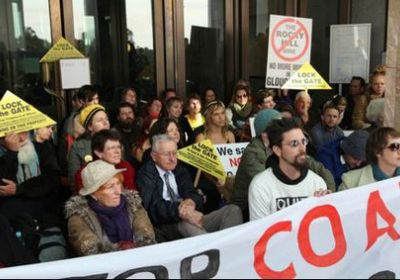 About 120 landowners from NSW and Queensland staged a sit-in at Parliament House in Canberra on June 20 to protest the federal government approval process for mining projects. It follows the Liberal and Labor parties voting down legal changes to give farmers the right to say “no” to mining on their land, despite a new opinion poll that shows 86% of people support giving landowners the right to refuse access to miners.
 -
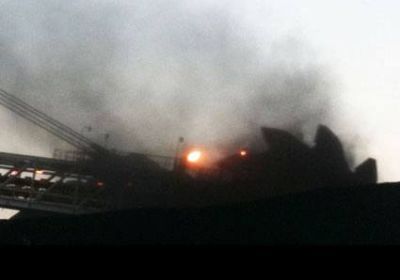 The Australian Rail Track Corporation (ARTC) and Brisbane-based consultant Katestone have come under fire for releasing a report, on coal train dust in the Hunter Valley, that appeared to have been doctored. The ARTC is a federal-owned corporation and leases rail track from the NSW government. It is in charge of most rail track other than dedicated inner city passenger rail corridors, including rail tracks that deal mainly in freight and commodity haulage.
 -
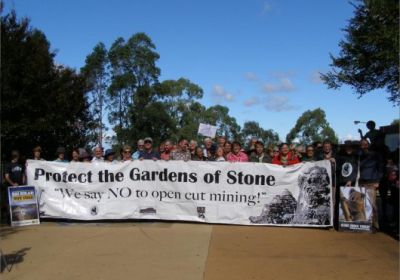 Coalmining company Coalpac Pty Ltd lodged a development proposal with the NSW government in July 2011 to expand its open-cut and high-wall coalmines in central western NSW. The sites are in a proposed extension to the Gardens of Stone National Park and surround the small town of Cullen Bullen. Coalpac’s “consolidation project” involves expanding its Invincible and Cullen Valley coalmines, and building a new quarry in the Ben Bullen State Forest near Lithgow.
 -
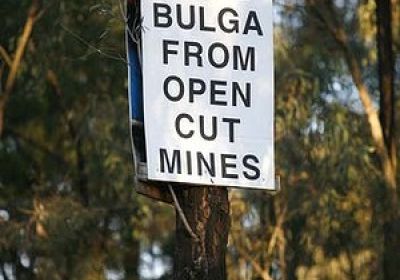 Lock the Gate Alliance released this statement on April 23. *** The Lock The Gate Alliance has slammed mining giant Rio Tinto after its Hunter Valley subsidiary Coal and Allied appealed to the Supreme Court to allow the Warkworth Extension coalmine project to go ahead. The project was rejected by the NSW Land and Environment Court last week after the Bulga Milbrodale Progress Association challenged the NSW government's approval of the mine.
 -
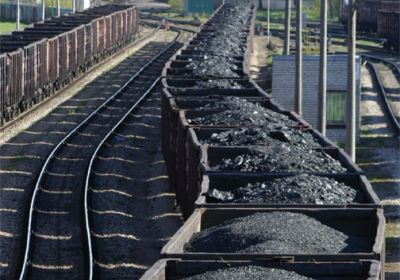 After being forced to admit that “clean coal” will never happen, the coal industry has fallen back on an old argument to justify itself — that Australia cannot live without the industry because it does so much for the economy by providing jobs and creating wealth.