
The Liberal Democrats have committed to support about $10 billion in public spending cuts as part of their coalition deal with the Conservative Party, Counterfire.org said in a May 12 article. An abridged version is below.
* * *
Liberal Democrat (LD) leader Nick Clegg is deputy prime minister (not bad for a leader who lost seats in the election) and another four members of his party will be in cabinet as part of the power-sharing deal signed with the Conservative Party (Tories).
-
-
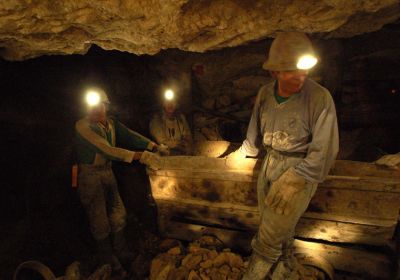
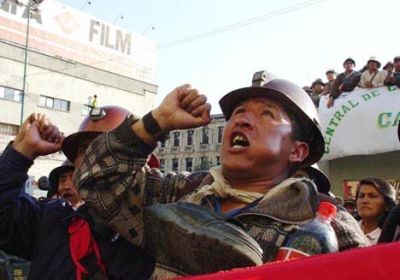 Perhaps no other sector better exemplifies the challenge the Bolivian government faces in lifting the country out of the poverty and dependency afflicting South America’s poorest nation than its all-important mining industry. Mining minister and former miners’ union leader Jose Pimentel told Green Left Weekly: “Bolivia has been a mining country for more than 500 years, ever since the Spanish came and discovered the legendary wealth [of the silver mines] of Potosi.”
 -
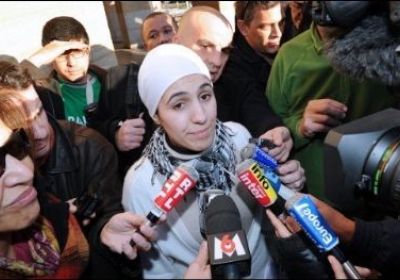 Laws punishing women for wearing the burqa and the niqab in public were passed by the Belgian lower house of parliament on April 29. A similar law has been discussed by French President Nicholas Sarkozy, and the French National Assembly passed a non-binding resolution in favour of a ban on May 11. These laws have been pushed by right-wing governments on the basis of security needs and protecting national identity, but the laws have also been justified as promoting equality for women. On this basis, the laws have received support from sections of the left and the feminist movement.
 -
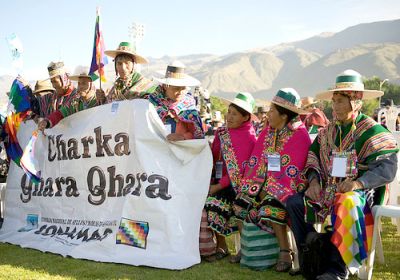 “There are two ways forward: Either save capitalism, or save Mother Earth”, Bolivian President Evo Morales said, stressing that this was the choice facing governments at a May 7 press conference in New York. There, he discussed the outcomes of the 35,000-strong World People’s Summit on Climate Change and the Rights of Mother Earth with United Nations Secretary-General Ban Ki-moon.
 -
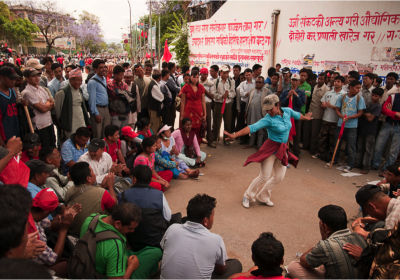
Jed Brandt, a member of US Kasama Project, is in Katmandu reporting on the ongoing struggle between Nepal’s poor majority, led by the Unified Communist Party of Nepal-Maoists (UCPN-M), and the US and Indian-backed elite that removed the UCPN-M-led government last year.
-
 The tremendous success of the April 19-22 World Peoples Summit on Climate Change and Mother Earth Rights held in Cochabamba, Bolivia, has confirmed the well-deserved role of its initiator — Bolivian President Evo Morales — as one of the world’s leading environmental advocates. Since being elected the country’s first indigenous president in 2005, Morales has continuously denounced the threat posed by the climate crisis and environmental destruction. Morales has pointed the figure at the real cause of the problem: the consumerist and profit-driven capitalist system.
 -
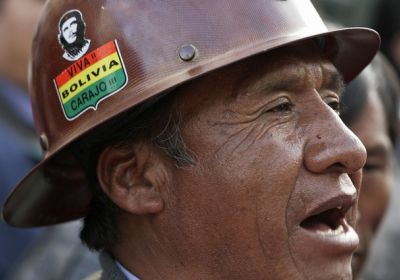 Under the new constitution approved in January 2009, the state now controls all minerals, metals, precious and semi-precious stones in the country. While respecting previously granted concessions to private companies, it has restricted new concessions to joint ventures with the state In 2007, the Bolivian government returned 100% control of the Huanuni tin mine to the state-owned Comibol. On May 3, the government nationalised the Glencore-owned antimony smelter, which has been out of operation for more than two years.
 -
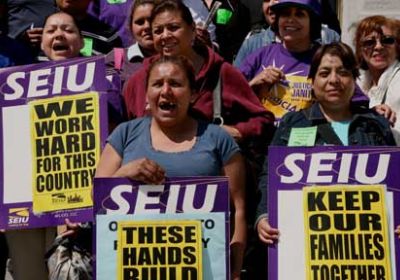 Federal immigration authorities have pressured one of San Francisco’s major building service companies, ABM, into firing hundreds of its own workers. Some 475 janitors have been told that unless they can show legal immigration status, they will lose their jobs in the near future. ABM has been a union company for decades, and many of the workers have been there for years. Olga Miranda, president of Service Employees International Union (SEIU) Local 87, said: “They’ve been working in the buildings downtown for 15, 20, some as many as 27 years.
 -
 On April 29, more than 10,000 union members and others organised a protest on Wall Street in New York organised by the AFL-CIO union federation, Alternet.org said the next day. “The banners declared ‘Wall Street: Never Again’ and ‘Less Audis, More Audits’. Almost to a one, they echoed the clear policy demands of the day: regulatory reform, new taxes on banks and speculators, and a jobs bill.”
 -
 When setting a giant oil spill on fire is the least-worst option to limit environmental damage, you know you're in trouble. But that appeared to be the case as US authorities debated how to contain an spill caused by the failure in April of a deepwater oil rig — owned by the oil giant BP — about 80 kilometres off the US in the Gulf of Mexico. On May 2, the Times of London reported that Professor Ian MacDonald, an ocean specialist at Florida State University, said satellite data suggested the leak has already spread 9 million gallons of heavy crude oil.
 -
 Each Saturday for the past two months, a thousand or more Haitian earthquake survivors have met in the auditorium of the Aristide Foundation for Democracy (AFD) to discuss the future of their country. Since its founding in 1996, the AFD has provided a place for grassroots activists and ordinary Haitians to debate and discuss national issues.
 -
Across the United States, large rallies were held on May Day (May 1, the international workers’ day). Opposition to attacks on immigrants were a major theme in big cities and small towns. Organisers of the march in Los Angeles estimated 250,000 immigrants and supporters staged a boisterous march in opposition to Arizona’s anti-immigrant SB1070 law. In Tucson, Arizona, 15,000 protested against the racist law. About 30,000 people protested in New York and about 3000 marched in Washington D.C.