-
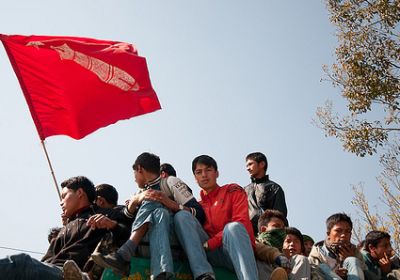
The 2006 Jana Andolan (“People’s Movement”), which shut down Nepal and overthrew the 240-year-old Shah monarchy, was widely hailed as the birth of a new era of democracy. For the first time, the people of Nepal were able to elect a constituent assembly in 2008, giving the mass of Nepalis an unprecedented say in the future of their country. -
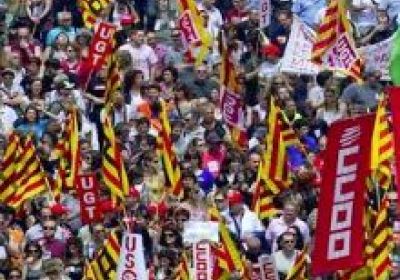
More than 10 million workers staged a general strike in Spain on September 29 in response to vicious government attacks on their rights and pensions. The huge mobilisation, organised by the Confederacion Sindical de Comisiones Obreras (CCOO) and Sindicato Union General de Trabajadores (UGT) labour unions, produced a 75% turnout of members, sending a strong message of opposition to the austerity measures. UGT secretary for organisation and communication Jose Javier Cubillo said that in some sectors of the economy, such as steel and energy, support for the strike was close to 100%. -
On September 27, the repressive police apparatus of the Spanish state was brought to bear on the Askapena, the internationalist organisation of the Basque pro-independence left.
-
The abridged statement below was released by the South African Palestine Solidarity Committee (PSC) on September 29. * * * After a huge mobilisation by South African academics, the senate of the University of Johannesburg (UJ) voted today “not to continue a long-standing relationship with Ben Gurion University (BGU) in Israel in its present form and has set conditions for the relationship to continue”. -
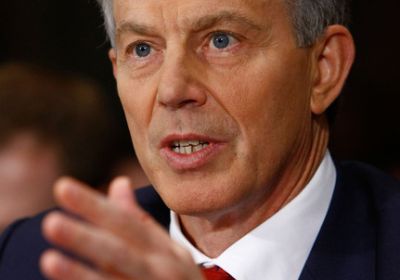
Secret documents disclosed in Britain’s High Court revealed former British prime minister Tony Blair was warned in the weeks after US forces began rounding up terrorism suspects that British nationals held by the US in Afghanistan and Guantanamo Bay were being tortured, the Guardian said on September 30. A January 22, 2002 note from Blair in which he expressed concern about the treatment of British citizens being held by the US appeared, among heavily censored MI5 and foreign office documents, in court hearings in which British citizens are suing the government, MI5 and MI6. -
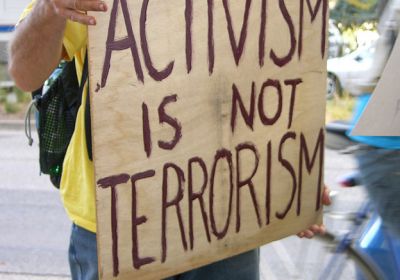
In a qualitative escalation, the government of President Barack Obama has for the first time used the “war on terror” against socialists in the United States. On September 24, the FBI conducted a series of coordinated early-morning raids at homes and offices in Minneapolis, Chicago, Michigan and North Carolina. The political police seized computers, passports, books, documents, cell phones, photos, financial records, diaries, maps and other materials. In one case, children’s artwork was confiscated.
-
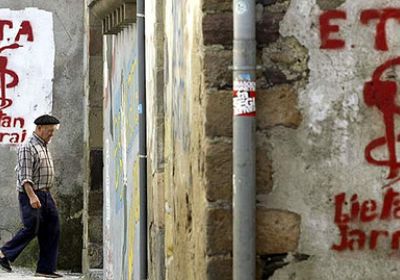
On September 5, the Basque armed group Euskadi Ta Askatasuna (Basque Homeland and Freedom, ETA), which has fought an armed struggle for Basque freedom for decades, released a video declaring that several months ago it had decided to stop armed actions, and announced a ceasefire.
-
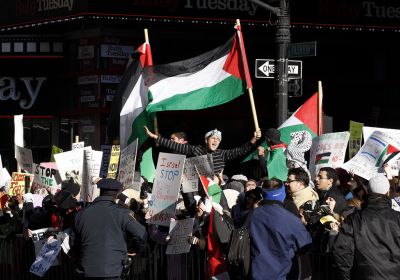
Palestinian activists in the occupied West Bank have called for the boycott of the popular Rami Levy Israeli supermarket chain. The chain has several stores inside Israel’s illegal settlements. Activists say they will call on fellow Palestinians to “avoid supporting the occupation and settlements’ economy by boycotting Israeli goods and settlement stores”. A vigil was held on September 23 outside the Rami Levy store inside the Sha’ar Binyamin settlement south of Bethlehem. -
Pakistan blocked a vital supply route for US-led troops in Afghanistan on September 30. The move was in apparent retaliation for an alleged cross-border NATO helicopter strike that killed three Pakistani frontier troops, The British Morning Star said that day. The blockade appeared to be a big escalation in tensions between Pakistan and the United States. A permanent stoppage of supply lorries would place huge strains on NATO and damage the already faltering counter-insurgency campaign in Afghanistan. -
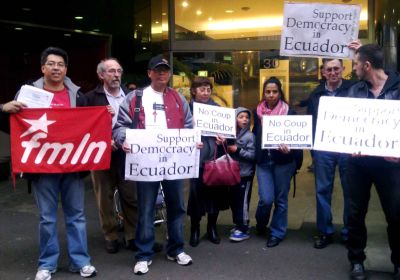
On September 30, Ecuador descended into chaos as a protest by sections of the police force and army turned into a potentially bloody coup against left-wing President Rafael Correa. At about 8am, sections of the Ecuadorian Armed Forces and the national police went on strike, occupying police stations and barracks in the capital Quito, in Guayaquil and in at least four other cities. They set up road blocks with burning tyres, cutting off access to the capital. -
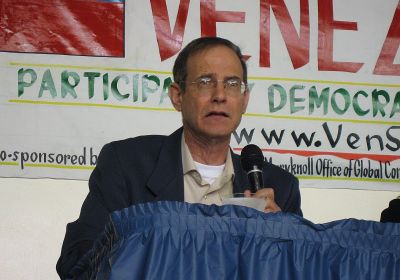
On September 28, a British Guardian reporter who interviewed me by phone published an article on the September 26 Venezuelan National Assembly elections titled “Opposition Gains Loosen Chavez’s Grip on Power.” According to the article, I said the electoral results “suggested the government should try to modify its radical discourse and accommodate the opposition, as long as it accepted the government’s legitimacy”. -
Britain is said to be approaching its Berlusconi Moment. That is to say, if Rupert Murdoch wins control of Sky, he will command half Britain’s television and newspaper market and threaten what is known as public service broadcasting. Although the alarm is ringing, it is unlikely that any government will stop him while his court is packed with politicians of all parties. The problem with this and other Murdoch scares is that, while one cannot doubt their gravity, they deflect from an unrecognised and more insidious threat to honest information.