-
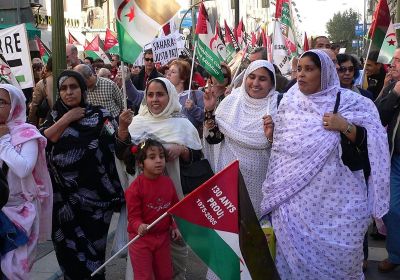
The crackdown by Moroccan occupation forces on the protest camp at Gdeim Izik on November 8 may have brought more attention to the plight of Western Sahara than was intended. The 20,000-strong camp at Gdeim Izik, 15 km from the Western Saharan capital, El Aaiun, was established on October 9 to protest against the discrimination and oppression experienced by Saharawi people living under Moroccan occupation. -
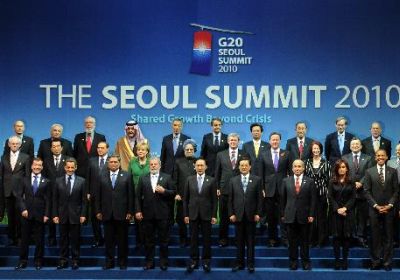
“The Group of 20 countries [which met in Seoul over November 11-13] were supposed to have stamped out the financial market abuses at the heart of the global crisis but little seems to have changed since their last summit, analysts say. “Hopes for reform after the market chicanery that brought down a series of ‘too-big-to-fail’ banks and sparked the worst slump since the 1930s have faded with the return of the ‘get rich quick’ mentality, according to analysts.
-
Thousands of supporters of Thailand’s Red Shirt movement (the popular name for the United Front for Democracy Against Dictatorship) once again turned Bangkok’s busy Ratchaprasong Intersection into a sea of red on November 19. Protesters turned out in their thousands to mark six months since the military attacked and dispersed a mass protest camp that occupied the area in April and May. More than 90 people were killed and thousands injured. Hundreds of protesters are still imprisoned. -
The statement below was released on November 3 by the Canada Haiti Action Network in preparation for Haiti’s November 28 elections. For more information, visit . To contact CHAN, email [email protected]. * * * The Canada Haiti Action Network is once again expressing its grave concerns about exclusionary elections in Haiti. -
“The National Front of Popular Resistance (FNRP) expresses its energetic condemnation of the massacre against the campesino community in El Tumbador, Trujillo, in which our companeros Ignacio Reyes, Teodoro Acosta, Siriaco Munozm Raul Castillo and Jose Luis Sauceda were assassinated”, the FNRP said in a November 16 statement. All of those killed were members of the Campesino Movement of Aguan (MCA). The campesino activists were killed by assassins hired by pro-US oligarch Miguel Facusse, who helped fund the coup that overthrew president Manuel Zelaya last year. -
Burma’s November 7 elections — held under an undemocratic constitution in an atmosphere of repression and with the result crudely rigged — have been overshadowed by the release from house arrest of opposition National League for Democracy (NLD) leader Aung San Suu Kyi on November 13. Thousands of supporters lined the streets to her house and flocked to NLD offices to hear her speak. Suu Kyi’s release has been compared to that of Nelson Mandela in 1990. However, unlike Mandela, Suu Kyi was not released from detention by a regime seeking negotiations. -
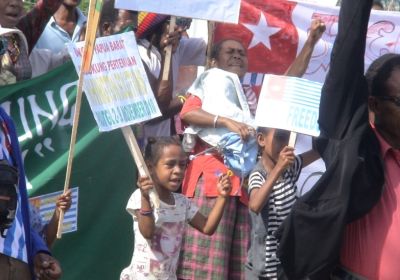
Leaked military documents have confirmed that Indonesia’s elite special forces unit Kopassus routinely engages in “murder [and] abduction”. The documents also show Kopassus officially defines civilian dissidents as its “enemy” in its operations in West Papua. The documents, posted by journalist Allan Nairn at Allannairn.com on November 9, identify Indonesia’s primary enemies in West Papua as unarmed civilians involved in the independence movement. -
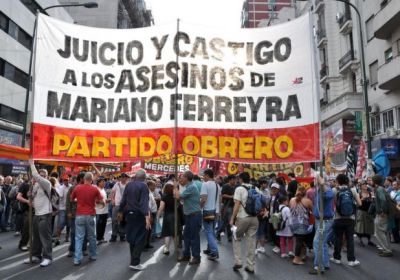
Twenty-three-year-old Mariano Ferreira, a Workers Party (PO) activist, was shot dead in Buenos Aires on October 8 when a mob violently attacked protesting railway workers. The protesters, all of them labour hire workers, were demanding their reinstatement after being sacked. The attack was similar those against other workers in comparable circumstances who have demanded rights denied by the bosses. Often the bosses’ have acted with local union support. -
An unprecedented high abstention rate of 39% marked elections for municipal and regional authorities for 13 region governors and 325 mayors in Greece. The second round of the elections took place on November 14. The regions are newly created local authorities. Their formation is closely connected to the austerity program imposed on Greece by the International Monetary Fund (IMF) and European Union (EU). The new bodies conform to the “Kallikratis” plan, a hasty reform of the administrative structure of the country. -
The Venezuelan government has begun distributing the first of 350,000 portable Canaima laptop computers to be provided to public elementary school children by the end of the year, Venezuelanalysis.com said on November 17. Education minister Jennifer Gil said: “The Canaima Plan is a milestone and a technological innovation. It allows us to keep deepening our integral and massive education system that does not involve just students, but the entire family environment, parents, representatives and teachers.” -
“About 15 per cent of US households — 17.4 million families — lacked enough money to feed themselves at some point last year, a US Department of Agriculture report says. “The study also found that 5.6 million of these households — with as many as 1 million children — had continuing financial problems that forced them to miss meals regularly. “The number of these ‘food insecure’ homes … was more than triple the one in 2006, before the recession brought double-digit unemployment.
-
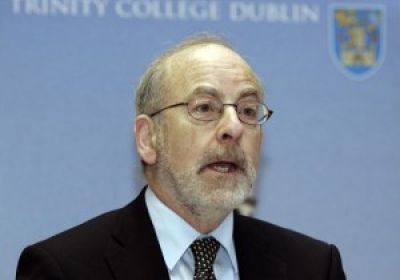
An “army” of European Union (EU) and International Monetary Fund (IMF) officials arrived in Dublin on November 18 “seeking to foist a large loan on Ireland in a bid to prop up the country’s embattled banking sector and save the European currency”, the Morning Star said that day. Irish finance minister Brian Lenihan told MPs that Ireland, the EU and the IMF were exploring the prospect of forming “a contingency capital fund that would stand behind the banks”, the article said.